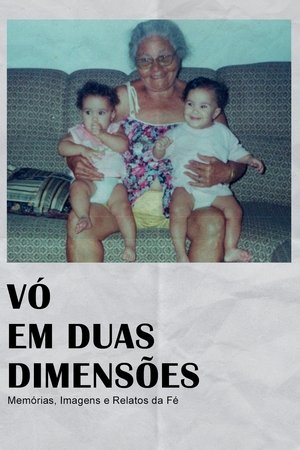
A young anthropologist reflects on her late grandmother's religious background.
A film about Mali's ancient culture, and this culture's position in the country today. Filmed with a Malian crew, cut to the beat of Malian music, the film offers an alluring mosaic of perspectives.
“The barbaric negro inhabitants of an African village are shown in their various forms of activity, the first view being a photograph of a number of children of all sizes, shapes and degrees of African beauty. Following this is a match between two giant negro wrestlers, who first fence with slicks and then grapple with each other. The start of a caravan is next pictured, the handling of the huge camels being well demonstrated. A British courier next comes into view and the African, presumably sheiks, attack him. A short sham fight takes place, and he escapes. Now a religious procession of natives is shown, with their tom-toms and curious devices for making curious music. The last is a photo of a comical looking African infant playing with a kitten.” (Moving Picture World)
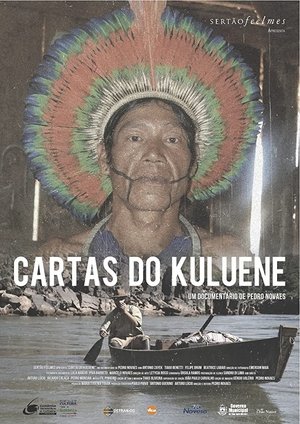
Cartas do Kuluene
The Danube Delta in Romania - the 'Last European Sanctuary’ - is a UNESCO World Heritage Site. While major efforts are made to protect biodiversity, the plight of local communities is largely overlooked. Social scientists claim that the traumatic nature of the swamp bears heavy on the villagers' lives. But is Nature really to blame? Swamp Dialogues is based on an extensive field-research in the Danube Delta Biosphere Reserve. Through a careful ‘argument montage’ built entirely on cinematic language the film represents an anthropological analysis formulated in image and sound.
The Fall of Womenland is a fascinating documentary on the unique sexual culture of the Mosuo people — a small minority situated in the southwest of China — and one of the last remaining matriarchal societies in the world. Without a formal marriage contract, the Mosuo traditionally build relationships based on free love and sexual satisfaction (‘walking marriages'). But can the sexual liberty and power of the Mosuo women survive as modern Chinese society slowly encroaches their ancestral land? The film explores the present reality for the Mosuo people as well as the dangers that threaten their inherited way of life.
This is the story of Dona Virginia, an elderly woman who awaits the expropriation of her house. Year after year, the government threatens to destroy the place, her past and her memories.
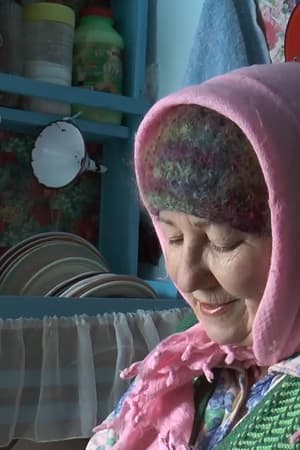
“The shepherdess” is a short ethnographic film inspired by Joyce, an 80 year old woman who has spent her whole life farming in Eastern Ontario. While this film is largely centred on Joyce’s narrative about her life, it is also about Joyce’s flock of about 20 Suffolk ewes, the filmmaker, and the relationships between these actors.
This documentary follows three couples to see how things turned out several years after their weddings. The film presents challenging ideas about relationships, as it answers the question: Why is marriage so difficult?
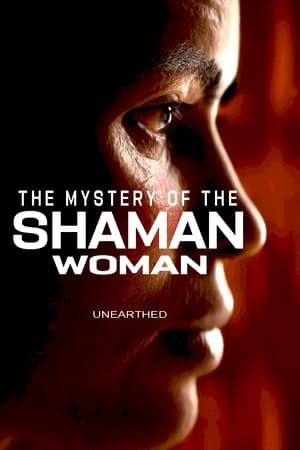
One of the most significant cases in European archaeology is the grave of the shaman woman of Bad Dürrenberg, a key finding of the last hunter-gatherer groups. From a time when there were no written records, this site was first researched by the Nazis, who saw a physically strong male warrior from an ‘original Aryan race’ in the buried person. It was, in fact, the most powerful woman of her time. The latest research shows that she was dark-skinned, had physical deformities, and was a spiritual leader. The documentary – using high-end CGI and motion capture – compares the researchers of the Nazi era, who misrepresented and instrumentalised their findings, to today’s researchers, who meticulously compile findings and evidence, and use cross- disciplinary methods to examine and evaluate them. It also substantiates the theory of the powerful roles women played in prehistoric times. The story of this woman, buried with a baby in her arms, still fascinates us 9,000 years after her death.
Vaastu Marabu documents the theory and practice of the Vaastu tradition of Indian art, architecture, craft and design. One of the foremost shilpis (designer-builder-sculpter) of India, Shri. V. Ganapati Sthapati of Mammallapuram, meditates on his art and his occupation. The film shows the process of making stone idols at Mammallapuram, near Madras, of casting bronzes in Kumbakonam, and of building stone temples at Kamudhi, near Madurai and at Ratnagiri, near Vellore. It illustrates the continuity of the tradition and reveals a technology that is ancient, yet still relevant today. The film explores the process of translating inner experience into art, and invites us to experience the naked beauty of the form while understanding the metaphysical message. The art of the Vishwakarma has given form and expression to all denominations of metaphysical thought in India. The film also probes the underlying scientific and mathematical principles.
"Heart of the Country" is the story of Shinichi Yasutomo, the extraordinary principal of a rural elementary school in Kanayama, central Hokkaido, Northern Japan. Yasutomo is a man driven by his vision for learning and his passion for educating the heart as well as the mind. The film follows Yasutomo, his teachers and staff, students and their families over the course of one entire school year. The film is also the story of the families of Kanayama. Parents and elders of this once impoverished town embrace Yasutomo's vision, but not without wary glances back to the past. This small community, bound together by love for its children, is also defined by its journey through the cultural upheavals of postwar Japan.
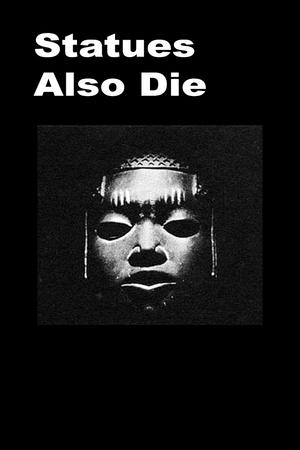
Commissioned by the journal Présence Africaine, this short documentary examines how African art is devalued and alienated through colonial and museum contexts. Beginning with the question of why African works are confined to ethnographic displays while Greek or Egyptian art is celebrated, the film became a landmark of anti-colonial cinema and was banned in France for eight years.
In 1968, the fury and violence of the Democratic National Convention in Chicago propelled us toward a tipping point in politics. Martin Luther King Jr. and Robert F. Kennedy were assassinated, America suffered its bloodiest year in Vietnam and drugs seduced us. Yet idealism--and hope--flourished. Explore the significance of that turbulent year and the way it continues to affect the American landscape. Tom Brokaw offers his perspective on the era and shares the rich personal odysseys of some of the people who lived through that chaotic time, along with the stories of younger people now experiencing its aftershocks. Includes archival footage and interviews with former Atlanta Mayor Andrew Young, who was talking to King when he was assassinated and rushed to his side to try to staunch the wound; Olympic gold medalist Rafer Johnson, who wrestled RFKs' assassin to the ground; and Arlo Guthrie, best known for his song "Alice's Restaurant.
Captain Kleinschmidt leads an expedition sponsored by the Carnegie Museum to the arctic regions of Alaska and Siberia to study the natives and the animal life.
"Papua New Guinea: Anthropology on Trial" was a 1983 episode of the PBS science documentary series NOVA. It explored the field of anthropology, particularly in the context of Papua New Guinea, from the perspective of the people being studied.
Inspired by Steven Blush's book "American Hardcore: A tribal history" Paul Rachman's feature documentary debut is a chronicle of the underground hardcore punk years from 1979 to 1986. Interviews and rare live footage from artists such as Black Flag, Bad Brains, Minor Threat, SS Decontrol and the Dead Kennedys.
Ano Ravenia, a mountain village in Greece, young men leave to find work, learn a trade or serve in the Army while a young woman may leave her father's house only to enter that of her husband. The unmarried girls remain in the village amoung the elderly folk, meeting together to embroider their trousseaus and chat. In a rural Greek community, it is not the role of women to express their point of view in public. The film allows the spectator to sit in one of these casual sewing sessions where the girls talk about their wishes and problems, most of which revolve around marriages that will change their lives.
Thanassakis, a 13-year-old boy, is staying with his grandparents in the Greek village of Ano Ravenia, while his parents stay with his younger brother in Zurich, Switzerland. It was filmed during three periods: winter in the village, summer in the village (while his parents, as most migrants, come back for the holidays), and Christmas in Zurich when the grandfather and the young boy visit their family. Who is most important to the young boy - his father or grandfather?
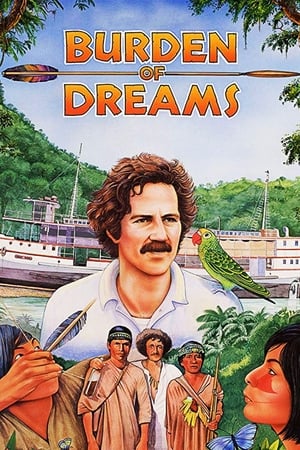
The Amazon rain forest, 1979. The crew of Fitzcarraldo (1982), a film directed by German director Werner Herzog, soon finds itself with problems related to casting, tribal struggles and accidents, among many other setbacks; but nothing compared to dragging a huge steamboat up a mountain, while Herzog embraces the path of a certain madness to make his vision come true.