From the rains of Japan, through threats of arrest for 'public indecency' in Canada, and a birthday tribute to her father in Detroit, this documentary follows Madonna on her 1990 'Blond Ambition' concert tour. Filmed in black and white, with the concert pieces in glittering MTV color, it is an intimate look at the work of the icon, from a prayer circle before each performance to bed games with the dance troupe afterwards.
Tchai is the word used by Ju/'hoansi to describe getting together to dance and sing; n/um can be translated as medicine, or supernatural potency. In the 1950's, when this film was shot, Ju/'hoansi gathered for "medicine dances" often, usually at night, and sometimes such dances lasted until dawn.
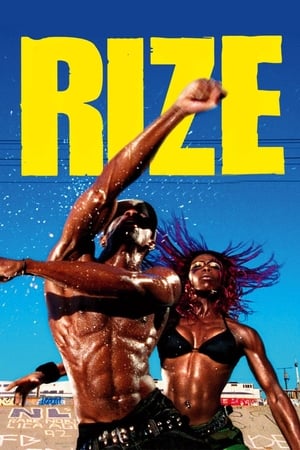
A documentary film that highlights two street derived dance styles, Clowning and Krumping, that came out of the low income neighborhoods of L.A.. Director David LaChapelle interviews each dance crew about how their unique dances evolved. A new and positive activity away from the drugs, guns, and gangs that ruled their neighborhood. A raw film about a growing sub-culture movements in America.
In the same vein as Meri's other documentations, this one takes advantage of the glasnost policy to discuss the social and ecologic impact of the Russian oil industry on the natives and the lands they inhabit.
Documentary on the great American Ballerina Wendy Whelan
Welcome to CRUNCH Fitness! If you're on a mission to flatten your belly, firm your thighs, lift your butt and get your body fighting fit then it's time for Belly, Butt & Thighs Bootcamp.
Narrated by Terence Stamp, this TV program documents the life and career of famed ballet dancer Rudolf Nureyev, through interviews with friends and colleagues and archive footage.
Ninja is famous around the world for her fierce ballroom performances, but she is not as well-known in her native country of French Guyana. But a trip home to teach a workshop might change that.
Hotel Armada is a curated portrait of dance and expression showcasing talents in the world of contemporary, vogue, and ballet. It is an integration of time, space, movement and sounds highlighting each performer's rawness in their power and beauty.
Dance for All
In this documentary, Argentinians dance to their favourite hits.
The senior year of a girls’ high school step team in inner-city Baltimore is documented, as they try to become the first in their families to attend college. The girls strive to make their dancing a success against the backdrop of social unrest in their troubled city.
Anma (The Masseurs) is a representative and historical work by the creator of Butoh dance, Tatsumi Hijikata in his early period in the 1960s. The film is realized not only as a dance document but also as a Cine-Dance, a term made by Iimura, that is meant to be a choreography of film. The filmmaker "performed" with a camera on the stage in front of the audience. With the main performers: Tatsumi Hijikata and Kazuo Ohno, the film has the highlights such as Butohs of a soldier by Hijikata & a mad woman by Ohno. There is a story of the mad woman, first outcast and ignored, at the end joins to the community through her dance. Inserted descriptions of Anma (The Masseurs) are made for the film by the filmmaker, but were not in the original Butoh. The film, the only document taken of the performance, must be seen for the understanding of Hijikata Butoh and the foundation of Butoh.
A short documentary following Paulette Harwood, a 90-year-old former Radio City Music Hall Corps de Ballet soloist, as she teaches the final classes in a school she's run for sixty years.
Portrait of Lester Horton, a Los Angeles-based dancer, choreographer and teacher who trained many world-reknowned dancers and built the first American theater devoted permanently to dance. Former students and friends, including Bella Lewitzky, Alvin Ailey, and Carmen de Lavallade, help create a picture of Horton through interviews. Includes numerous dance excerpts.
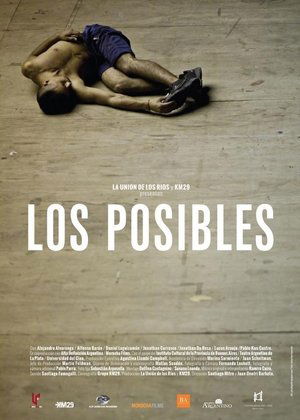
Santiago Mitre co-directs his first movement following The Student together with choreographer Onofri Barbato. Although it would have been more accurate to say “his first film-story-adventure-movie-great movie following The Student”, the word movement fits perfectly in Los posibles, the most overwhelmingly kinetic work Argentine cinema has delivered in many, many years. The film deals with the adaptation of a dance show directed by Onofri together with a group of teenagers who came to Casa La Salle, a center of social integration located in González Catán, trying to find some refuge from hardship. Already entitled Los posibles, the piece opened in the La Plata Tacec and was later staged in the AB Hall of the San Martín Cultural Center. Now, it dazzles audiences out of a film screen, with extraordinary muscles and a huge heart: Los posibles is a rhapsody of roughen bodies and torn emotions. Precise and exciting, it’s our own delayed, necessary, and incandescent West Side Story.
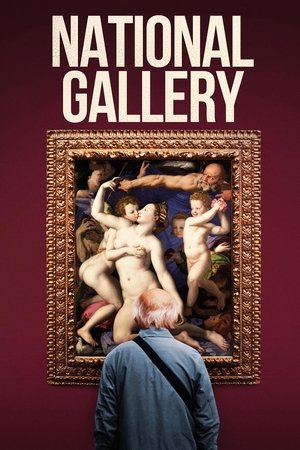
A portrait of the day-to-day operations of the National Gallery of London, that reveals the role of the employees and the experiences of the Gallery's visitors. The film portrays the role of the curators and conservators; the education, scientific, and conservation departments; and the audience of all kinds of people who come to experience it.
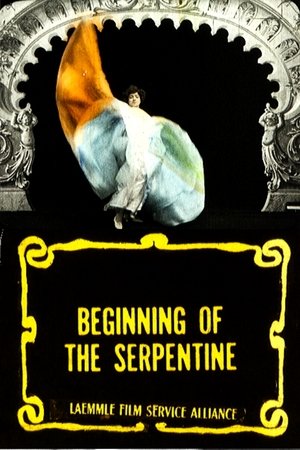
"La Gigue" (Gaumont #590) is part of the "Miss Lina Esbrard. Danseuse cosmopolite et serpentine" series of 4 films, and should not be confused with "Danse excentrique" (Gaumont #587), "Danse serpentine" (Gaumont #588, the only extant film in the series), or "Danse fantaisiste" (Gaumont #589).
"Danse serpentine" (Gaumont #588) is part of the "Miss Lina Esbrard. Danseuse cosmopolite et serpentine" series of 4 films, and should not be confused with "Danse excentrique" (Gaumont #587), "Danse fantaisiste" (Gaumont #589) or "La Gigue" (Gaumont #590).
A filmed version of Aaron Copland's most famous ballet, with its original star, who also choreographed.