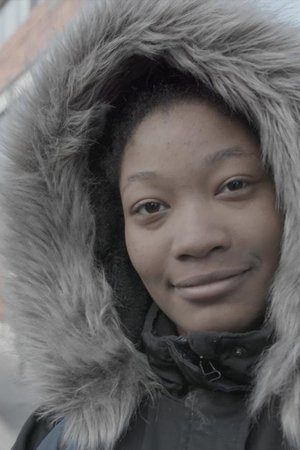
A short documentary profiling the lives of three transgender Black men, exploring what life is like living as a Black man when no one knows you are transgender, and their journeys with gender in the years since they transitioned.
Can a secret change who you are? Mysterious events unfold and reveal how Martha, a Polish holocaust survivor, managed to lead a double life in Australia. The vivacious Jewish artist and doting mother, died without ever revealing her secret. The film follows Martha’s daughter Eve, over a decade, as she unlocks the mystery behind the streets named Eve and Martha. Clues are found in old recordings and Martha’s home movies revealing a mystery man gazing into the lens. Eve’s investigation leads her to the Sobieski castle in the Ukraine, the site of a massacre where her grandmother died, and the Eichmann trial as she explores her parents’ holocaust survival and her father’s heroic escape from a concentration camp. When a ‘doppelgänger’ contacts Eve, her life is forever altered, as she uncovers lies, tracks down her mother’s young lover and reveals the family secret that led her to rewrite her entire life.
Working men and women leave through the main gate of the Lumière factory in Lyon, France. Filmed on 22 March 1895, it is often referred to as the first real motion picture ever made, although Louis Le Prince's 1888 Roundhay Garden Scene pre-dated it by seven years. Three separate versions of this film exist, which differ from one another in numerous ways. The first version features a carriage drawn by one horse, while in the second version the carriage is drawn by two horses, and there is no carriage at all in the third version. The clothing style is also different between the three versions, demonstrating the different seasons in which each was filmed. This film was made in the 35 mm format with an aspect ratio of 1.33:1, and at a speed of 16 frames per second. At that rate, the 17 meters of film length provided a duration of 46 seconds, holding a total of 800 frames.
Robert Altman's first film was this 26-minute short, which has a football coach explaining how to play the sport. This is basically an educational short where the viewer learns about the various rules of the sport as the narrator explains them while we see reenactments.
TGV, 30 ans de vitesse
The best known, "Weegee's New York" (1948), presents a surprisingly lyrical view of the city without a hint of crime or murder. Already this film gives evidence, here very restrained, of Weegee's interest in technical tricks: blur, speeded up or slowed-down film, a lens that makes the city's streets curve as if cars are driving over a rainbow. - The New York Times
Diane di Prima (1934-2020) was a poet, writer, publisher and playwright whose work has been associated with the Beat movement. Born and raised in New York City, she associated with poets such as Amiri Baraka, Jack Kerouac and Frank O’Hara, co-editing The Floating Bear magazine with Baraka in the 60s and co-founding the Poets Press and the New York Poets Theatre. Throughout her life in New York and later out West, both her sense of anarchic limitlessness and her zeal for collaboration guided her work.
"On the Fourth of July, Sikhs in Fresno came together to host the California city’s annual minor league baseball game and fireworks show to create awareness about their religion and demonstrate their love for America" (Vice News).
On the way to creating a new future, the New Jewish Filmmaking Project is rediscovering the past. 11 young storytellers, ages 15-25, collaborated with Citizen Film’s team of documentary professionals to create a multimedia exhibit that offers a set of signposts for what Jewish identity has been and is becoming.
Joe Brainard (1941-1994) was an artist particularly noted for his work in collage and comics. Brainard’s artistic career took off during his teenaged years in Tulsa, Oklahoma where, along with Ron Padgett and Dick Gallup, he produced The White Dove Review, an art and culture magazine. Both Brainard and Padgett serendipitously moved together to New York City, where Brainard was a prolific artist whose work was showcased in varied spaces such as the Museum of Modern Art and the Whitney Museum. He also frequently collaborated with members of the New York School of Poets, supplying book and cover art and bringing to life visual representations of poetry. Brainard’s writing also received acclaim, particularly his 1975 memoir I Remember.
Gary's Story is part of a collective filmmaking project that looks at relationships between teenagers and their grandparents in families that have recently immigrated to the US from the former Soviet Union. Gary's family is from Moscow.
Klaira presents a surprising vision of assimilation and a loving depiction of San Francisco. She and her grandparents explore how the experience of immigration changed their sense of self and altered the fabric of their relationship.
This Ukrainian-Jewish teenager immigrated to San Francisco as a young child. Now on the brink of adulthood, she interviews her grandparents about their new lives yearning to see her American world through their eyes. Yelena understands that life in the US has changed her profoundly.
This short documentary follows Frank Ladouceur, a man who lives alone for months at a time, trapping muskrat in the vast, desolate wilderness of northern Alberta. He receives no visitors, and rarely voyages to his family home in Fort Chipewyan. What some may consider an unthinkably lonely, isolated existence is the calling of this fiercely independent Métis man. Remarkably determined and self-sufficient, Frank makes his home in the wild bush.
A science fiction fantasy on skis with spectacular glacier skiing, extraordinary acrobatics, unique optical effects, and an original score. The world's polarity is mysteriously reversed, requiring the skiers to regain the realm of normal perception by performing maneuvers inspired by the ambiguous nature of the "Moebius Strip."
A 16 year old girl recalls the last moments of her summer vacation, spent with friends in the Laurentians north of Montreal. She reminisces about their talks on life, death, love, and God. Shot in direct cinema style, working from a script that left room for the teenagers to improvise and express their own thoughts, the film sought to capture the immediacy of the youths presence their bodies, their language, their environment.
Elizabeth Windsor tells the story of the girl who was never supposed to be Queen. Born the first daughter of 'the spare', the Duke of York, Princess Elizabeth's life was destined to be nothing more than a bit part in the privileged shadows of the British Royal family.