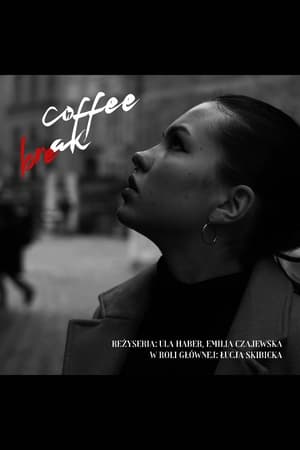
An American writer moves to Paris to be closer to his daughter and finds himself falling immediately on hard times.
A haiku film poem. the early morning waiting for the monks. the voices. the fire. the wat drum.
A series of in-depth conversations with Poet Laureate Rita Dove—conducted and recorded by Eduardo Montes-Bradley between September 2012, and October 2013. The film explores the poet's life, exposing fundamental facts of Dove's childhood and formative years growing up in Akron, Ohio in the 1950s and during the turbulent 1960s, supplemented by selections from hundreds of still images and several hours of home movies from the Dove family's collection.
Ismail Merchant's feature directorial debut addresses a subject close to his heart: the expressive Urdu language of Northern India, in danger of extinction as political trends and modernization obscure its contributions to Indian culture. Merchant 's treatment is wry and good humored , as his characters - an aging Urdu poet (Shashi Kapoor) and a worshipful young college lecturer - clash despite their shared passion for the beauty of words.
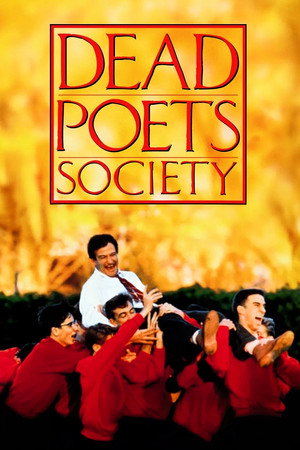
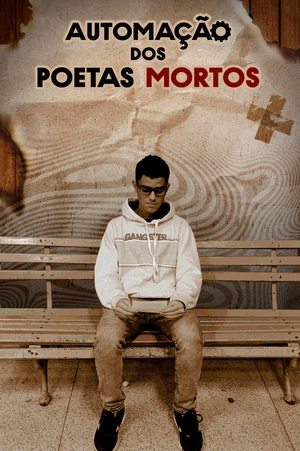
A collection of memories from a tumultuous time at University.
On 19 July 1965, the South-African poet Ingrid Jonker walked into the sea near Drieankerbaai in Cape Town at the age of 31. She left behind a little daughter and an oeuvre of three laurelled collections of poems. Jonker's work fell into oblivion, until on 25 May 1994 president Nelson Mandela opened the very first session of the first democratically elected parliament of South Africa with Jonker's poem Die kind wat dood geskiet is deur soldate by Nyanga, a poem from 1960 that refers to the demonstrations near Sharpeville. Mandela chose the poem for good reason; he called Jonker 'both an African and an Afrikaner'. A white person in South Africa cannot get a bigger compliment. In the documentary Korreltjie niks is my dood, director Saskia van Schaik reconstructs the poet's eventful life, making her powerful poetry with its South-African rhythm tell part of the story. (filmcommission.nl)
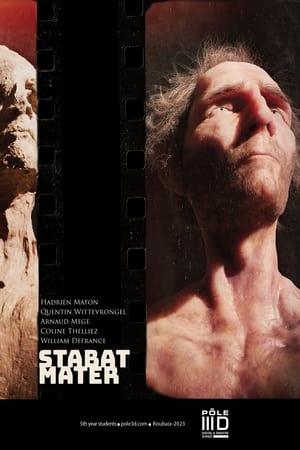
A short fil that follows a body subjected to institutional and diffuse forms of power: medicalization, psychiatric labeling, regimes of sexuality, and everyday violence. Moving between a white clinical space, a cemetery in Toulouse, and ordinary interiors, the film unfolds through gestures, textures, and encounters with other bodies. Inspired by Michel Foucault, Deleuze and Guattari, Artaud, Rancière, and critical thought from Latin America, this short film traces a sensitive cartography of emancipation and asks a simple yet difficult question: what can a body do when it attempts to reclaim its own history?
A quiet killer is looking for a room. The real state agent, shy and expressionless, guides him through Tokyo, towards the ruins the decadent economy has left behind, in hopes of finding The Room.
An account of the life and work of the Spanish poet Luis García Montero; a journey through his experiences, his mentors, his influences and his contact with other artists, both from the literary world and from other disciplines.
A young night watchman at the Anton Chekhov museum in Yalta encounters a mysterious, weary intruder who appears to be the playwright himself, returned from the dead. Over the course of a single night, the two share a series of quiet, existential interactions within the preserved rooms of the estate.
Across the installation's multiple channels, the camera circles a group of artists as they sit together in a field eating, licking, and squeezing ripe tomatoes. Throughout the ever-changing scene, kisses, whispers, and caresses are shared with a casual, gentle intimacy that reflects interconnectivity and abundance. These queer and desirous exchanges constitute a portrait of collectivity wherein individuals come together as distinct parts of a whole.
A creation myth realized in light, patterns, images superimposed, rapid cutting, and silence. A black screen, then streaks of light, then an explosion of color and squiggles and happenstance. Next, images of small circles emerge then of the Sun. Images of our Earth appear, woods, a part of a body, a nude woman perhaps giving birth. Imagery evokes movement across time. Part of the Dog Star Man series of experimental films.
An atmospheric essay, which is an alternative version of Count Dracula, a film directed by Jess Franco in 1970; a ghostly narration between fiction and reality.
X-ray images were invented in 1895, the same year in which the Lumière brothers presented their respective invention in what today is considered to be the first cinema screening. Thus, both cinema and radiography fall within the scopic regime inaugurated by modernity. The use of X-rays on two sculptures from the Bilbao Fine Arts Museum generates images that reveal certain elements of them that would otherwise be invisible to our eyes. These images, despite being generally created for technical or scientific purposes, seem to produce a certain form of 'photogénie': they lend the radiographed objects a new appearance that lies somewhere between the material and the ethereal, endowing them with a vaporous and spectral quality. It is not by chance that physics and phantasmagoria share the term 'spectrum' in their vocabulary.
A man is forced to take part in a bizarre and punishing experiment inside an abandoned warehouse, where a simple instruction; 'answer the telephone' - becomes an ever-shifting psychological trap.
Poetry on Film is a moving image commissioning project for young and emerging Hong Kong filmmakers, motivated by the belief that poetry possesses an inherent cinematic quality. Its rhythmic cadence, vivid imagery, and emotional depth offer a rich tapestry for filmmakers to weave their visual narratives. Animator STEP C., narrative filmmaker Chu Hoi Ying, analogue film artist Jolene Mok, and documentarian Lee Wai Shing were asked to choose a contemporary Chinese-language poem written by a local writer, then visualise it using their personal cinematic language. The resulting shorts showcase the diversity of Hong Kong moving image practice, with unique approaches to medium, storytelling, cinematography, and sound.
Under the relentless sun, a killer stalks through the mountains, where the innocence of a young couple becomes prey. With no shadows to hide their fate, the hunt is a macabre game in broad daylight, where fear is not hidden in the darkness, but burns with the rawness of the unperturbed noon.
A lost traveler encounters a talking clown puppet that won’t stop looking at a mysterious orange light.
Lake gazes down at a still body of water from a birds-eye view, while a group of artists peacefully float in and out of the frame or work to stay at the surface. As they glide farther away and draw closer together, they reach out in collective queer and desirous exchanges — holding hands, drifting over and under their neighbors, making space, taking care of each other with a casual, gentle intimacy while they come together as individual parts of a whole. The video reflects on notions of togetherness and feminist theorist Silvia Federici’s call to “reconnect what capitalism has divided: our relation with nature, with others, and our bodies.”
After his death, a young man stuck in purgatory attempts to cope with the afterlife.