The carnage in Sarajevo provides the focus of this French documentary which seeks to call attention to the terrible conflict in the hopes of finally ending it. The film is divided into five parts. Each part covers a time frame ranging from April 4, 1992, the beginning of the war, to the present. The major issues that occur are three-fold. It depicts the systematic genocide of Bosnians, the silence of Western countries, and the determination of the Bosnians to resist. They refuse to be seen as victims, even though the filmmakers portray them so. Also included are the origins and political aspects of the war. It offers interviews with participants. It also reveals how the U.S. State Department censored reports about Serbian death camps.
Living Death Camps describes the condition of two former concentration camps located in the territory of ex-Yugoslavia: the World War II-era camp of Staro Sajmište, and the camp of Omarska, dating from the Yugoslav war. Both are presently inhabited and used for other purposes. Living Death Camps names a collaborative project that seeks to investigate the complex material and political issues currently unfolding around these two sites, and to understand the politics of commemoration in which each of them is embroiled.
Following the 2001 terrorist attacks on New York City, one item of clothing has gained a scandalous global reputation: the headscarf. All over the world, a major debate is going on about whether Muslim women should be allowed to wear the headscarf in public.
Between 1993 and 1995, artist and photographer Louis Jammes took pictures of people on the streets of Sarajevo under siege and gave them angelic face and wings. Then he put his huge portraits on destroyed city walls. Suddenly, it seems as life is getting back with their arrival, because they brought a sense of peace, beauty, nostalgia...
A young boy plays an accordion in a shopping mall. Béla Tarr picks up the camera one more time to shoot his very last scene. It is his anger about how refugees are treated in Europe, and especially in Hungary, that drove him to make a statement.
Escribir no es normal: Roberto Bolaño y su paso por Cataluña
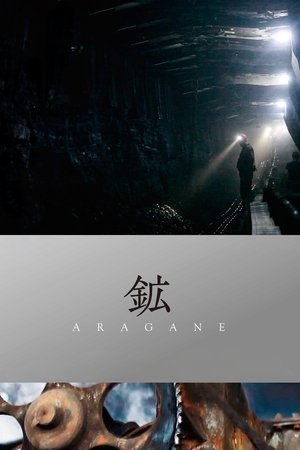
Moments in the life of a young Japanese filmmaker in Bosnia, charged with acoustic and visual poetry. Buoyant and essayistic entries in a process of self- and world-reassurance.
Rides - André Malby
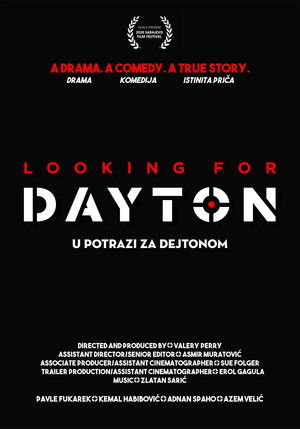
I went to Bosnia after war ended, in 1996, when the Danton Peace Accord was being implemented. Bosnia had been divided in two entities, which separated the two main opposing forces of the conflict; the Serb Bosnians and the Muslim Bosnians. Two years later, in 1998, I returned to Bosnia... This movie is a diary of the two voyages, in which I deal with the memories of the war, the death and destruction and with the victim’s struggle who don’t know how to return home.
In present-day Bosnia and Herzegovina, economically depressed towns turn themselves into tourist destinations in order to survive—deliberately forming their own cultural narratives. Centering on four different locations, The Stone Speakers interrogates a nation’s contradictory memories. Made with subtlety and tactful distance, director Igor Drljaca’s film reveals the traumatic consequences of being a country that is stuck in a postwar identity crisis.
Ser Fronterizo: Crónicas de las Asimetrías Globales
Sexual violence against women is a very effective weapon in modern warfare: instills fear and spreads the seed of the victorious side, an outrageous method that is useful to exterminate the defeated side by other means. This use of women, both their bodies and their minds, as a battleground, was crucial for international criminal tribunals to begin to judge rape as a crime against humanity.
An attempt to erect a virtual memorial for the victims of the Bosnian war, using archive material, videos and statements from survivors in a 3D animation.
Batan is the goalkeeper of the Zanatlija football club from Visoko, competing in the lowest-level town league of Bosnia and Herzegovina. Their opponent in the game is the local rival which holds the top position and has the ambition to move to the next league, which would be secured with a victory over Zanatlija. The atmosphere is blazing hot and any silly move on the field is received by the supporters as a life-or-death event. However, although he's been keeping the goal of his team for 10 years, Batan, the hero of this story, doesn't find the result of the game all that important.
The war crimes trial of Ratko Mladic, accused of masterminding the murder of over 7000 Muslim men and boys in Srebrenica in the 90s Bosnian war, the worst crime in Europe since WW2.
SARAJEVO RICOCHET - A TOWN BETRAYED This documentary exposes the callous betrayal of the massacred men of Srebrenica - how they were sacrificed by their own government for a political objective. The widows, mothers and sisters of the men and boys who died near Srebrenica will never let the world forget the events of July 1995. The Serbs pulled the trigger, but the reasons for their brutal action has not been investigated. Now Bosnian Muslims themselves expose what really happened before, during and after what is been called `the European genocide of our time`. The Bosnian Muslim government was negotiating with the Serbs to exchange territory - Srebrenica for the suburbs of Sarajevo.
Emir Kusturica views himself as a rock musician and believes that he became a world-famous filmmaker by pure chance, as he shoots his movies only in between concert tours with the “No Smoking Orchestra” band. At these little pinpoints of time he gets “Palms d’Or” at Cannes, “Golden Lions” in Venice, builds his own villages, a power plant and a piste and regrets not becoming a professional football player. Kusturica’s own living is very much similar to his movies, where shoes are polished with cats, death is treated like a story from tabloid press, and life is a miracle...
Story about Plavi orkestar (Blue Orchestra), a pop band from Sarajevo who were one of the biggest pop sensations in the 1980s Yugoslavia.
From May to August of 1992, during the Bosnian War, more than 3000 Bosnian Muslims--known as Bosniaks--and Croats were murdered by Serbian authorities in the town of Prejidor, Bosnia, and its surroundings and in the Omarska concentration camp near the city.
A surreal exploration of the war in Bosnia told through the unbreakable spirit of seven of her people whose strength to leave was as powerful as the fight to stay. Through the lens of diaspora, the film captures not just the weight of displacement, but the defiant act of survival and the unwavering pursuit of home, no matter where the journey leads.