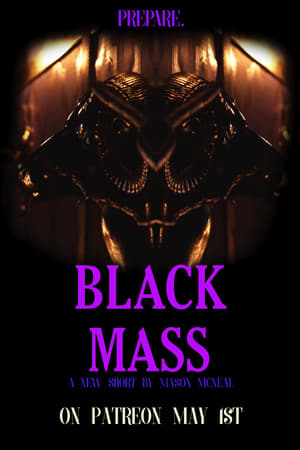
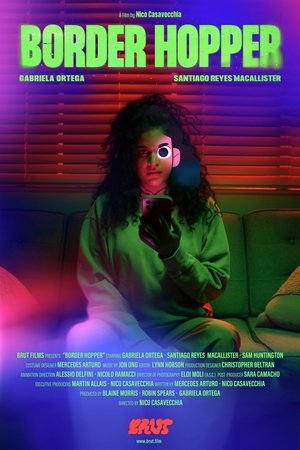
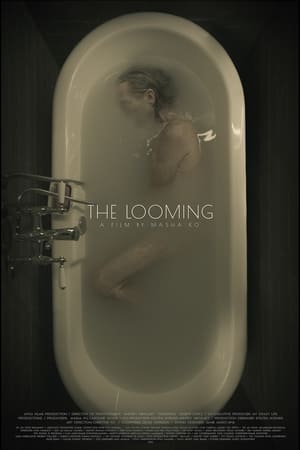
Strange experimental short film that follows four days of a writer.
Soon after getting married, couple Maya and Andi begin to experience eerie disturbances from unseen malevolent forces.
Margot enjoys life pleasures: eating, drinking, smoking, dressing in nice clothes. However, when her proposal for an advertising campaign is rejected, she becomes aware of how lonely she feels. Then Anna stands at her door. Anna was sent by the health insurance to make Margot lose weight. Every evening Anna prepares a healthy, light dinner for Margot. Margot is gradually overcomes her aversion towards Anna, who keeps her company during their dinners. A fine and fragile friendship develops. Yet, when Margot gains weight again, the insurance orders Anna to end the mission. At their last dinner, their friendship is put to the test and secrets are unveiled.
After a series of murders begin to happen at Gregory Hills school, a group of friends decide to investigate the bodies, thus beginning a great search for the truth and discovering the real killer.
A spiral of dreams and ages unravel as two celestial characters awaken and transmutate into a mythological being.
Having just lost her mother, Anna finds herself facing a nightmarish situation...a fur monster appears in her home. She will have to live with this strange being.
The Silhouette Soul, created for the Fearscreen 48 Hours Later Winter Challenge 2026, follows Kali as she slowly begins to lose herself, confronting a dark presence that may not be separate from her at all.
min krop, men mit hoved
A festival of digestion on many scales, from planetary to microbial.
The confluence of words and movement propels this multi-layered collaboration by Atlas, choreographer Douglas Dunn, and poets Anne Waldman and Reed Bye. Dunn's athletic choreography is performed to the rhythms, cadences, and associative meanings of the poets' "cascade of words," which function as music. Atlas introduces narrative references, ironically staging the dance in unexpected locations, including domestic interiors and vehicles. In a self-referential deconstruction that punctures the theatrical illusion, the poets are seen reading their texts and interacting as self-conscious performers within the dance. Atlas and his collaborators intersect the language of words with the language of the body.
A surreal meditation on chronic illness and anxiety, Prion follows a character's struggle with self-acceptance as their fears manifest in the form of a sickly, white deer.
Women’s voices rise to deliver testimonies of victims of sexual violence. By reconstructing a story with these fragments of experience, a societal portrait is painted throughout the documentary. Like a mosaic, the pieces stick together to build a unique story that could belong to any human.
Defiant 18-year-old Adela León pushes her father and an unbending headmistress to the limit in this delicious comedy.
The sisters struggle with their own bodies. One, driven by ambitions, seeks the limits of its possibilities, for the other, the body is a prison. One believes that ballet will save her from memories. The second observes the world from the balcony with such attention that she sees and hears more.
"Barriers" is a documentary in which three women over 60 and a group of young women participate in a game that exposes the prejudices surrounding sexuality in later life. Through these letters, the young women ask the older women about their intimate lives. This creates a space that sheds light on both the taboos and the discomfort that persist around the topic. A space open to silence and deep conversations. At the same time, we discover the stories that characterize these social figures.
An exploration of the interconnected experiences of queerness and illness, this film navigates personal and collective journeys through medical spaces, sexual violence, and survival, displays the profound impact on body and identity.
Writing a letter to Paul B. Preciado, trans philosopher and filmmaker, as one would write to a friend. Undertake a healing process as a queer child growing up in a Spanish evangelical family. From Lausanne to New York, Lézio Schiffke-Rodriguez follows in the footsteps of revolutions that invite us to redefine our vision of binary bodies.
A video work which reflects on the conflicting natures of gender, bodies, queerness, algorithms, glitches, and data.
Far from the dictates of current female beauty, MBMR focuses on these other bodies, those who take up space, those that stain, biters, those who devour, those who enjoy as they wish, those age and those who are self-transformed, those who are free and wild. Eight people will reveal the magic,cruel, sensuel, powerful relationship they have with their own bodies.The adventure of the film is multiple: the objective is to give voice and images to women whose body or sexuality is seen as non-standard, unseen or without speaking. The film will highlight possible resistance through an intimate portrait gallery, collective experimentations, tantra, exchange of fluids and knowledge, rituals… A strong political and feminist manifest about body politics, female sexuality and its representation, as well as about diversity and various forms of sexual desire.
Six extra-ordinary people from around the world reveal their bodies and share their secrets in a unique experiment in search of their inner selves.