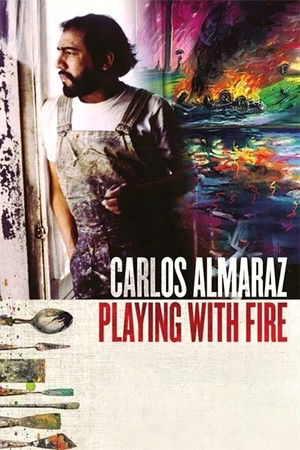
Mixing archival footage with interviews, this film celebrates one of Los Angeles's most influential painters and Chicano art activists from the 1970s.
Josef Váchal
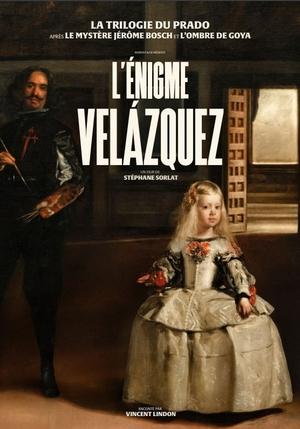
Diego Velásquez, painter of kings and commoners, master of the off-frame and mise-en-abyme, stands at the heart of a cinematic journey that challenges conventions. From the hypnotic depth of Las Meninas to the dizzying layers of meaning in The Spinners, The Vélasquez Mystery seeks to unravel a troubling question: how does this artist, admired by geniuses such as Manet and Dalí, remain so often on the margins of collective memory? Guided by the symbolic thread of water, a metaphor for movement and reflection, the film traverses centuries and continents, boldly blending historical narratives, contemporary interpretations, and reflections on the universal legacy of an unmatched master.
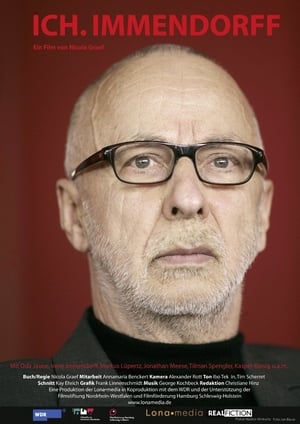
Documentary film about the painter and sculptor Jörg Immendorff who ranks among the most important German artists. The filmmakers accompanied Immendorff over a period of two years – until his death in May 2007. The artist had been living for nine years knowing that he was terminally ill with ALS. The film shows how Immendorff continued to work with unabated energy and how he tried not to let himself be restrained by his deteriorating health.
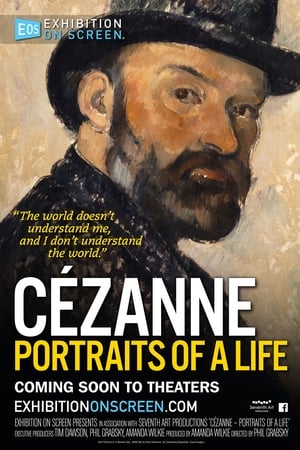
Dedicated to the portrait work of Paul Cézanne, the exhibition opens in Paris before traveling to London and Washington. One cannot appreciate 20th century art without understanding the significance and genius of Paul Cézanne. Filmed at the National Portrait Gallery in London, with additional interviews from experts and curators from MoMA in New York, National Gallery of Art in Washington DC, and Musée d’Orsay in Paris, and correspondence from the artist himself, the film takes audiences to the places Cézanne lived and worked and sheds light on an artist who is perhaps one of the least known and yet most important of all the Impressionists.
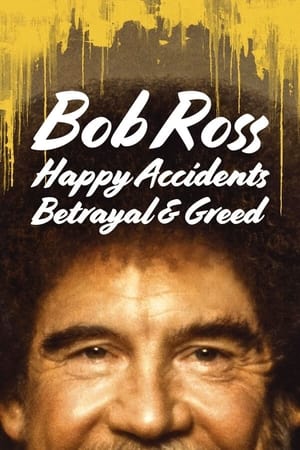
Bob Ross brought joy to millions as the world's most famous art instructor. But a battle for his business empire cast a shadow over his happy trees.
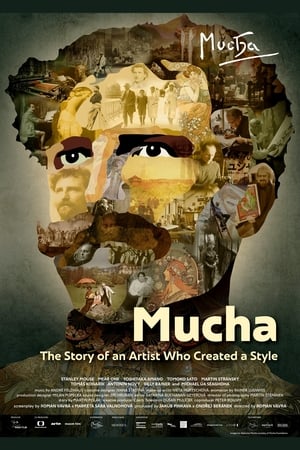
Czech painter and illustrator Alphonse Mucha (1860-1939) ranks among the pioneers of the Art Nouveau movement at the end of the 19th century. Virtually overnight, he becomes famous in Paris thanks to the posters that he designs to announce actress Sarah Bernhardt’s plays. But at the height of his fame, Mucha decides to leave Paris to realize his lifetime project.
Petr Brandl – malíř světla v době temna
Caspar David Friedrich – Der Gedankenmaler der Romantik
A lost chapter in black British film: extraordinary rushes from a documentary showcasing talented members of the black community.
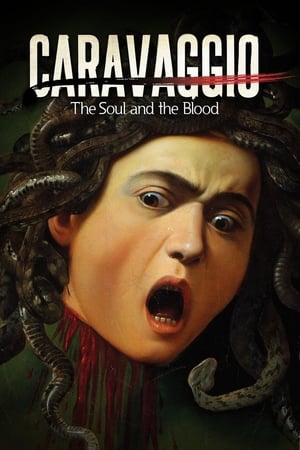
An exciting and unsettling cinematic journey through the life, work and torments of Caravaggio.
Bacon-Freud, face à face
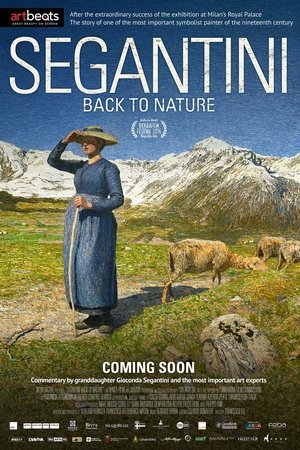
Giovanni Segantini rose from humble origins to become the most important of Italian pointillists, and one of the most important symbolist painters in the 19th century. This film focuses on his way of feeling nature as a source of artistic and spiritual inspiration.
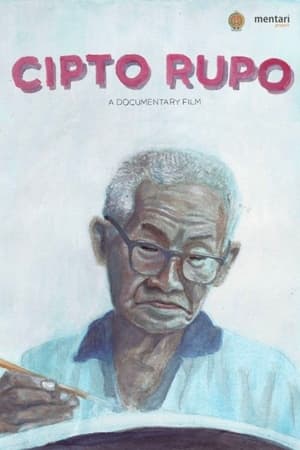
Tjipto Setiyono, 85, is a rickshaw painter. Despite being past his prime, he lives alone in a 3-by-3 meter square boarding room, in which Tjipto’s brush strokes give birth to his paintings.
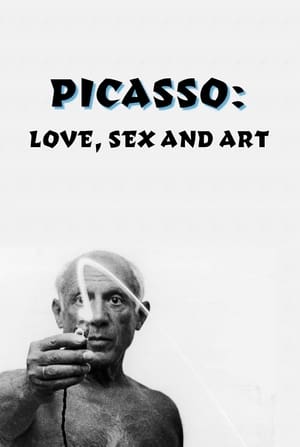
Documentary telling the story of the women who fed the life and art of Pablo Picasso, many of whom would find themselves damaged forever by the experience of being his partner.
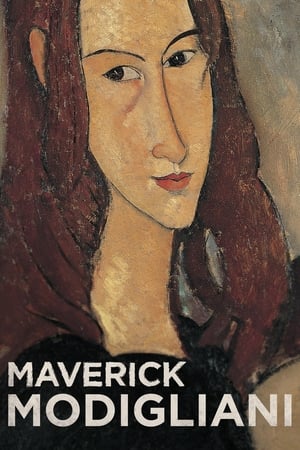
Born in Livorno, Tuscany, artist Amedeo Modigliani (1884–1920) lived a short, tormented life, narrated here from an original point of view, that of his young common-law wife, Jeanne Hébuterne.
The Greatest Painters of the World: Van Gogh
Romantic art was a response to the social upheavals of the 19th century, as shown by works by its emblematic painters Friedrich, Venetsianov and Delacroix.
He was always busy making the absolute painting, one of Jaap Hillenius' sons says about his father. The artist who was killed in a car accident in 1999 steadily built, averse to conventions and trends, an autonomous oeuvre, indefatigably looking for the ultimate beauty. In daily life, he did so too; the artist wore out a throng of girlfriends, although in a sense he stayed faithful to both his wife and his only muse. He did not have the time to be a real father. 'With my father in the train with a Nuts bar', is the best childhood memory his sons have of him. Kees Hin tries to get closer to this complex man, who imputed a profoundly melancholic soul to himself, like the writer Marcel Proust, whom he admired so deeply. In three films, that play on the screen alongside each other and alternately appear in the foreground, via interviews - with people like his wife, his muse and his sons - and archive footage, we get to know more about his daily (emotional) life, his work and ideas.
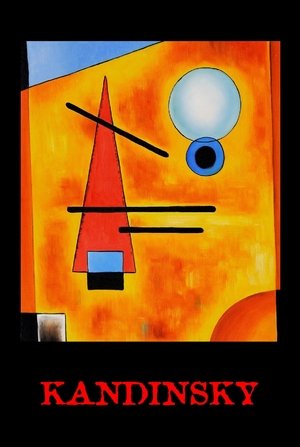
The Russian painter Wassily Kandinsky claimed, or has been credited with, the 'creation' of abstract art. At the core of this film is a dramatic recreation of Kandinsky's account of returning to his studio one dark evening, and being astonished by an unknown masterpiece of abstract art leaning against the easel - a picture which turned out to be one of his own landscapes fallen on its side. 'Now I knew for certain that the object spoiled my pictures.' While this film's narration does indeed emphasize the notion of an inspired breakthrough to Abstraction, the picture it conveys in more purely filmic ways is a rich and complex one.