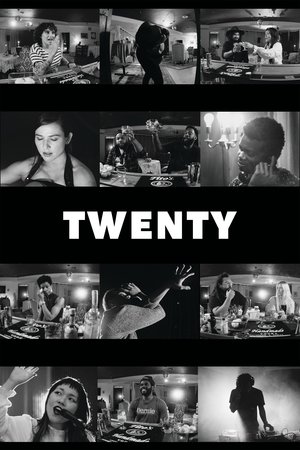
A documentary featuring 30 Argentinian women aged between 4 and 80, sharing their stories of resilience, strength, and unique perspectives on womanhood through performance art.
the film „mandà in lunga“ follows a journey from Val Poschiavo, a valley in the Italian-speaking part of the Swiss canton of Grisons, up to the highest point of the Morteratsch Glacier, the largest glacier in the Bernina Range. Shot entirely on 16mm film and edited in-camera, the film captures the changing landscapes and atmospheric shifts along the way. The journey is musically accompanied by the organ drones and violin sounds of Laura and Luzius Schuler.
Symphonic documentary exploring the Miami identity in six movements. It was performed and projected live by the New World Symphony, led by Michael Tilson Thomas on Feb 22, 2018. The film is made up of five separate and synchronized video channels, projected onto the walls of the New World Center concert hall, above a full symphony orchestra.
This short, started early on into sobriety, finished about nine months in, is a collage of diaries and notes, collected from within addiction and into recovery.
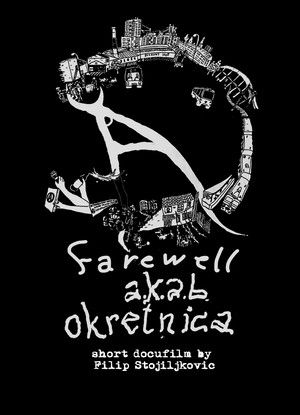
Experimental documentary that poetically exposes the reality of public transport in the city of Curitiba.
An experience of a camera swinging in different gestures facing the optical distortion of the Sun. The last appearance of the smudge.
Francesca Svampa’s dreamlike portrait of Barcelona, shot in double exposure on reversible 8mm film, is interwoven with Svampa’s intimate, reminiscent telling of her personal micro-memories, as a woman, filmmaker, and immigrant.
Quatre altitudes bosniaques is an exercise in topographic cinema shot in Bosnia-Herzegovina. The document draws on the geography of the city of Sarajevo, from which the filmmakers construct a visual ethnography fragmented into four levels of elevation.
Long before Kim Gordon was a cooler-than-thou multimedia artist in Body/Head, she was a cooler-than-thou multimedia artist in Sonic Youth. In the ’80s, Gordon and her bandmates were fixtures of New York’s downtown art and music scene; one regular haunt of theirs was legendary nightclub Danceteria, which served as the setting for a short film Gordon made sometime around 1985. Now, as Dangerous Minds points out, said video has surfaced online thanks to filmmaker/designer Chris Habib (a.k.a. Visitor Design). “Excellent video I found in my Sonic Youth archive,” Habib writes on the clip’s Vimeo page. “I digitized it for Kim during her [early 2000s] CLUB IN THE SHADOWS exhibition at Kenny Schachter’s old space in the West Village.”
Made in Japan, Last Room is both fiction and documentary. The occupants of the love-hotels and capsule-hotels tell their own intimate, dreamlike stories, interspersed with journeys through the archipelago's landscapes. Soon, these personal stories resonate with a collective history: that of Gunkanjima, the abandoned ghost island of Nagasaki, and then that of Japan as a whole.
Drawing on a wealth of unseen archival material and unpublished notebooks, the film weaves a complex and personal portrait of Margaret’s life, from the perspective of a fellow artist sensitive to the potential Margaret envisaged for film as a poetic medium.
The "bleared eyes of blue glass" in the title of this experimental short expand on a verbal image from Virginia Woolf's novel The Waves, considered the most experimental among the 20th-century British writer's literary works, from which the young filmmaker took inspiration for his film, borrowing passages and visions to explain his own understanding of what cinema is. A film that plays with water - precisely - and light, and yet in a very dark b&w lit up by rare flashes of colour, making a journey in the night in which the shadow of a man gradually acquires substance.
Believing he was sacked unjustly from his job as an engineer in a big Japanese corporation, Tanaka Tetsuro has protested outside the company gate every morning for 25 years. Is he an obsessive? Why does he do this? After meeting him on the Internet the filmmakers travel to Japan in time for the 25th anniversary of his protest. They discover that in a world that places a premium on conformity, Tanaka-san has found a way to become himself.
Documentary filmed on the occasion of the “2003, Odyssey in Space Zero” operation inside the Spazio Zero Theater in Rome. The document, filmed between 21 October and 30 November 2003, recounts the representation of Fotofinish not as a single and continuous work, but as the evolution over time of the moods and movements of the actors who, replica after replica, have developed an awareness of the space and arrived at the joy of staging.
A tactile exploration of the inherent duality of violence and sensuality in nature.
Somewhere in the dreary zones of Mumbai's film industry, stuck between star-cult, superstition and the daily gridlock, Camera Threat explores the ambivalent, and sometimes paranoid relationship that this film city has with the moving image itself. Seated on a casting couch, two actors are getting trapped in their impromptu conversations on the unwanted side effects of a world that no longer bothers to tell facts from fiction. An expanded multi-genre film within the constraints of the so-called Masala Formula popularly known from Indian cinema.
A spectral first-person journey through Los Angeles layers the city across itself as our guide disassociates, giving way to an abstracted daytime ghost story following a woman's splitting of self and perception. ANGEL PROJECT continues.
"In the final format for MAGELLAN, Frampton had planned to disassemble these two films into twenty-four 'encounters with death' that were to be shown in five-minute segments twice a month. In their present state, seen together and roughly the length of an average feature film, the two parts of MAGELLAN: AT THE GATES OF DEATH constitute perhaps the most gripping, monumental, and wrenching work ever executed on film...Frampton in 1971 began his filming of cedavers at the Gross Anatomy Lab at the University of Pittsburgh. He returned to the lab four times over the course of the next two years and then spent nine months assembling his 'forbidden imagery' into an extraordinary meditation upon death."–Bruce Jenkins
memory file 01
Sara and Alberto spend their days at home. They look out the window and watch: spring is approaching and the sun is setting later and later. Alberto entertains himself by playing with the light, the shadows and the nooks and crannies they leave on the living room. Sara goes out on the balcony in the evenings and examines the neighborhood with her camera. When they are in bed, they talk about what worries them. About job expectations. About being creative and why keep trying, if someone else has done it before you. About living in confinement, but at the same time, realizing that things haven't changed as much as they seem.