How has teleworking changed our professional environment and our lives? By taking a close interest in this phenomenon, the documentary looks with humor and intelligence at the origins, effects, successes and certain imponderables of remote work.
“To me films are an imaginary world where emotion comes into play.” YOO Teo traveled to Belgium to make his movie but he ended up being locked down due to COVID-19. This film is about his 15-days of quarantine in Antwerp Hotel fighting for his movie and loneliness. He also depicted his most personal story. This is the debut film of YOO Teo both as the star and the director.
One of the most powerful video documentaries of our time boldly reveals the modern medical-industrial complex’s dire descent into utter corruption. HIV/AID$ - A deadly and dangerous DECEPTION! This feature-length expose explains exactly how the 300-Billion-dollar AID$ fraud began, why HIV can NOT be the cause of AIDS, what the real causes could be, and who manipulates the public’s good intentions while poisoning hundreds of thousands with toxic drugs that cause the very disease they are supposed to prevent.
As a decades-old state-run aeronautics munitions factory in downtown Chengdu, China is being torn down for the construction of the titular luxury apartment complex, director Jia Zhangke interviews various people affiliated with it about their experiences.
‘Voices from the Shadows’ shows the brave and sometimes heartrending stories of five ME patients and their carers, along with input from Dr Nigel Speight, Prof Leonard Jason and Prof Malcolm Hooper. These were filmed and edited between 2009 and 2011, by the brother and mother of an ME patient in the UK. It shows the devastating consequences that occur when patients are disbelieved and the illness is misunderstood. Severe and lasting relapse occurs when patients are given inappropriate psychological or behavioural management: management that ignores the severe amplification of symptoms that can be caused by increased physical or mental activity or exposure to stimuli, and by further infections. A belief in behavioural and psychological causes, particularly when ME becomes very severe and chronic, following mismanagement, is still taught to medical students and healthcare professionals in the UK. As a consequence, situations similar to those shown in the film continue to occur.
In the 19th century, China held the monopoly on tea, which was dear and fashionable in the West, and the British Empire exchanged poppies, produced in its Indian colonies and transformed into opium, for Chinese tea. Inundated by the drugs, China was forced to open up its market, and the British consolidated their commercial dominance. In 1839, the Middle Empire introduced prohibition. The Opium War was declared… Great Britain emerged as the winner, but the warning was heeded: it could no longer depend on Chinese tea. The only alternative possible was to produce its own tea. The East India Company therefore entrusted one man with finding the secrets of the precious beverage. His mission was to develop the first plantations in Britain’s Indian colonies. This latter-day James Bond was called Robert Fortune – a botanist. After overcoming innumerable ordeals in the heart of imperial China, he brought back the plants and techniques that gave rise to Darjeeling tea.
Nemoc z nemytých rukou
The Tea Explorer documentary follows the journey of tea enthusiast Jeff Fuchs along the Tea Horse Road, a 1300-year-old trade route in the Himalayas. It combines the author's passion for both tea and mountains, tracing the route's history, meeting the people who live along it, and exploring the significance of tea in the region.
On March 26th, 2020, seven boys locked themselves in a house for 48 hours, with only potatoes, bread, and red light for survival. Watch the chaos unfold and tension rise between the comrades as they struggle to find a cure before it's too late.
In China, there exists an astonishing place. A burial ground to rival Egypt’s Valley of the Kings, where pyramid tombs of stupendous size are full of astonishing riches. In 221 BC, China's first Emperor united warring kingdoms into a nation that still exists today. To memorialise this achievement, he bankrupted the national treasury and oppressed thousands of workers to build one of the world’s biggest mortuary complexes. China's second dynasty, the Han, inherited the daunting challenge of building larger tombs to command respect and establish their right to rule without running the nation into the ground. Although no Han emperor's tomb has been opened, the tombs of lesser Han aristocrats have revealed astonishing things: complete underground palaces (including kitchens and toilets) and at least one corpse so amazingly well-preserved some believe Han tomb-builders knew how to "engineer immortality".
The city of Ordos, in the middle of China, was build for a million people yet remains completely empty. Ordos is not so much a place but a symbol of babylonic hype. But nothing will change - as long as people believe.
A representation of queer and feminist imagery that was mainly shot in the Qinghai-Tibetan Plateau, remote and developing areas in southwest China, and metropolitan cities like Beijing from 2000 to 2004 to document the social changes in contemporary China. The director sympathetically and erotically represents a variety of women, including women as laborers, women as prayers, women in the ground, women in marriage, and women who lie on the funeral pyre with their dead husbands. Her camera juxtaposes the mountains and rivers in old times, the commercialized handicrafts as exposition, the capital exploitation of the elders’ living space, and the erotic freedom of the young people in a changing city.
The film uses a documentary approach to tell the stories of 12 Chinese pioneers, chosen from the fields of business and the arts. The protagonists reflect upon their life journeys against the backdrop of modern China.
Hacking at Leaves documents artist and hazmat-suit aficionado Johannes Grenzfurthner as he attempts to come to terms with the United States' colonial past, Navajo tribal history, and the hacker movement. The story hones in on a small tinker space in Durango, Colorado, that made significant contributions to worldwide COVID relief efforts. But things go awry when Uncle Sam interferes with the film's production.
Draussen bleiben
69, année pandémique
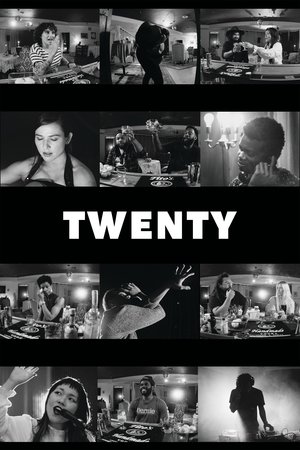
In 2020, the World was closed. Life got cancelled. People were struggling. Here’s an emotional and entertaining true story shot live, during the pandemic, about courageous people who came together, despite the risk, to share their love with one another. The film opens in Times Square on NYE 2020. Everything seemed right with the World. Fast-forward six months into the pandemic, hundreds of artists from all different performance art genres are invited to come together over the course of several consecutive days, culminating in a group costume parade event on 10/10/2020 to witness the only live performances happening ANYWHERE. The goal was to lift each other's spirits during the 2020 Covid-19 pandemic. There were over a dozen genres represented including acrobatics, live music, magic, dance, and even a wedding. Dozens of unscripted live interviews were recorded and the event proved a huge success. The film captures the rawness of what it was like living during this unprecedented time.
How do you reconcile a commitment to non-violence when faced with violence? Why do the poor often seem happier than the rich? Must a society lose its traditions in order to move into the future? These are some of the questions posed to His Holiness the Dalai Lama by filmmaker and explorer Rick Ray. Ray examines some of the fundamental questions of our time by weaving together observations from his own journeys throughout India and the Middle East, and the wisdom of an extraordinary spiritual leader. This is his story, as told and filmed by Rick Ray during a private visit to his monastery in Dharamsala, India over the course of several months. Also included is rare historical footage as well as footage supplied by individuals who at great personal risk, filmed with hidden cameras within Tibet.
Undercover in Tibet reveals the regime of terror which dominates daily life and makes freedom of expression an impossibility. Tash meets victims of arbitrary arrests, detention, torture and ‘disappearances’ and uncovers evidence of enforced sterilizations on ethnic Tibetan women. He sees for himself the impact of the enormous military and police presence in the region, the hunger and hardship being endured by many Tibetans and hears warnings of the uprising taking place across the provinces now.
March 2020. Fabrizio, a photographer and filmmaker who lives in Luxembourg, returns to his family in central Italy after his father has suffered a heart attack. It’s the beginning of the pandemic, the country is in lockdown. An intimate diary and an ode to filial love in the face of the most trying circumstances a son can face. A tale of the soul and personal hardship in the context of a broader collective tragedy.