Ozymandias recites Percy Bysshe Shelley's poem of the same name. Selected AI-generated images and text-to-speech narration - with their vutlure-like generative methods, and already rapidly-dating aesthetics - are placed in parallel to the poem's explorations of legacy, decay, futility, and the future.
Poems by some of the greatest writers of all time are brought to life through lyrical animation and readings by some of today’s most respected performers.
For the multimedia exhibition Tangenten I (Tangents I), Dammbeck and co-organizer, sculptor and painter Frieder Heinze had planned to collaborate on a film that would combine non-camera animation with 35mm footage of a train ride between the two Dresden districts of Radebeul and Pieschen. When the exhibition was banned in 1978, Heinze turned to other projects, but Dammbeck continued working on the film by himself. Metamorphoses I—the first experimental film ever to be shown publicly in East Germany—marks the filmic beginning of Dammbeck’s long-term art project the Herakles-Konzept (Hercules Concept).
An experimental visual poem combining film, animation, photography, and archival footage inviting people to occupy the Black Body and examine the lived Black experience for a brief moment.
Rubén tries to describe the color blue as "The color of dreams, of art, of the ocean and of the firmament", thereby unleashing half a century of poetry.
Reynivellir is a representation of the transit that is generated when approaching the art work, described with visual games that can well be evoked by the same brain when witnessing the impossible figures of Jose María Yturralde. Reynivellir is also a beach in a country that is a musical sonnet, and this is so because the mental image does not always connect the articulated parts of a sensation, it is systematic, but aleatory, and it is from these notions of the field of observation, that it approaches and moves away from understanding, linking and unlinking forms, movements, sounds, sensations and knowledge.
He stood, in pain, near the rope, in tears, while his creator hung.
Colourful lines and geometric figures move and change to the notes of a disjointed Wilhelmus [Dutch national anthem]. As the film progresses the disjointed music finds its way back to the original and flowing performance of the national anthem. The colours and figures move simultaneously into the shape and the tricolour of the Dutch flag.
The Hypergaussian Wars is an AI-generated feature-length audiovisual work exploring algorithmic warfare, obsolete media and the transformation of images through repetition, saturation and collapse. Built from thousands of generated images, synthetic landscapes and references to 14th–16th century painting, the film stages a continuous conflict between historical visual culture and contemporary computational systems. Fragments of obsolete video games, ruined architectures, military simulations and post-human figures circulate through increasingly unstable environments. Rather than telling a linear story, the film operates as an image system in which visual excess progressively erodes meaning. The Hypergaussian Wars reflects on memory, obsolescence, artificial intelligence and the persistence of images after their original function has disappeared.
Ego Sum Petrus
Loose impressionistic brushstrokes sketch a series of portraits of two faces, one male and one female, while the verse on the soundtrack tells the tale of both one and a thousand relationships.
A spring night is a poetic film which is based on the motives of the poem by V. Lugovsky. The film is devoted to the theme of fidelity to the battle traditions of revolutionary past, to the theme of human happiness the sense of it in the battle for high ideals.
Animation inspired by the poem “The Infinite” by Giacomo Leopardi.
Mancha de una vida
This isn’t a film. It’s a leaked ritual. Somewhere between analog prayer and digital disease, a collection of gestures tried to become human again. They failed. Children orbit the fence like insects around an electric hymn. A figure holds a violin but never plays — his silence is louder than the sound. The man in the branches hasn’t fallen in years. The killer appears, or doesn’t — but you’ll feel him beneath the cuts, mouthing things you’ll wish you didn’t understand. There are bodies, sometimes clothed in flesh, sometimes not. There is scripture, mangled and reversed — not to mock it, but to unlock it. The voice speaks, but only when you stop listening. This is the place where lost footage remembers you. Where noise prays back. CHOKE ECHO was compiled under duress by 0xHamza in 2025 using material never meant to be rearranged. Watch it if you must — but it will keep watching after you close the tab.
Marcel, your mother is calling you
An animated poem about a dog, her human, and the consequences of a nasty habit.
Dozens of film enthusiasts come together to intervene and recreate already filmed in s8
X-ray images were invented in 1895, the same year in which the Lumière brothers presented their respective invention in what today is considered to be the first cinema screening. Thus, both cinema and radiography fall within the scopic regime inaugurated by modernity. The use of X-rays on two sculptures from the Bilbao Fine Arts Museum generates images that reveal certain elements of them that would otherwise be invisible to our eyes. These images, despite being generally created for technical or scientific purposes, seem to produce a certain form of 'photogénie': they lend the radiographed objects a new appearance that lies somewhere between the material and the ethereal, endowing them with a vaporous and spectral quality. It is not by chance that physics and phantasmagoria share the term 'spectrum' in their vocabulary.
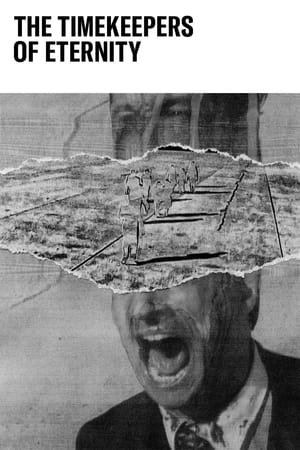
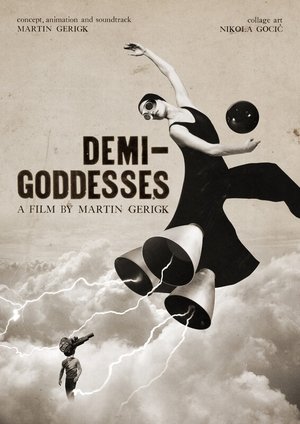
In a gargantuan city lurking in the sky, powerful immortals who have become jaded with eternal life. Most of their time is spent monotonously constructing bizarre and unusual objects while waiting for the ultimate gift to arrive.