Over the years, Raul Ries, a military veteran (US Marine Corps) has reached out to those who are serving or have served in our armed forces. He has spoken to countless men and women from various theaters of military conflict, after their return home. In 2006, 40 years after fighting in the jungles of Vietnam, Ries experienced flashbacks for the first time. Subsequently, he found three of the men closest to him, who fought alongside of him in the Marine Corps unit ALPHA 1/7, and have suffered the consequences. Together again, they are taking the hill and finding healing.
A Marine officer reported as killed in Vietnam, but who was actually a POW, returns home. Instead of being welcomed home, however, he discovers that his father has died, his wife has remarried, his daughter has been adopted, his business has been sold, and his life has completely changed.
Since the renewed Intifada began in 2000, there have been over 75 Palestinian suicide bombings. This is the story of 0ne-the bombing of bus 32 in Jerusalem in June 2002. The film connects the stories of a group of ordinary Israelis-Jews and Arabs. Each of them holds a clue to someone who died that day.
Bobby served in the United States Army for 10 years in a Criminal Investigation Division (CID) unit. During that time, he was deployed once to Iraq in September 2006, where he developed PTSD.
Bafta-winning drama. Following difficulties with her parents, teenager Gemma Brogan leaves home. She falls under the spell of a young woman who introduce her to the world of alternative youth culture and drugs. Initially her new life seems glamorous and exciting but she soon discovers its dark side as she slides uncontrollably into heroin addiction.
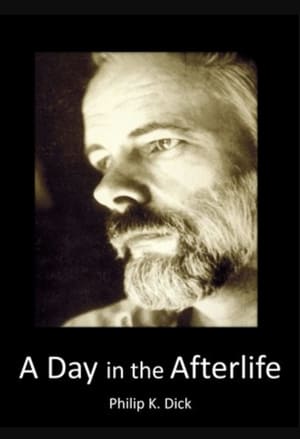
A poetic look at the life and legacy of legendary author Philip K. Dick (1928-1982), who wrote over a hundred short stories and 44 novels of mind-bending sci-fi, exploring themes of authority, drugs, theology, mental illness and much more.
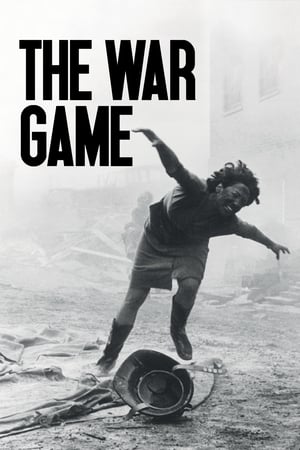
A docudrama depicting a hypothetical nuclear attack on Britain. After backing the film's development, the BBC refused to air it, publicly stating "the effect of the film has been judged by the BBC to be too horrifying for the medium of broadcasting." It debuted in theaters in 1966 and went on to great acclaim, but remained unseen on British television until 1985.
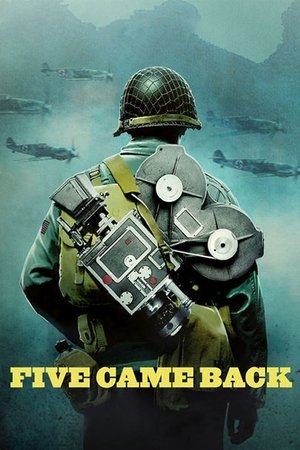
With suicide rates among active military servicemen and veterans currently on the rise, this documentary brings urgent attention to the invisible wounds of war. Drawing on personal stories of American soldiers whose lives and psyches were torn asunder by the horrors of battle and PTSD, the documentary chronicles the lingering effects of combat stress and post-traumatic stress on military personnel and their families throughout American history, from the Civil War through today's conflicts in Iraq and Afghanistan.
The lastest neuroscience discoveries show surprising results: false memories, distortion, modification, déjà vus. Our memory is affected in many ways, and deceives us every day. The very fact of recalling souvenirs modifies them. The everyday consequences are manyfold. To what extent can we rely on our souvenirs? How much credit can we give them during trials? Even more shocking, scientists have proved to be able to manipulate our memory: creating artificial souvenirs, deleting, emphasizing or restoring them on demand.
Raised by a man leading a monstrous double life, the daughter of the BTK serial killer shares her chilling story.
This film tells (using modern day interviews and archival footage and sound tapes) the story of how in 1967, while his band The Beach Boys triumphantly toured abroad, Brian Wilson was trying to push the boundaries of conventional pop music with a new follow-up to the Beach Boys' cutting-edge mega-hit, Pet Sounds. The new album was to be called "SMiLE". SMiLE pushed the envelope both musically and lyrically, and was supposed to out-do the Beatles' Sgt. Pepper record. But Brian wasn't able to sell the project to his band-mates when they returned. The project was shelved and Wilson's well-documented decline into depression, drug abuse, recluseness, and obesity had begun. Thirty-odd years later, Wilson announced that in 2004, SMiLE would be performed live in its entirety in London. This film tells the story of a damaged but healing artist bringing his greatest work to light.
The Inglewood Police Department's 1960s video, "LSD: Trip or Trap?" is a classic of the genre. Alex sez, "It's a story of two friends who enjoy flying model planes, except that one becomes an 'acidhead' so he can be 'groovy' with the other acidheads. The other does research into LSD and decides it's a 'bummer'."
OBAIDA, a short film by Matthew Cassel, explores a Palestinian child’s experience of Israeli military arrest. Each year, some 700 Palestinian children undergo military detention in a system where ill-treatment is widespread and institutionalized. For these young detainees, few rights are guaranteed, even on paper. After release, the experience of detention continues to shape and mark former child prisoners’ path forward.
October 7, 2023: Hamas terrorists attack Israel, murder and take hostages. Israel reacts with severity. The goal: the destruction of Hamas. But with the war in Gaza, Israel is awakening the great trauma of the Palestinians: the expulsion of 1948. How can the lack of empathy on both sides be explained?
Helke Sander interviews multiple German women who were raped in Berlin by Soviet soldiers in May 1945. Most women never spoke of their experience to anyone, due largely to the shame attached to rape in German culture at that time.
The Director reflects upon and seeks to understand the causes and the events that lead to her drug-addicted prostitute daughter being murdered at the age of 26.
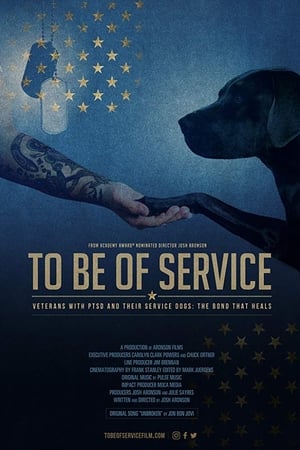
A documentary film about veterans with PTSD who find that, after other treatments fall short, a service dog helps them return to an independent feeling life.
In Iraq 2003 Corporal Martin Webster filmed fellow soldiers beating Iraqi youths during rioting in Al Amara. Two years later, a British newspaper obtained his footage. The story that ran led to outrage across the world.
The war on drugs has been going on for more than three decades. Today, nearly 500,000 Americans are imprisoned on drug charges. In 1980 the number was 50,000. Last year $40 billion in taxpayer dollars were spent in fighting the war on drugs. As a result of the incarceration obsession, the United States operates the largest prison system on the planet. Today, 89 percent of police departments have paramilitary units, and 46 percent have been trained by active duty armed forces. The most common use of paramilitary units is serving drug-related search warrants, which usually involve no-knock entries into private homes.
Lucy is eleven years old. Having been neglected by her estranged mother and father, she is placed in a children's home. Through her eyes, we follow her struggle to cope with the system; her only saving being her self-belief and certainty that she is being watched over and protected by the holy spirit.