Documentary tells the story of the Chilean football club Colo-Colo, exploring its profound impact on popular culture and the everyday lives of its fans. Throughout the film, it shows how the club has transcended sport to become a symbol of resistance, pride, and class struggle in Chile.
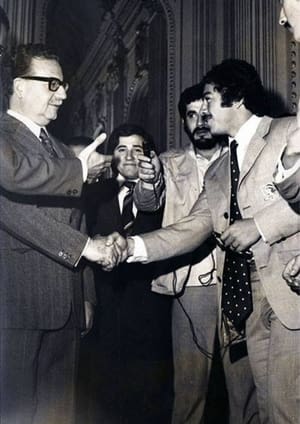
Just when Chile was experiencing the last months of the Popular Unity of President Salvador Allende, Colo Colo - the most popular team in Chilean soccer - faced the 1973 Copa Libertadores de América. This benchmark led by footballers Carlos Caszely, Francisco "Chamaco" Valdés and coach Luis "Zorro" Álamos, not only managed to play the final of this competition against Independiente of Argentina, but also, its brilliant game, dynamics and drive popular turned it into the necessary balm for the fans, at a time when the Chilean political and social situation became extremely acute. Thirty-four years later, the protagonists of Colo Colo 73 relive this Copa Libertadores campaign.
The story of Colo Colo 1991, champion of the Copa Libertadores de América, in the voice of its protagonists.
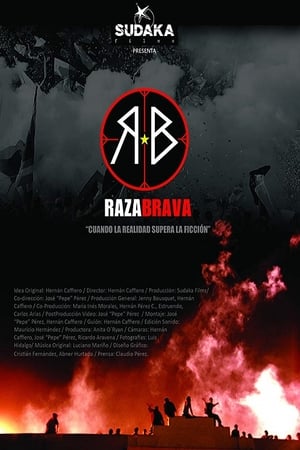
Raza Brava
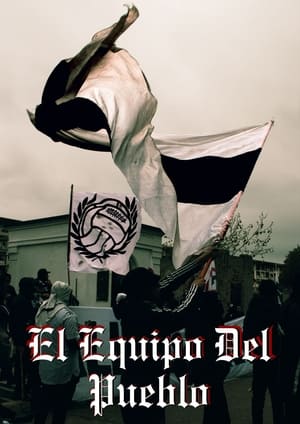
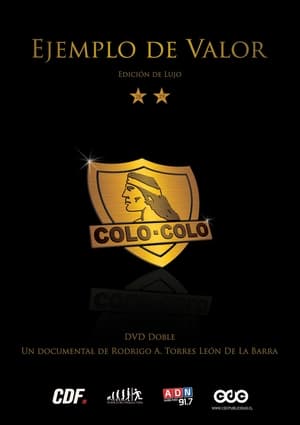
Documentary that explores the history of the Colo-Colo Social and Sports Club, and not only highlights the socio-political significance of Colo-Colo at a national level but also debunks the myth surrounding the relationship between Pinochet and Colo-Colo. It dispels the belief that the former dictator provided funds for the construction of the Estadio Monumental.
Campaign of Colo Colo champion of the 1991 Copa Libertadores narrated by its players and fans
Colo Colo went bankrupt in 2002 and its players will once again remember everything that was that season that will remain in history.
Stories of some idols of the Colo Colo Social and Sports Club
Documentary about the recovery process of the Colo Colo social and sports club, a process in which young people grouped in branches, artists and members of the club decide to organize themselves in order to rescue the memory of the futbol team.
Unpublished images of Colo-colo in the 2008-2009 seasons, intensely experiencing the institutional crisis that the club suffered after Claudio Borghi's brilliant campaign.
An allegorical documentary about the workers of the world, whose common destinies and hopes for peace are symbolically united by the rivers that run through their respective lands. The film was shot on the Volga, the Mississippi, the Nile, the Yangtze, the Amazon and the Ganges and combines these images of five continents with the music of Dmitri Shostakovich and the poetry of both Bertolt Brecht and Paul Robeson.
Compilation of images by cameraman William Gericke (credited as producer and cinematographer), who for 50 years traveled around Brazil and recorded some rare images of the country's history in the 20th century.
This documentary by director Claire Billet and historian Christophe Lafaye details the massive and systematic use of chemical weapons during the Algerian War. Algerian fighters and civilians, sheltering in caves, were gassed by "special weapons sections" of the French army. The gas identified on military documents is CN2D, whose widespread use forced insurgents to flee "treated" sites, at the risk of dying there. The method is reminiscent of the "enfumades" used by the French expeditionary force during the conquest of Algeria in the 19th century. Between 8,000 and 10,000 such operations are believed to have taken place on Algerian soil between 1956 and 1962. This historical aspect is little known due to the difficulty of accessing archives, many of which are still classified, raising questions about memory, historical truth, and justice.
Filmed in Cordoba, Granada, Seville, and Toledo, this documentary retraces the 800-year period in medieval Spain when Muslims, Christians, and Jews forged a common cultural identity that frequently transcended their religious differences, revealing what made this rare and fruitful collaboration possible, and what ultimately tore it apart.
Whales have long been a profound mystery to us. They live in a world so removed from our own that we can barely imagine their lives. Their environment is different, their senses are different, their relationships are different. How might such almost alien creatures see the world?
The departure point for this film is a series of notebooks created during the Greek civil war of 1946-49 and first discovered years later, under an olive tree. Inside their pages, diary-like, deported women recount their experiences in Greek concentration camps. Many of them were active in the resistance under Nazi occupation. Actress Olympia Dukakis, who serves as the film’s narrator, was also the individual who originally called director Toska’s attention to the unique documents.
From the Barents Sea, a chill wind seems to blow constantly across a semi-deserted town at the edge of the world. Nevertheless, a little community holds out here. In a flawlessly filmed portrait of this extraordinary place, the theme linking the residents is their determination to chart their own course. Bardak was a marine, but his garrison broke up and his comrades sought a better life elsewhere. He stayed behind among the many empty buildings that are slowly but surely being consumed by the elements. Meanwhile, Dima, a young poacher, flouts as many rules as he can, but gives friendly directions to lost tourists and reads lovingly to his little daughter. Ferryman Alexander is locked in a silent generational battle with his teenage daughter Masha; her eyes are on the outside world. Further along, a little team of ships from the Second World War turns up, and a woman steadfastly runs a weather station.
Abrindo o Armário dives into the process of liberation and conquests of the gay movement in Brazil. Through interviews, archival images and artistic performances, the film shows how homosexuals from different generations faced resistance, conquered spaces and fought for the right to construct a political, social and collective identity.
Full-length documentary about the mystery of the hands of Che Guevara, Victor Jara and Juan Peron. What happened, what is hidden, what is known, what is unknown, and what about it’s the symbolic effects.
With the most tech startups and venture capital per capita in the world, Israel has long been hailed as The Startup Nation. WIRED’s feature-length documentary looks beyond Tel Aviv’s vibrant, liberal tech epicenter to the wider Holy Land region – the Palestinian territories, where a parallel Startup Nation story is emerging in East Jerusalem, Nazareth, Ramallah and other parts of the West Bank, as well as in the Israeli cybersecurity hub of Be’er Sheva. And we will learn how the fertile innovation ecosystem of Silicon Wadi has evolved as a result of its unique political, geographical and cultural situation and explore the future challenges – and solutions – these nations are facing.