In 1944 Lye moved to New York City, initially to direct for the documentary newsreel The March of Time. He settled in the West Village, where he mixed with artists who later became the Abstract Expressionists, encouraged New York’s emerging filmmakers such as Francis Lee, taught with Hans Richter, and assisted Ian Hugo on Bells of Atlantis. Color Cry was based on a development of the “rayogram” or “shadow cast” process, using fabrics as stencils, with the images synchronized to a haunting blues song by Sonny Terry, which Lye imagined to be the anguished cry of a runaway slave. —Harvard Film Archive
Christine Vachon’s story of a man haunted by the grotesque memory of having stepped on a dead animal's carcass is an artistic tour de force starring Michael Sean Edwards (the voice of Richard Carpenter in Todd Haynes’ Superstar) and a young Steve Buscemi.
Errape
Commissioned by the Exploratorium in San Francisco, Paul Clipson's five-part COMPOUND EYES cycle delves into the otherworldliness of the natural world. In training his Super-8 camera on insects and other "minor" invertebrates, Clipson draws the eye into an unseen realm, one so delicate as to simultaneously tempt and refuse the touch. Following the surrealist desire to make the familiar strange and the strange familiar, Clipson relates this micro-landscape to the built environment. Electronic musical motifs supplied by frequent Clipson collaborator Jefre Cantu-Ledesma add another layer of inquiry, one tuned to the unspoken space between wonder and terror. This first entry in the series keys the viewer's vision to a single drop of dew on a blade of glass. Wisps of eyelashes, dandelions and insect limbs seem to brush against the lens in a trembling intimation of seeing.
In Untitled (Pink Dot), Murata transforms footage from the Sylvester Stallone film First Blood (1982) into a morass of seething electronic abstraction. Subjected to Murata's meticulous digital reprocessing, the action scenes decompose and are subsumed into an almost palpable, cascading digital sludge, presided over by a hypnotically pulsating pink dot.
Cosmic horror explores the elements and matter of so-called inanimate nature, which become actors and form a new ecosystem. A stream of depictions of fluid materials embedded into each other is accompanied by an unsettling soundtrack that reinforces the uncertainty of whether we are watching a cosmogonic or eschatological vision.
Cinematic icons collide in the fake medieval alleyways of Barcelona.
Short film by Juliet Berto.
Filmed over five years across varied sites, Devereaux gives quiet attention to the shifting sensations of place. From rain and snow to beaches, mountains, and city streets, the film traces environments in contrast: rural and urban, water and land, summer and winter. These images, held in long takes, resist narrative flow, instead assembling a meditation on how landscapes provoke moods, memories, and ideas.
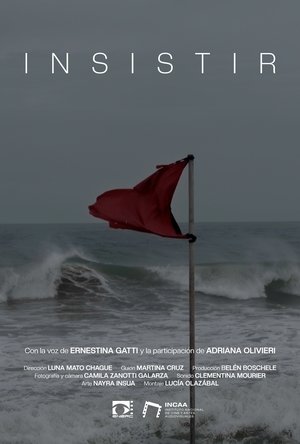
During the 2021 lockdown, I directed this short film as an intimate visual diary: a tribute to dance, music, and the queer desire to be seen. Inspired by Andy Warhol’s workshop spirit, the shoot became a stage where we played at being our own celebrities, exploring difference as affirmation. Three years later, this piece returns with a new voice-over—an echo of that creature who, even today, insists: “I am a star.”
Shot in a series of long-takes over several days, the film follows a flower shop attendant (played by Devereaux, then actually employed at a small flower shop by the beach) in fragmented detail. The order of scenes resists chronology: moments recur, shift, or vanish, creating not the passage of a single day but the jumble of many, refracted into a meditation on routine and its quiet abstractions.
ADN
Standing shots of different sad gravestones depicting the hopelessness of life.
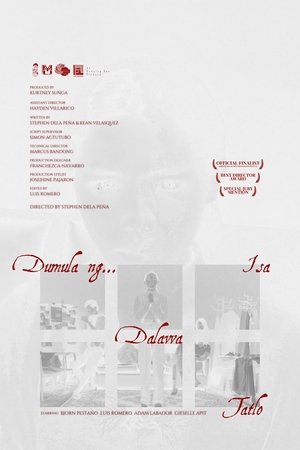
Why wouldn't you? Is there any reason not to? We've got so much at our disposal, so, why don't you? Won't you tell me? Won't you please tell me? To have you down is simply unacceptable. Just look at this; or this; at all these hallmarks to guide you and convey to you the prime ways to feel lovely. Just follow them and you'll be set. So, I ask you again... Don't you feel lovely today?
He's hungry, and chances are you're also hungry, so tag along. Who knows, you might learn a thing or two.
Short experimental computer animation by Jules Engel
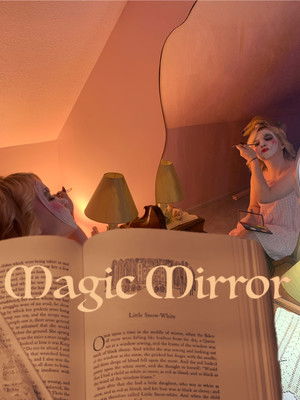
A poem told through Rebecca, the American Girl Doll.
In this poignant animated short, a film student navigates the shockwaves of hidden trauma and PTSD on a night out with friends.
Shot in downtown Minneapolis, Rush Light assembles a rapid montage of fleeting street compositions. Through quick cuts and sudden shifts, Devereaux creates a collage of ready-made visual moments—buildings, signs, shadows, and chance alignments glimpsed in passing. The film operates as both a study of three-dimensional space and a meditation on the eye’s ability to seize upon images in a split second. Color, light, and shadow flicker across the frame, transforming the city into a shifting field of accidental design.
A ritual of grids, reflections and chasms; a complete state of entropy; a space that devours itself; a vertigo that destroys the gravity of the Earth; a trap that captures us inside the voids of the screen of light: «That blank arena wherein converge at once the hundred spaces» (Hollis Frampton).