Between the end of the Second World War and the abolition of the "offence of homosexuality" in 1982, 10,000 sentences were handed down in France. Sentences in correctional courts, fines and sometimes imprisonment, the convictions were mainly against men. The last witnesses of this period speak out and tell of four decades of clandestine life, just before the tragedy of AIDS.
Oppenheimer, la véritable histoire de la bombe atomique.
On January 20, 1981, 52 members of the U.S. Embassy in Tehran were released after 444 days of captivity. Told by those who lived through it, a crisis that traumatized America and upset the political balance in the Middle East.
For eight centuries, between the 9th and 1st century BC, the Etruscans, inhabitants of the Italian peninsula, were one of the most powerful peoples of the Mediterranean basin, and when they disappeared they left behind impressive necropolises, vestiges of sanctuaries and even entire cities. How did they attain such power? How far did they extend their dominion and influence? What were the causes of their decline?
What happened after Einstein fled Nazi Germany? Using archival footage and his own words, this docudrama dives into the mind of a tortured genius.
In the spring of 1902, Viennese working-class daughter Marie König runs away from her beating father and is lured into a high-class brothel by an agent. Instead of the promised self-determined life "with horse-drawn carriage rides and silk dresses", she experiences closed doors, violence and exploitation. Only after years of agony does Marie confide in the journalist Emil Bader, who makes the conditions in the brothel public and takes the owner, Regine Riehl, to court.
Sebastia, a small archaeological town, sits on top of a hill Northwest of Nablus, Palestine surrounded by Shavei Shomron, an illegal Israeli settlement and confiscated agricultural fields of olive groves and apricot trees. This ancient site was excavated multiple times over the last century by colonial archaeologists funded by Zionist individuals and institutions. The first excavation of 1908 led by Harvard University took advantage of Sebastia locals including women, men, and children as cheap labor digging their own land for the sake of biblical archaeology. Each excavation extracted soil and artifacts from the ground, taking what they considered valuable to their home institutions and leaving pottery shards and rubble on the surface. Today, what’s left of the archaeological monuments is contested by the nearby settlement as well as the Israeli military. The Roman Forum is a battlefield, but the locals are incredibly resilient.
Les raisins du Reich
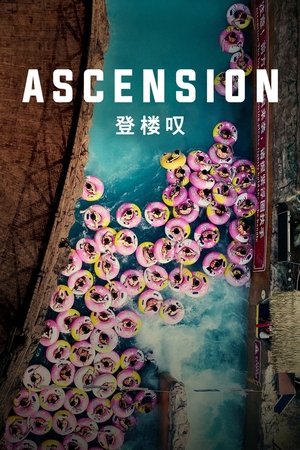
The film explores the pursuit of the “Chinese Dream.” Driven by mesmerizing—and sometimes humorous—imagery, this observational documentary presents a contemporary vision of China that prioritizes productivity and innovation above all.
Jamie Johnson takes the exploration of wealth that he began in Born Rich one step further. The One Percent, refers to the tiny percentage of Americans who control nearly half the wealth of the U.S. Johnson's thesis is that this wealth in the hands of so few people is a danger to our very way of life.
Frank Lloyd Wright’s Modern Masterpiece, Unity Temple is an homage to America’s most renowned architect. The film pulls back the curtain on Wright’s first public commission in the early 1900’s to the painstaking efforts to restore the 100 year old building back to its original beauty. The dedicated team of historians, craftspeople, members of the Unitarian congregation and Unity Temple Restoration Foundation reveal the history of one of Wright’s most innovative buildings that merged his love of architecture with his own spiritual values. The film intersperses the architect’s philosophies with quotes narrated by Brad Pitt.
A modern and fast-paced cinematic documentary that aims to trace, understand and demonstrate the historical and unwavering links between the United States, Bordeaux and its wines. An investigation like no other, Eastbound Westbound lets the viewer understand how this Franco-American friendship around Bordeaux wines had its starting point in the 18th century around the greatest connoisseur of fine wines and lover of Bordeaux, the American Thomas Jefferson, US Ambassador to Paris and third President of the United States. To better demonstrate Thomas Jefferson’s legacy, this intimate relationship between the two winegrowing continents is illustrated through interlinked portraits of wine families, from many and varied backgrounds but all sharing a real passion for wine. Leading players in their field, they produce some of the best wines in the world.
Cruelty, psychological and sexual violence, humiliations: reality television seems to have gone mad. His debut in the early 2000s inaugurated a new era in the history of the audio-visual. Fifty years of archives trace the evolution of entertainment: how the staging of intimacy during the 80s opened new territories, how the privatization of the biggest channels has changed the relationship with the spectator. With the contribution of specialists, including philosopher Bernard Stiegler, this documentary demonstrates how emotion has made way for the exacerbation of the most destructive impulses.
After 20 years seeking Cleopatra's tomb, archaeologist K. Martinez's search shifts to an underwater Mediterranean site. She's joined by Titanic finder Bob Ballard, Egyptian Navy and dive teams to explore the location.
An ancestral house builds itself, comes to life, and shows us its story spanning one hundred fifty years. Through the ages, it allows us to perceive the passage of time.
The Victorian era is often cited for its lack of sexuality, but as this documentary reveals, the period's artists created a strong tradition surrounding the classical nude figure, which spread from the fine arts to more common forms of expression. The film explains how 19th-century artists were inspired by ancient Greek and Roman works to highlight the naked form, and how that was reflected in the evolving cultural attitudes toward sex.
From the acclaimed director of American Movie, the documentary follows former Los Angeles police officer turned independent reporter Michael Ruppert. He recounts his career as a radical thinker and spells out his apocalyptic vision of the future, spanning the crises in economics, energy, environment and more.
As early as 1920, the journalists of the "Münchener Post" recognized the danger posed by Adolf Hitler. Consistently and boldly they wrote about National Socialism. The brave journalists and their newspaper are almost forgotten today. A single book has been published about them - in Brazil.
RiverBlue chronicles an unprecedented around-the-world river adventure, led by renowned paddler and conservationist, Mark Angelo, who ends up uncovering and documenting the dark side of the global fashion industry.
What killed King Tutankhamun? Ever since his spectacular tomb was discovered, the boy king has been the most famous pharaoh of all ancient Egypt. But his mysterious death, at just 19 years old, has never been explained. In this BBC One special, presenter Dallas Campbell reveals new scientific research and carries out unique experiments to get to the truth. For the first time, a virtual autopsy of Tut's mummified body reveals astonishing secrets about the pharaoh. Using CT scan data, the programme creates the first ever full size, scientifically accurate image of the real Tutankhamun. Brand new DNA analysis uncovers a shocking secret about Tut's family background, and the genetic trail of clues leads to a radical and revolutionary new theory to explain Tut's sudden and unexpected death. This is an epic detective story that uncovers the extraordinary truth of the boy behind the golden mask.