The international success of the film Das Boot by Wolfgang Petersen made U-96 one of the most famous submarines in cinematic history. But the true story of one of Hitler's most fearsome U-boats and its crew goes far beyond fiction. For the first time, this documentary sheds light on the reality behind the fiction through exclusive interviews with the makers and actors of Das Boot, as well as the last survivors of the time. In doing so, this documentary explores how Hitler's propaganda images may have influenced the visual and narrative force of Das Boot.
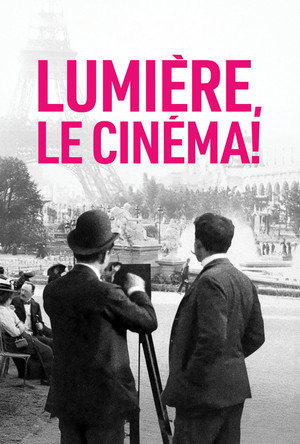
In 1982, Wim Wenders asked 16 of his fellow directors to speak on the future of cinema, resulting in the film Room 666. Now, 40 years later, in Cannes, director Lubna Playoust asks Wim Wenders himself and a new generation of filmmakers (James Gray, Rebecca Zlotowski, Claire Denis, Olivier Assayas, Nadav Lapid, Asghar Farhadi, Alice Rohrwacher and more) the same question: “is cinema a language about to get lost, an art about to die?”
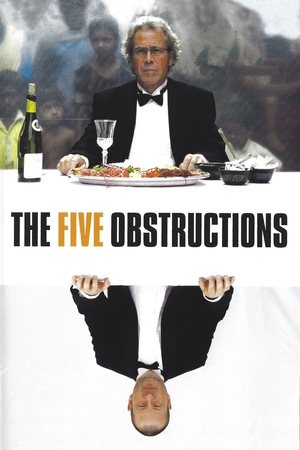
In 1967, experimental filmmaker Jorgen Leth created a striking short film, The Perfect Human, starring a man and women sitting in a box while a narrator poses questions about their relationship and humanity. Years later, Danish director Lars von Trier made a deal with Leth to remake his film five times, each under a different set of circumstances and with von Trier's strictly prescribed rules. As Leth completes each challenge, von Trier creates increasingly further elaborate stipulations.
A look at the legendary Czech sound designer and his profession. Editor and documentary filmmaker Adéla Špaljová has her father Ivo Špalj talk about his life, career, and working methods. Over the course of his long life, sound designer Ivo Špalj (*1940) has collaborated on hundreds of films and become a mentor for at least one generation of men and women behind the mixing board. This gentle documentary also shows “Engi” (as he is known to his colleagues) again working with Jan Švankmajer, whose films he has lent their typical, dense, and sophisticated sound mix.
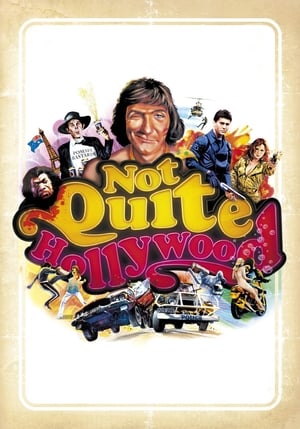
The first feature-length documentary that fully explores how the toxic social and political Canadian context after 1968 created some of the most nihilistic and imaginative Canadian cult films of the 1970s and 80s and beyond.
From the ambitious young filmmaker behind Boundless, The Weaving of a Dream is a short documentary that details the making of Johnnie To's film Three.
Memories from the making of the classic Milos Forman film "Ragtime".
When World War II broke out, John Ford, in his forties, commissioned in the Naval Reserve, was put in charge of the Field Photographic Unit by Bill Donavan, director of the soon-to-be-OSS. During the war, Field Photo made at least 87 documentaries, many with Ford's signature attention to heroism and loss, and many from the point of view of the fighting soldier and sailor. Talking heads discuss Ford's life and personality, the ways that the war gave him fulfillment, and the ways that his war films embodied the same values and conflicts that his Hollywood films did. Among the films profiled are "Battle of Midway," "Torpedo Squadron," "Sexual Hygiene," and "December 7."
Brought to life through archival material and the reflections of over 40 colleagues, friends and fans, BLOOD & FLESH is much more than the story of a moviemaking life most unusual. It beautifully captures the worlds of outsider filmmaker communities that existed in California in the ’70s, and the weird ways they intersected with Hollywood mainstream and union indies. On Adamson shoots, regular Orson Welles crew and cinematographers like Gary Graver, Vilmos Szigmond and Lazlo Kovaks worked alongside Bud Cardos — and at one point, Charles Manson! Director David Gregory (founder of Severin Films, director of LOST SOUL: THE DOOMED JOURNEY OF RICHARD STANLEY’S ISLAND OF DR. MOREAU) spent years making this film, speaking to everyone down to the cops who investigated Adamson’s murder, vividly encapsulating both a bold life and tragic demise, with alien conspiracies, go-go dancers and Colonel Sanders coming in along the way. If you’ve got even a passing interest in cinema, you want to see this
This documentary captures the sounds and images of a nearly forgotten era in film history when African American filmmakers and studios created “race movies” exclusively for black audiences. The best of these films attempted to counter the demeaning stereotypes of black Americans prevalent in the popular culture of the day. About 500 films were produced, yet only about 100 still exist. Filmmaking pioneers like Oscar Micheaux, the Noble brothers, and Spencer Williams, Jr. left a lasting influence on black filmmakers, and inspired generations of audiences who finally saw their own lives reflected on the silver screen.
HECKLER is a comedic feature documentary exploring the increasingly critical world we live in. After starring in a film that was critically bashed, Jamie Kennedy takes on hecklers and critics and ask some interesting questions of people such as George Lucas, Bill Maher, Mike Ditka, Rob Zombie, Howie Mandel and many more. This fast moving, hilarious documentary pulls no punches as you see an uncensored look at just how nasty and mean the fight is between those in the spotlight and those in the dark.
In 1981, a film about the misadventures of a German U-boat crew in 1941 becomes a worldwide hit almost four decades after the end of the World War II. Millions of viewers worldwide make Das Boot the most internationally successful German film of all time. But due to disputes over the script, accidents on the set, and voices accusing the makers of glorifying the war, the project was many times on the verge of being cancelled.
Acclaimed Finnish director Rauni Mollberg made several scandalous yet widely appreciated films. Former co-worker Veikko Aaltonen’s eye-opening documentary The Dinosaur looks at the relentless, often disturbing directing techniques behind Mollberg’s art and success.
What makes European cinema so special? Find out in Paul Joyce’s feature-length documentary, Pictures of Europe, which examines the differences between American independent and Hollywood movies and films from European directors. Featuring luminary iconoclasts from European cinema such as Agnes Varda, Bernardo Bertolucci and Pedro Almodovar, as well as American counterpoints from Paul Schrader, and those who have crossed back and forth, such as Paul Verhoeven
A retrospective documentary about the groundbreaking horror series, Friday the 13th, featuring interviews with cast and crew from the twelve films spanning 3 decades.
The shooting diary of a film shot in France and in the United States. Using photos of Paris and of New York City, excerpts of his former films, statements by friends of his and shooting sequences of the film itself, tormented filmmaker Marcel Hanoun has made a heterogeneous and unclassifiable film about the difficulty of filming.
Documentary about the original 1986 film Critters. Features interviews with actors Dee Wallace, Don Opper, Terrence Mann, and Lin Shaye; producer Barry Opper; writer Brian Muir; critter designers and voice actors; and many more.
Kirby Dick's provocative documentary investigates the secretive and inconsistent process by which the Motion Picture Association of America rates films, revealing the organization's underhanded efforts to control culture. Dick questions whether certain studios get preferential treatment and exposes the discrepancies in how the MPAA views sex and violence.
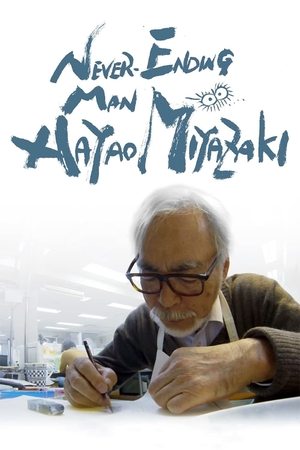
A documentary that focuses on Hayao Miyazaki’s deep connection to nature and the environmental themes expressed through his films.
As Hong Kong's foremost filmmaker, Johnnie To himself becomes the protagonist of this painstaking documentary exploring him and his Boundless world of film. A film student from Beijing and avid Johnnie To fan, Ferris Lin boldly approached To with a proposal to document the master director for his graduation thesis. To agreed immediately and Lin's camera closely followed him for over two years, capturing the man behind the movies and the myths. The result is Boundless, a candid profile of one of Hong Kong's greatest directors and a heartfelt love letter to Hong Kong cinema.