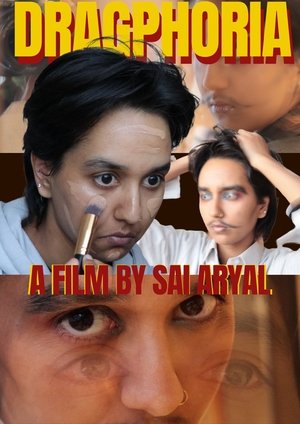
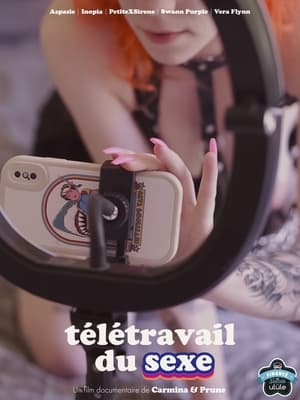
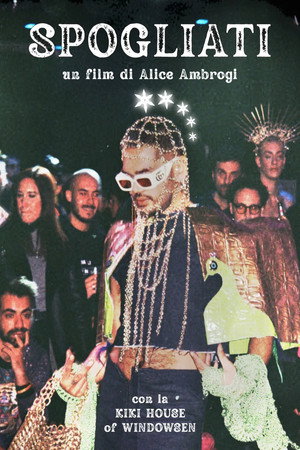
In 1995, the Chilean state made a grave mistake when it detained Marcelina (68), an Indigenous spiritual authority, a machi of the Mapuche people. The police stripped her of her jewelry and traditional clothing and sent her to a men’s prison despite her identifying as a woman. She was unjustly accused of murdering a patient through witchcraft, triggering feelings that led her to leave her community, even after her innocence was proven. Thirty years later, Cons (34) delves into her story—into a world foreign to her—confronting lessons and prejudices she had never known.
BATE CABELO! unveils the story of an artistic creation that became a living symbol of memory, embodiment, and resistance.
In an Amsterdam gym for queer people, three individuals confront doubts about their belonging. David, often read as straight due to his style and body type, feels undesired and questions if he “counts.” Qianyu, nonbinary, struggles with invisibility as queer nightlife favors cis gay men, and past health issues make joining the gym daunting. Barbara, 67 and bisexual, wonders if she still belongs after past rejection by parts of the lesbian community. Through candid conversations and colourful, sometimes absurd fictional scenes, their insecurities and longing for acceptance are explored. Ultimately, the gym becomes a space of vulnerability, solidarity, and self‑realization, helping them see that they are indeed “queer enough.
He was born different, and chose to become unique. Becoming Lucky Love follows how Luc Bruyère turned his “flaw” into strength and his life into an act of creation. Born without his left arm, he faced the violence of people’s gaze from childhood, sinking into shame and self-destruction. “I was born homosexual, without a left arm — I didn’t fit what a man was expected to be: a figure without nuance, categorical,” Luc confides. Instead of giving up, he chose to transform himself and become what he had always dreamed of: a singer and performer. With his angelic face and magnetic presence, nothing seems to resist him — yet his blazing loves and excesses marked him deeply. Now, on the verge of turning 30, he looks back without filters. Becoming Lucky Love paints the portrait of an avant-garde, captivating outsider who proves that destiny can be endlessly reinvented through strength, poetry, and self-invention.
The documentary mixes reenactments with true accounts from four characters/actors who tell the stories of six black gay men, their experiences and their romantic relationships crossed by racism and homophobia.
For the last quarter century, Houston native Arden Eversmeyer journeyed across the country to record hundreds of oral "herstories" with a mostly invisible population that is rapidly disappearing. Old Lesbians honors Arden's legacy by animating the resilient, joyful voices she preserved in the Old Lesbian Oral Herstory Project, from first crush to first love, from the closet to coming out, and finally from loss to connection.
Flora Valverde, a non-binary student of Cinema and Audiovisual at UFPB, recounts in a video letter their experiences to their idol David Bowie, updating him on the events that happened after his death in 2016.
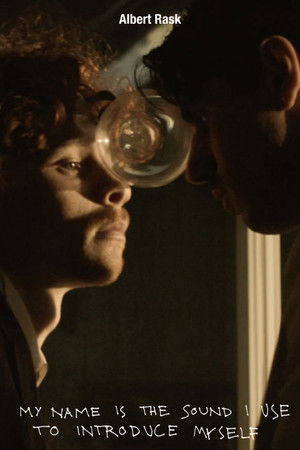
A man looks into a mirror and sees a reflection version of himself dancing, carefree, and rebellious -- only for the reflection to be shattered by a mystery man with a box over his head.
Amidst the Colombian Andes, a group of trans women from the Embera Chami community make their way into the international fashion scene, empowered through artistic collaboration and creation while preserving their spiritual heritage and ancestral connection to their territory.
Experimental documentary short starring Batato Barea and Peter Pank, filmed in July 1991
Sebz traces an intimate and heartbreaking journey through her past and present, exploring the nuances of her identity as a non-binary, black, asexual trans person. Through an introspective narrative, Sebz reflects on the abuse she suffered as a child and the revelation that these experiences were not unique, but also familial. In a space where memory and reality intertwine, Sebz confronts her relationship with her mother, a complex connection torn between rejection and a search for understanding, accentuated by tensions of gender, sexuality and shared trauma. This short queer documentary is an honest and courageous portrait of wounds, family ties and the resilience that defines those who seek to exist beyond social impositions.
A documentary on Queercore, the cultural and social movement that began as an offshoot of punk and was distinguished by its discontent with society's disapproval of the gay, bisexual, lesbian and transgender communities.
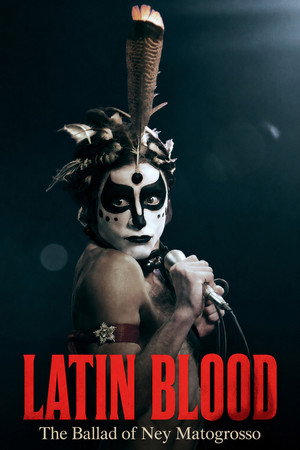
From a repressive childhood to artistic revolution, Ney Matogrosso transforms Brazil's stages — and himself — through music, creativity and inner fire.
This documentary is about the artistic trajectory of Edvaldo Souza, aka Edy star, the flamboyant gay singer, actor, dancer, theatrical producer, performer, visual artist and the last of the Kavernistas alive. The script mixes the memories of artists, friends and Edy himself, meeting in a studio with the singer and composer Zeca Baleiro.
The Alexander Ball is an observational documentary extravaganza celebrating Samoan-Māori-Australian trans woman of colour, Ella Ganza, and the Meanjin (Brisbane) ballroom scene, as she and her ballroom family prepare for one of the biggest pride events of the year: The Alexander Ball.
In a world where technology and humanity intertwine, Tiffany, a self-aware feminist "sex robot", embarks on a journey of self-discovery. Conversing with leading experts, Tiffany confronts the issues that have shaped her design and asks about queerness concerning sex tech.
A cruise ship and 3,000 men – it is a universe without heteros and women that usually remains a mystery to the outside world. Once a year the Dream Boat sets sail for a cruise exclusively for gay men where most passengers are united by the wish to live life authentically as themselves in a protected place.
History of the stigmatization and marginalization to which the queer community was subjected in Spain during the Franco dictatorship.
After discovering a stranger’s livestream, a month unfolds under his balcony, through watching and being watched.
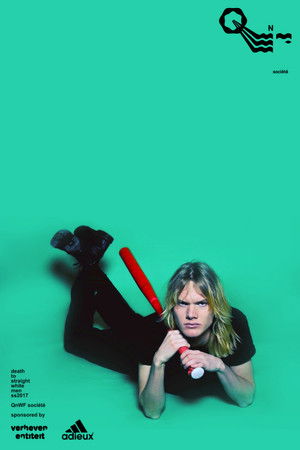
Three commercials, presented as a short film, for fictional clothing brand 'Death To Straight White Men' by the QnWF-Sociétè. This fictional clothing brand and the ready-for-action poses and portraits of the three models were in many ways the foundation for 'E Kolór Korra' (2017).