Hong Kong started and flourished as a fishing port in the past, and its people have long been committed to worshipping ancient deities for their blessings. With over a hundred Tin Hau temples (Goddess of Sea) in Hong Kong, there are three on Lamma Island alone, located respectively in Sok Kwu Wan, Luk Chau and Yung Shue Wan. The film documents the states of Tin Hau temples on the island and beyond, as an attempt to contextualise the everyday practice of the fishing community, islanders and city dwellers visiting the temples.
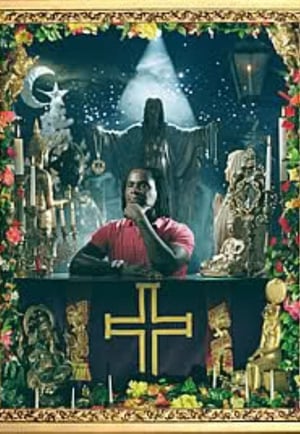
MAXIMÓN - Devil or Saint is a documentary about the controversial Maya deity, also known as San Simon or the drinking and smoking saint of Guatemala. He is a mixture of ancient Maya beliefs and Christianity. The movie concentrates on the people who surround Maximón with their strong personalities, opinions and faith. The documentary gives us a rare view into the rituals and fiestas honoring Maximón. The cult of Maximón is flourishing because he performs miracles. He is also feared and despised because he is used to cast curses that can result in death. Ultimately, Maximón transcends the duality of good and evil, reflecting the Maya cosmovision in which everything in the universe co-exists.
Part documentary, part expose, this film follows one-time child evangelist Marjoe Gortner on the "church tent" Revivalist circuit, commenting on the showmanship of Evangelism and "the religion business", prior to the start of "televangelism". Preserved by the Academy Film Archive in 2005.
This intimate ethnographic study of Voudoun dances and rituals was shot by Maya Deren during her years in Haiti (1947-1951); she never edited the footage, so this “finished” version was made by Teiji Ito and Cherel Ito after Deren’s death.
Karisa’s city-life is interrupted when his Grandma back home is called a witch and receives a death threat. Returning to his rural village to investigate, he finds a frenzied mixture of consumerism and Christianity is turning hundreds of families against their elders, branding them as witches as a means to steal their ancestral land.
Nomina contra Deum
The history of nuns mirrors the history of all women -- in what we are taught about the past, women are almost invisible. Although today's one million nuns outnumber priests two to one, they must struggle to be heard by the all-male Roman Catholic hierarchy from which they are excluded. Behind the Veil: Nuns is the first film ever to record from a global perspective the turbulent history and remarkable achievements of women in religion, from pre-Christian Celtic communities to the radical sisters of the 1980s. Contemporary nuns of strength, dignity and commitment speak of their lives and of their predecessors.
Les femmes disciples de Jésus
Keith Garner visits historical locations, elegant chapels and bustling city centres as he discovers the impact of the work of cleric and theologist John Wesley, 200 years after his death.
For Muslims everywhere, the ultimate goal is to make the Hajj at least once during their lifetime. This spiritual journey is the basic premise of an entire religion and sees impoverished African Muslims mixing with their incredibly wealthy Western counterparts. This documentary follows some of the 20,000 Britons who make the journey to Mecca, unravelling the mysterious aura that surrounds this remarkable event. Combining the wondrous backdrop of Mecca with intriguing interviews that provide a previously undocumented view of Islam, Hajj will enchant both Muslims and non-Muslims alike.
Rusia: Revolución conservadora
Baseball, Dennis & the French tells the true story of Paul Croshaw, longtime liberal activist and connoisseur of French films, who amazed his family, friends and himself by becoming a churchgoing, conservative Christian after years of listening to nationally syndicated radio host Dennis Prager.
An attempt to engage with the historical, mythical and the contemporary worlds of the city of Pushkar
The film shows the genesis of the El Rocío pilgrimage and unveils the economic, socio-political and religious reasons and interests that nurture the phenomenon.
Using original animation, archival footage and personal interviews, this full-length documentary portrays the multiple relationships Canadian Muslim women entertain with Islam’s place of worship, the mosque. Islam is the fastest growing religion in the world. In North America, a large number of converts are women. Many are drawn to the religion because of its emphasis on social justice and spiritual equality between the sexes. Yet, many mosques force women to pray behind barriers, separate from men, and some do not even permit women to enter the building. Exploring all sides of the issue, the film examines the space – both physical and social – granted to women in mosques across the country.
Before he "saw the light," Saul of Tarsus pursued murderous threats against the disciples of Jesus. But Saul's zeal was upended when he was knocked from his horse and humbled by the hand of God. Join Stephen Ray, best-selling Catholic author and popular Bible teacher, as he takes you on the road with St. Paul through Israel, Syria, Turkey, Greece and Italy. Part of the "Footprints of God" series of devotional DVDs.
An enthralling and thorough documentation of the traditional Armenian church liturgy.
In 2012, Stephen Vaughan and Kay Ferreter are invited to address the congregation at St. Joseph's Redemptorists Church in Dundalk, Ireland for the Solemn Novena Festival. In a powerful speech, the pair describe their experiences being gay and lesbian in Ireland, feeling excluded by Catholic doctrine, and the importance of a more inclusive church.
Die Randgemeinschaft
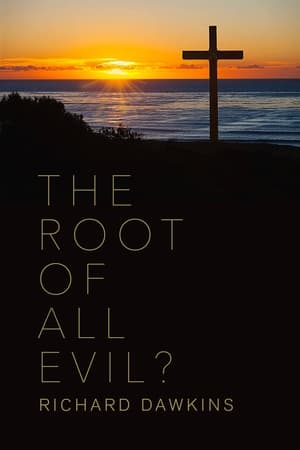
In this two-part Channel 4 series, Professor Richard Dawkins challenges what he describes as 'a process of non-thinking called faith'. He describes his astonishment that, at the start of the 21st century, religious faith is gaining ground in the face of rational, scientific truth. Science, based on scepticism, investigation and evidence, must continuously test its own concepts and claims. Faith, by definition, defies evidence: it is untested and unshakeable, and is therefore in direct contradiction with science. In addition, though religions preach morality, peace and hope, in fact, says Dawkins, they bring intolerance, violence and destruction. The growth of extreme fundamentalism in so many religions across the world not only endangers humanity but, he argues, is in conflict with the trend over thousands of years of history for humanity to progress to become more enlightened and more tolerant.