The incredible story of Lucrezia Borgia (1480-1519), daughter of Pope Alexander VI (1431-1503), deliberately used politically by her powerful family and historically slandered as a poisoner and incestuous femme fatale. But who was the real Lucrezia?
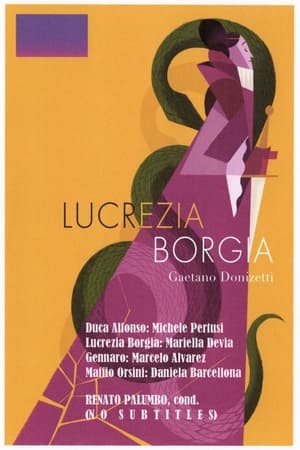
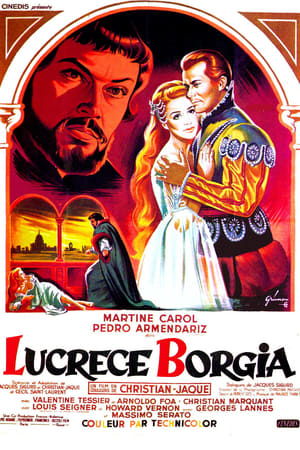
Gennaro, the son of Lucretia Borgia, lives unaware of the identity of his mother, who has married the Duke of Ferrara. After Lucretia's brother is killed by five conspirators, the fathers of Gennaro's dearest friends, Lucretia tortures the old men to death. Later, Gennaro and his companions journey to Lucretia's domain, and she sees her son for the first time. The Duke, who believes him to be her lover, poisons him, but Lucretia administers the antidote in time and saves his life. Then she schemes to poison her sons' five friends for their fathers' mistake.
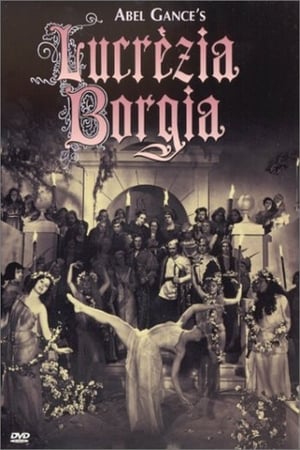
French silent film pioneer Abel Gance directs this 1935 classic about Lucrezia Borgia, her brother, Cesare. and her father, Pope Alexander VI -- one of history's most ruthless and ambitious crime families.
A playwright descended from the Borgia family becomes a murder suspect.
In 1458, five years after the fall of Constantinople to the Turk, eighteen cardinals meet to elect a new pope. Rodrigo Borgia, a 27 year old cardinal learns to play a very dangerous game.
Lucrezia Borgia - Teatro degli Arcimboldi
In 1500, Duke Cesare Borgia hopes to marry his sister to the heir apparent of Ferrara, which impedes his conquest of central Italy. On this delicate mission he sends Andrea Orsini, his sister's lover and nearly as unscrupulous as himself. En route, Orsini meets Camilla Verano, wife of the count of Citta' del Monte, and sentiment threatens to turn him against his deadly master, whom no one betrays twice...
In the early 16th century, Italy is ruled by the powerful Borgia family, led by César Borgia and his sister Lucrèce. In a ruthless power play, César plots to have his sister’s husband murdered. But without her brother’s knowledge, Lucrèce has taken a strong lover who will challenge the Borgias.
The tiny independent duchy of Ferrara is located between Casare Borgia's Rome and Venice, and Borgia has plans to conquer Venice via Ferrara. He murders his sister's husband and makes it appear that Alfonso D'Este of Ferrara was behind the killing. To avenge herself against Ferrara and D'Este, Lucretia Borgia marries D'Este and intends to poison him. But...she falls in love with him.
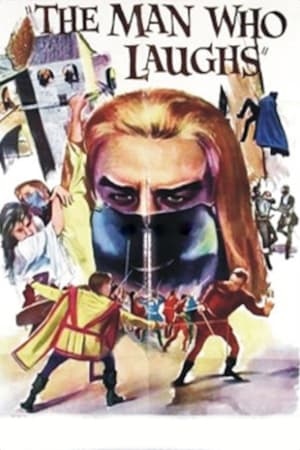
This loose adaptation of the Victor Hugo classic shifts the story to Italy and back in time, with the deformed protagonist meeting Lucrezia Borgia instead of Queen Anne. Also, Gwynplaine is renamed Angelo (Jean Sorel) with his disfigurement represented by a single broad slash across his mouth, crude yet convincing. The story (not credited to Hugo) is a swashbuckler pitting the disfigured acrobat against the henchmen of the Borgias.
Trance dances and out of body projection. In front of the camera, Parvaneh Navaï becomes a mediator who enters in contact with and immerses into the energies of Nature, while her own energy radiates and echos in the forest ("selva"). The camera amplifies and expands her presence, transforming the forest into an imaginary space. The camera becomes a painter's brush.
An orthodox heroine astride a motorbike. Young people breaking the monotony of a country life through stunt riding. A meeting against a Western backdrop between two universes that are at odds with each other except for their very reason for being: passion.
American Falls, from Incline R.R. (1896) is a brief silent actuality directed by James H. White and produced by Thomas A. Edison. Filmed from a tourist-friendly incline railway in early December 1896, it presents a striking view of the American Falls at Niagara Falls in crisp detail—part of Edison’s “New Niagara Falls” travelogue series.
A famous figure of the 20th century, Albert Schweitzer was a tireless humanist and polymath who opened a hospital in the Gabonese jungle to bring healthcare to remote areas. But today the legacy of the winner of the Nobel Peace Prize in 1952 is being scrutinised. How important was his wife Hélène in his success? And was the virtuous man also racist?
Short documentary extolling the virtues and necessity for women to participate in America's preparation for war, showing women working in scientific, industrial, and voluntary-services activities. Preserved by the Academy Film Archive in 2008.
In this somewhat whitewashed documentary on Manhattan's Bowery a newcomer to the area takes his first step toward redemption after a meal, bed, and inspiring talk.
Documentary on the French graphic and visual artist and designer, editor, artistic director, and teacher who is known for his widely-used fonts.
Karpatské bukové pralesy
In 1935, 17-year-old aspiring actress Marsha Hunt was discovered in Hollywood. She signed with Paramount Pictures and went on to a flourishing career at MGM. She made 54 films in 17 years before a series of unfortunate events led to her being unfairly blacklisted. After the blacklist, she championed humanitarian causes, forging a career as one of Hollywood's first celebrity activists. She was the FIRST Angelina Jolie. As far back as 1955, Eleanor Roosevelt was a mentor of hers as they both worked tirelessly to support the work that the United Nations Association was accomplishing in this country. At age 96, Marsha continues to fight for causes she believes in. This film is a call to action for activists of all ages.
Evandro Teixeira is one of the leading names in world photojournalism, with a career spanning more than 37 years in the Brazilian press. Baiano from Jequié, chose Rio de Janeiro to settle down and it was in Jornal do Brasil that he spent most of his career. In addition to an untiring photographic reporter, he also traveled to Brazil to search for images of Brazilians and recorded important events in the history of Brazil and the world, in coverage of national and international events.