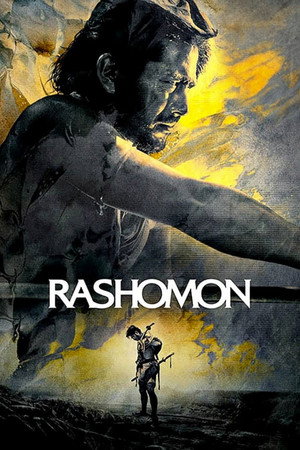
Four people recount different versions of the story of a man's murder and the rape of his wife.
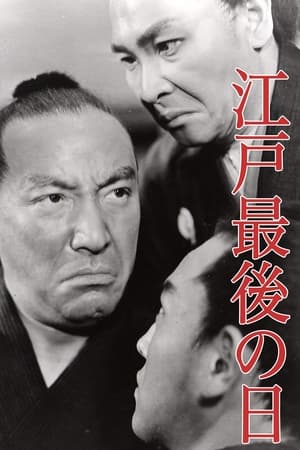
In 1701, an insult led to a sword slash between the heads of the Ako clan and the Kira clan in Shogun's court. The head of the Ako clan was ordered to commit seppuku, and his loyal retainers plotted revenge against the Kira clan. This led to the legendary events known as the "47 ronin incident". However, unknown to most, the head of the Kira clan, Kozukenosuke Kira, is already dead from his wounds. Impersonating him is his slacker monk brother Takaaki, who has to prevent his brother's death being found out to protect his clan – and accidentally befriends Ooishi, the leader of the Ako men who wouldn't really want to go through with the revenge. Will Takaaki survive with his head?
Ninomiya Kinjirou is a biopic follows the life of the eponymous character, an 18th century peasant boy who worked to rescue over 600 poor villages and hamlets from financial ruin by developing new economic policies.
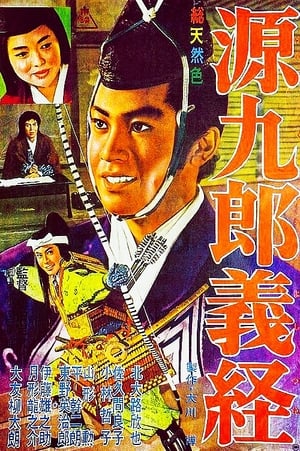
The story of Yoshinaka during the tumultuous period of warring related to us in the Heike Monogatari. Close in setting to Kinugasa’s famous Gate of Hell (1953).
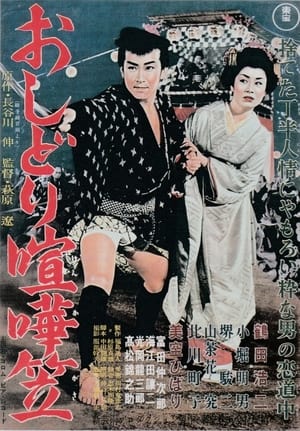
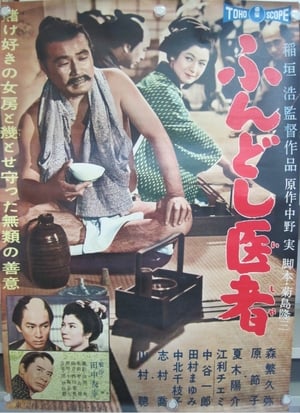
After eloping with a prostitute named Otoyo, Hishakaku takes refuge in the Kogane family’s turf. Indebted to Boss Kogane for his kindness, Hishakaku swears to dedicate himself to protect the Koganes in time of crisis. Hishakaku’s humble life comes to a sudden halt when the Kogane family becomes involved in a fatal feud with their rival, and Hishakaku’s services are called upon.
Returning to their lord's castle, samurai warriors Washizu and Miki are waylaid by a spirit who predicts their futures. When the first part of the spirit's prophecy comes true, Washizu's scheming wife, Asaji, presses him to speed up the rest of the spirit's prophecy by murdering his lord and usurping his place. Director Akira Kurosawa's resetting of William Shakespeare's "Macbeth" in feudal Japan is one of his most acclaimed films.
Aspiring to an easy job as personal physician to a wealthy family, Noboru Yasumoto is disappointed when his first post after medical school takes him to a small country clinic under the gruff doctor Red Beard. Yasumoto rebels in numerous ways, but Red Beard proves a wise and patient teacher. He gradually introduces his student to the unglamorous side of the profession, ultimately assigning him to care for a prostitute rescued from a local brothel.
A story of revenge between two samurai families on the Igagoe Road. Araki Mataemon born in the province of Iga. He studied the art of the sword under the Yagyu family. He helped the younger brother of his wife Watanabe Kazuma take revenge on his enemy Kawai Matagoro. Ichikawa Utaemon plays Araki Matemon and his son Kinya Kataoji plays Kazuma.
Inomatsu, a carpenter with a reputation as a skilled craftsman, has a wife named Oritsu. Oritsu is deeply in love with Inomatsu and believes that the purpose of her life is to devote herself to her husband day and night. However, Oritsu is Inomatsu's fourth wife. In fact, he is a robber and thief. As a carpenter, Inomatsu usually sneaked into merchants' houses and carried out robberies. For him, wives are just a tool to deceive the public...
広重ぶるう
The Color Print of Edo is a 1939 black and white Japanese silent film with benshi accompaniment directed by Kazuo Mori. It is a cheerful period drama, sprinkled with comical scenes and tells the story of a loyal and handsome Edo period servant who fights to help his older brother marry the woman he loves. The star of this film, Utaemon Ichikawa, gained enormous popularity for his portrayal of a cheerful and chivalrous man.
The Fox Dancing in the Dusk
Bakumatsu seishun graffiti: Ronin Sakamoto Ryoma
In a world where vendettas are officially sanctioned, the people sometimes needed help in carrying out their vengeance. Sanada Hiroyuki stars as Sukeroku the Helper, a ‘cool and rambling yakuza’ that has made a business out of helping victims carry out their revenge. When he returns to his hometown to pay a visit to his mother’s grave he meets a deadly ronin who carries a secret which eventually leads him into a vendetta of his own.
In 16th century Japan, peasants Genjuro and Tobei sell their earthenware pots to a group of soldiers in a nearby village, in defiance of a local sage's warning against seeking to profit from warfare. Genjuro's pursuit of both riches and the mysterious Lady Wakasa, as well as Tobei's desire to become a samurai, run the risk of destroying both themselves and their wives, Miyagi and Ohama.
Kanichiro Yoshimura is a Samurai and Family man who can no longer support his wife and children on the the low pay he receives from his small town clan, he is forced by the love for his family to leave for the city in search of higher pay to support them.
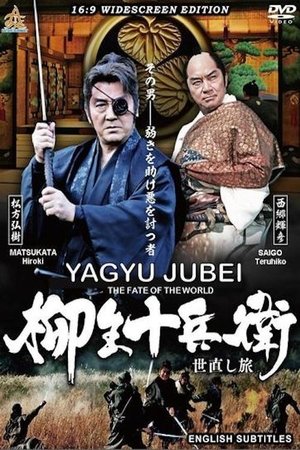
The classic tale retold. This is one of Japan’s most popular stories in a brand new version starring the great Matsukata Hiroki following in the footsteps of Yorozuya Kinnosuke as Yagyu Tajima, the grandmaster swordsman whose plot to maintain the succession of Iemitsu as shogun encounters obstacles on all sides. Loaded with action and featuring many of Japan’s new up and coming sword stars this exciting movie brings back the feelings of the golden age of motion pictures. Stunning cinematography brings 17th Century Japan to life in this exciting tale of loyalty and betrayal, leading up to an ending that won’t be found in any history book.
Down-on-his-luck veteran Tsugumo Hanshirō enters the courtyard of the prosperous House of Iyi. Unemployed, and with no family, he hopes to find a place to commit seppuku—and a worthy second to deliver the coup de grâce in his suicide ritual. The senior counselor for the Iyi clan questions the ronin’s resolve and integrity, suspecting Hanshirō of seeking charity rather than an honorable end. What follows is a pair of interlocking stories which lay bare the difference between honor and respect, and promises to examine the legendary foundations of the Samurai code.
The Tattooed Magistrate: Fallen Flowers Showdown Volume
Sen no Rikyu (Ebizo Ichikawa) is the son of a fish shop owner. Sen no Rikyu then studies tea and eventually becomes one of the primary influences upon the Japanese tea ceremony. With his elegant esthetics, Sen no Rikyu is favored by the most powerful man in Japan Toyotomi Hideyoshi (Nao Omori) and becomes one of his closest advisors. Due to conflicts, Toyotomi Hideyoshi then orders Sen no Rikyu to commit seppuku (suicide). Director Mitsutoshi Tanaka's adaptation of Kenichi Yamamoto's award-winning novel of the same name received the Best Artistic Contribution Award at the 37th Montréal World Film Festival, the Best Director Award at the 2014 Osaka Cinema Festival, the 30th Fumiko Yamaji Cultural Award and the 37th Japan Academy Film Prize in nine categories, including Best Art Direction, Excellent Film and Excellent Actor.