Shot over the course of 30 days at sea, filmmaker Alizé Jireh documents the group’s voyage across the North Atlantic—from moments of stillness and calm to the chaos of storms and setbacks. With an observational approach and an eye for the emotional and physical rhythms of life at sea, Jireh captures not just the external landscape, but the internal shifts that come with navigating the vast unknown.
A tender exploration of friendship, identity, and transformation, this film follows Brahel and Andoeni, who met as children and grew up together in Guadalajara. Though their romantic relationship eventually ended, their deep friendship endured. Years later, after Brahel’s gender transition, the two reconnect and rediscover their bond. Through a rich tapestry of archival footage, music, intimate moments, and unspoken emotions, the narrative unfolds as a heartfelt journey of reconnection, vulnerability, and lasting affection.
From the shadows of a Guatemalan neighbourhood scared into silence, two sisters lead a luminous rebellion—unleashing joy, art, and radical truth in a fight for survival.
This feature-length film tells the story of the passion between Marie de l’Incarnation, a mid-seventeenth-century nun and God, her "divine spouse." Fusing documentary and acting by Marie Tifo, whom we follow as she rehearses for this demanding role, the film paints an astonishing portrait of this mystic who abandoned her son and left France to build a convent in Canada, where she became the first female writer in New France.
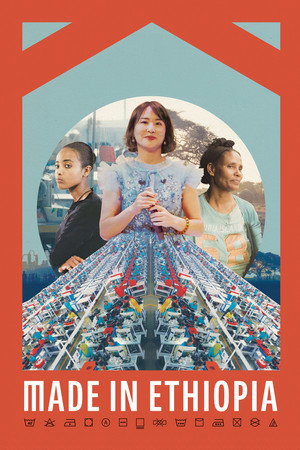
When a massive Chinese factory complex attempts a high-stakes expansion in rural Ethiopia, three women in search of prosperity have their faith in industrialization tested to the limit. Filmed over four years with singular access, Made in Ethiopia lifts the curtain on China’s historic but misunderstood impact on Africa, and explores contemporary Ethiopia at a moment of profound crisis. The film was awarded the Jury Special Mention at Tribeca Festival.
何以为家
In May of 1982 Julio Cortázar, the Argentinean writer and his companion in life, Carol Dunlop set out in their VW bus on a journey along the highway from Paris to Marseille that, for each of them, was to be their final one. Twenty-five years later, Océane Madelaine and Jocelyn Bonnerave set out to undertake the journey again.
For more than forty years, Belela Herrera has dedicated her life to saving that of others. The politically persecuted, those displaced by civil wars, and the world's refugees are her concern and vocation. Her story is also that of a woman who defined herself and twisted the destiny reserved for girls of her social class: marrying to a man from high society, having a large family and a comfortable and elegant existence . And it is also the story of a female legacy that is part and consequence of the invisible resistance of thousands of women.
Dadi manages an extended family in Haryana, Northern India, where daughters-in-law face loneliness and unrealistic expectations. The film delves into family dynamics, highlighting Dadi's firm control amidst tensions. Social and economic shifts challenge traditional values, exemplified by Dadi's son marrying outside the village. Despite clinging to tradition, Dadi adapts to her children's modern aspirations. This narrative reflects the clash between generations and gender roles in 1980s rural India, offering insight into the evolving concept of family.
Angel's Chest
In their own words, this is the story of six women from the South Wales valleys and how they helped sustain the bitter year-long miners' strike, changing their lives forever.
The end of World War II brings Europe a new political system, reshapes national and personal identities. Three women from Milan, Paris and Berlin report on the days of liberation in their diaries. Their personal stories expand the historical picture and make LIBERATION DIARIES a chronicle of female self-empowerment, resistance and resilience.
Leah and Purity are rangers in the Kenyan bushland. They roam around Amboseli National Park every day to track down wildlife. The Maasai shepherds also have their villages here. Conflicts can hardly be avoided. The young women are often called to missions to mediate or comfort. The two Maasai women themselves have to fight against discrimination
Directed by Ariane Louis-Seize, this tribute film was created as a gift for Lorraine Pintal, director of Montreal’s Théâtre du Nouveau Monde. Featuring some of the most memorable characters and performers of Pintal’s career, the film’s succession of surreal scenes from different dramatic worlds introduces viewers to the exceptional woman of theatre, stage director, and friend whom they consider to be the “ghost light” of Quebec theatre.
With depth, intimacy, and humor, FLOAT! captures filmmaker Azza Cohen's magnetic grandma’s life-affirming journey learning to swim at 82, inspiring audiences to defy societal expectations of aging and to boldly look forward at every stage.
Marseille, a city with a dual identity, is seen both as the setting of Pagnol’s films and as a hub for powerful organized crime. Often labeled France’s crime capital, its contemporary history is marked by recurring violence and media portrayals that clash with political leaders’ responses. Jérôme Pierrat examines the roots of this violence, exploring two centuries of social and political challenges that have shaped the city.
An intimate look at the evolution and impact of women emcees and rappers, told by the trailblazing artists who helped create a musical and cultural empire.
Les Enfants de la Bonne Mère : Rue d'Aubagne
In this modern, coming of age documentary, Naomi, Jojo and Arham grapple with economic divides, gender roles, and family dynamics while competing in the fastest growing high school sport in the country: girl’s wrestling.
Château d'If : La Prison du comte de Monte-Cristo