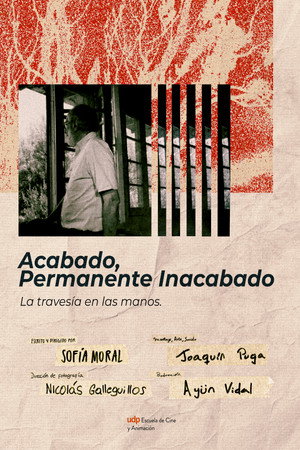
Between documentary images of a craftsman in his workshop and spaces threaded with loose strands, Acabado, Permanente Inacabado constructs a living journey that questions the illusion of a finished work, insisting on the possibility of returning, unraveling and allowing the act of creation to bloom.
Transcarpathians
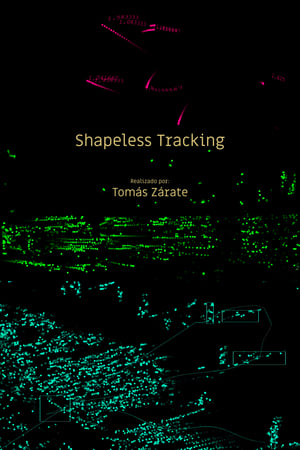
Inside a computer a space-time is revealed in which image and sound become numbers and motion manifests as rhythm, flow and chaos. This tracking and integration experiment removes the superficial identity of video to detect kinetic disturbances in everyday environment.
Childhood memories of the author's life using images of dance performances with music from a genre she discovered in her adolescence. Both marked her formative years in different ways. By replacing the original sound with the music she began listening to in her adolescence and which had a great influence on the construction of her personal identity, the author seeks to transform the memory of traumatic times of rivalry and body shaming between girls, which in some way affects her to this day.
A self-portrait film about sentimental objects and moments in life.
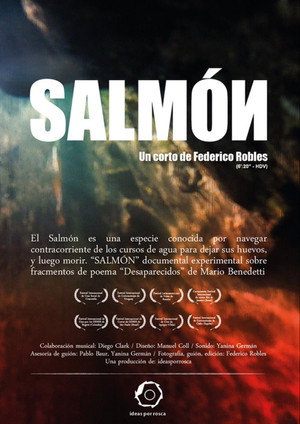
The salmon is a species known to go in counter-current through the rivers to lay their eggs, and then die. A short experimental documentary about fragments of the poem 'Missing' by Mario Benedetti.
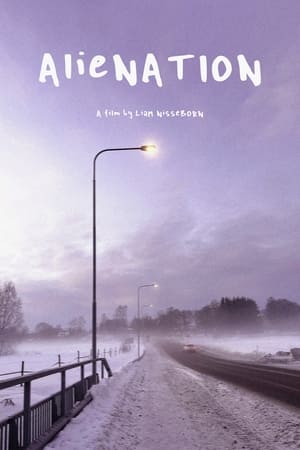
This short film shot in a small town in Sweden navigates themes of nostalgia through an original monologue, reflecting on gender identity struggle and the pursuit of a new beginning in a foreign land.
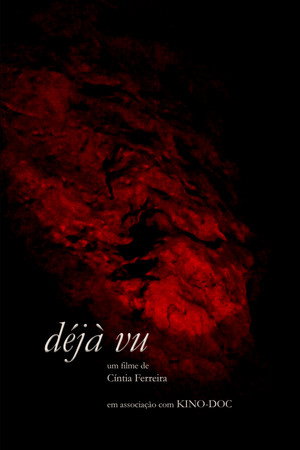
A young woman searches for traces of herself through a prehistoric monument engulfed by the urban landscape. Driven by a persistent feeling of déjà vu, she returns to the place where she grew up, repeating gestures of observation, collecting and photographic development in an attempt to recover a memory that may never have existed. Between ritual, the analogue darkroom and fragments of the landscape, she builds an intimate archive where memory, imagination and reality become intertwined.
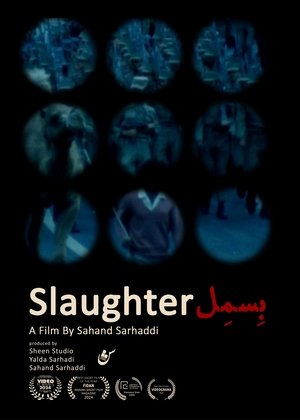
"Slaughter" is an experimental short film that delves into the archival and historical footage of the Iranian Revolution in 1979, depicting a symbolic narrative surrounding the ritualistic act of animal sacrifice, known as "Besmel." It serves as an allegorical representation of a nation's sacrifice amidst the backdrop of political transformations.
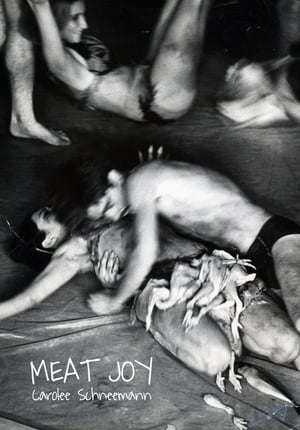
"Meat Joy is an erotic rite — excessive, indulgent, a celebration of flesh as material: raw fish, chicken, sausages, wet paint, transparent plastic, ropes, brushes, paper scrap. Its propulsion is towards the ecstatic — shifting and turning among tenderness, wildness, precision, abandon; qualities that could at any moment be sensual, comic, joyous, repellent. Physical equivalences are enacted as a psychic imagistic stream, in which the layered elements mesh and gain intensity by the energy complement of the audience. The original performances became notorious and introduced a vision of the 'sacred erotic.' This video was converted from original film footage of three 1964 performances of Meat Joy at its first staged performance at the Festival de la Libre Expression, Paris, Dennison Hall, London, and Judson Church, New York City."
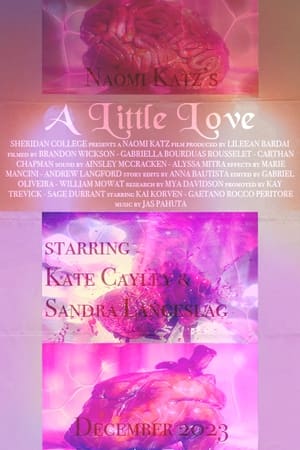
Through interspersed conversation and prose, this experimental documentary follows a poet and a neuroscientist as they explore the definition of love, what it means, and why it matters.
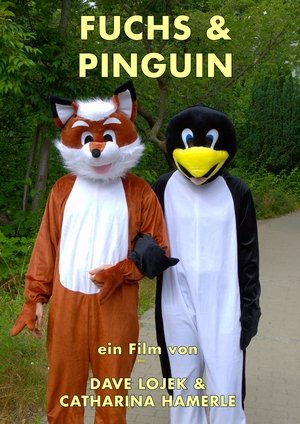
How do German couples communicate in private? What are they arguing about? Is the way to a man’s heart really through his stomach? This docu-fictional hybrid production discusses such questions with the help of authentic interview snippets that were edited under the staged plot. We get an insight into the life of an animal couple, who experience typical everyday situations on behalf of us humans. At first, our fox is emotionally contained, while the penguin lady may get wild as hell. With a wink, the filmmakers hold up a mirror to the audience in the cinema.
"This project consists a visual fluidity of construction, harmony and thoughts taking colors and length from this body of autonomy. Different images between figuration and abstraction are created by meaning and phenomenon letting the decoupage revealing a piece of a strange underworld. I built it like a window opened to the fresh air of improvisation by familiar landscapes, those exact moments articulating a connection between light and movement."
O Que Nos Separa
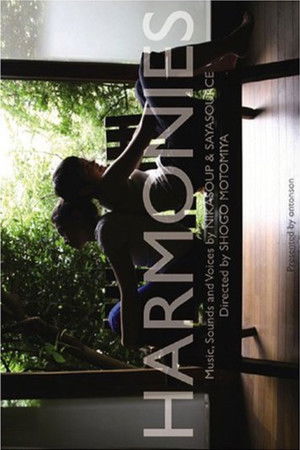
Japanese two female singer-songwriters, Kazumi Nikaido (also known as Nika Soup) and Saya Source (of Tenniscoats, Maher Shalal Hash Baz). Nika is known for her chameleon-like ability to transform her voice, while Saya has a melancholic and straightforward singing style. Both have distinct voices that can be identified immediately, but when they sing in unison, they create melodies that are truly sublime. They have released charming album IPIYA (2005) features playful pop songs reminiscent of nursery rhymes, repetitive mantra-like tracks. The two went back and forth from their homes in Hiroshima and Tokyo to create beautifully diverse songs for this record. This is the documentary of "how" and "why" and also "where" they had made the very original music. Many interviews, rehearsals, free sessions, live performances are included. There is a childlike innocence to this documentary, and offers a peak into the unique world of how they make music.
Outtakes, commentary from Zefier's third film: Jo; or The Act of Riding a Bike.
A very short film on the exploration of textural nuances through the city of Dublin. Shot on iPhone. Accompanied by a score.
In the summer of 1900, the first film camera was purchased by Mozaffar ad-Din Shah Qajar for Iran, and immediately the first Iranian moving images were captured by this camera. These images, in an obsessive manner, have embodied the mesmerized gaze of people. In the span of 79 years since the purchase of this camera, Iran has undergone two revolutions and two coups, and throughout all these moments, the camera has been present as the recorder of people's mesmerized gazes. These mesmerized gazes are in a way as if they are the ones looking at us, not the other way around. It seems like these gazes are trying to convey something, but what? No one knows. Now, we gaze at those who have gazed at us from a distant time.
Un jour avec Andrée
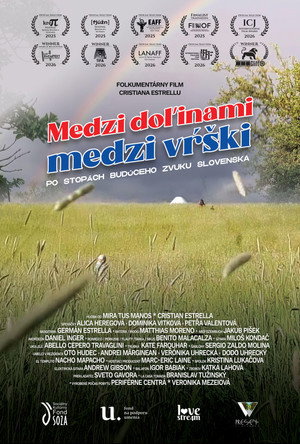
This is not just a “folkumentary”, but an invitation to reflect on the future of humanity on a planet where tradition and technology coexist, and where the unknown reminds us that there are still unanswered questions.