A porn-loving, Charles Manson-befriending, Mississippi Republican runs to become the next sheriff.
Secret societies is the new code word for organizations believed to pull the strings of the world. These groups have been both credited and blamed for great many nefarious acts perpetrated against humanity. Among the most infamous of secret societies stand without doubt the shadowy Illuminati.
A documentary following the civil rights movement and how the media, in particular the burgeoning TV, was used to fight for equality in the 1960s. From Selma to Charlottesville, we also see how modern activists use today's technology to continue fighting injustice today.
Guy Debord's analysis of a consumer society.
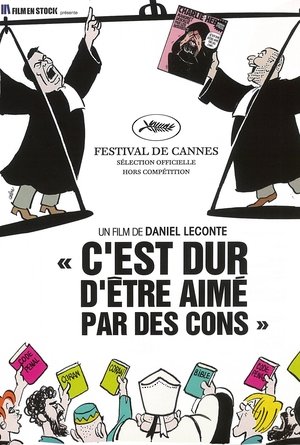
The murder of Dutch filmmaker Theo van Gogh by an Islamic extremist in 2004, followed by the publishing of twelve satirical cartoons depicting the prophet Mohammed that was commissioned for the Danish newspaper Jyllands-Posten, provides the incendiary framework for Daniel Leconte's provocative documentary, It's Hard Being Loved by Jerks.
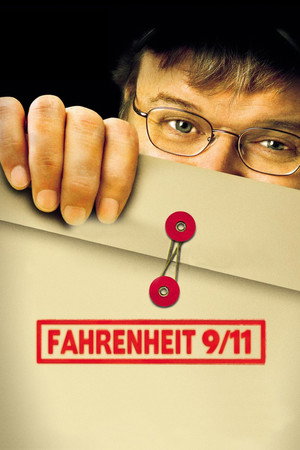
Michael Moore's view on how the Bush administration allegedly used the tragic events on 9/11 to push forward its agenda for unjust wars in Afghanistan and Iraq.
Doaa el-Adl, the first woman to be awarded the esteemed Journalistic Distinction in Caricature, serves as a catalyst for transformation within the predominantly male-dominated realm of Egyptian political cartoonists. Challenging patriarchal norms, she routinely confronts censorship, harassment, and even threats to her life. In a remarkable fusion of documentary, cartoons, and animation, Egyptian director Nada Riyadh breathes life into el-Adl's most renowned works. This dynamic and fearless presentation delves into the issue of violence against women, stretching the boundaries of freedom of speech in a society often characterized by restrictions. Through her exceptional talent, el-Adl not only champions women's rights but also serves as an inspiration for societal change.
A documentary on Al Gore's campaign to make the issue of global warming a recognized problem worldwide.
Into the Current tells the story of Burma's unsung heroes -its prisoners of conscience -and the price they pay for speaking truth to power in a military dictatorship.
The final case for American healthcare to be free and accessible to all—through a single-payer system. Using an all-star lineup of heavy-hitters in the healthcare movement, Healing US walks through all key points of the arguments in favor of a universal, single-payer healthcare system.
Crump's mission to raise the value of Black life as the civil lawyer for the families of George Floyd, Breonna Taylor, Black farmers and banking while Black victims, Crump challenges America to come to terms with what it owes his clients.
The filmmaker, Alexandros Papathanasiou, travels to Crete to meet Lefteris Eliakis, a guerrilla fighter during the Greek Civil War and a political prisoner for two decades. This insightful portrait conjures the ghosts of the Greek Civil War – the maverick people, revolutionary politics, and breathtaking events that have shaped today’s Greece.
On June 1st, 2019, around 11:30pm, the shoot which represents a turning point in the federal republic falls. In the hessian small town Wolfhagen-Istha, the district president of Kassel, Walter Lübcke, is murdered during this night, while, just a few meters away, the annual carnival is putting the locals into a festive mood. It is DNA-evidence on the clothes of Walter Lübcke which leads the investigators on June 15th, 2019, to his presumptive murderer: Stephan Ernst. The previously convicted right-wing extremist Ernst gets arrested by a SEK unit in Kassel. A first background check reveals: Stephan Ernst was known to the security authorities, but they did not have him on their radar for six years. Now he is back. And a person is dead. The docu-drama “Schuss in der Nacht” („Shoot in the dark“) tells emotionally, and simultaneously factually, how the deadly attack on Lübcke came to be. It tells about the first far-right motivated murder of a politician since the era of national socialism.
PUBLIC ENEMY NUMBER ONE looks at the war on drugs from 1968 until today and looks at trigger points in history that took cannabis from being a somewhat benign criminal activity into a self-perpetuating constantly expanding policy disaster.
A cheap, powerful drug emerges during a recession, igniting a moral panic fueled by racism. Explore the complex history of crack in the 1980s.
In a cluttered news landscape dominated by men, emerges India’s only newspaper run by Dalit women. Armed with smartphones, Chief Reporter Meera and her journalists break traditions on the frontlines of India’s biggest issues and within the confines of their own homes, redefining what it means to be powerful.
At a time when powerlessness and resignation carry the day, Noam Chomsky's work is a radical antidote for all those who want to put an end to the factory of powerlessness and its intellectual media star watchdogs. Theoretician of language, born in Philadelphia in 1928, Noam Chomsky revolutionized linguistics with the "generative grammar." But Chomsky is also a political analyst involved in all political struggles for decades. His clear analysis and rational ideological mechanisms of our societies is a crucial resource for critical thinking today.
With unfettered access, the film follows Baltimore's idealistic young mayor into office, where he puts his personal and political future on the line to save his beloved city from chronic violence.
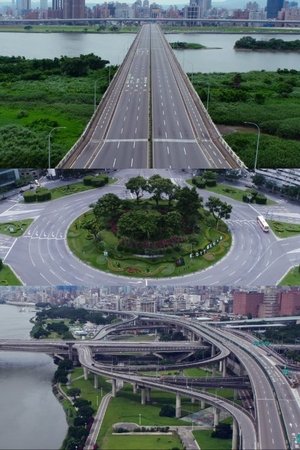
Hong Kong's high-speed rail link, the demolition of Choi Yuen Village, the impending budget and the influence of the global Occupy movement are at the centre of independent filmmaker Lo's timely measure of the city's pulse. Ostensibly the third entry in a trilogy that began with 21 years after. (2010) and to be continued (2010), which also captured public reaction to watershed moments in Hong Kong's political life since 2009. The documentary was built upon the material used in its previous installment (to be continued, 46 minutes). It disproves the notion of a passive Hong Kong in a chronicle of a generation poised for massive social change.
Dare to Dream was directed by Marianne Jenkins, a film student from Goldsmiths' College, University of London, in 1990. It looks at the history of anarchism in the UK and beyond, as well as the state of the movement in the tumultuous year the poll tax uprising finally led to the resignation of Thatcher. Among the anarchist heavyweights interviewed are Albert Meltzer, Vernon Richards, Vi Subversa, Philip Sansom, Clifford Harper and Nicholas Walter, as well as a host of lesser known but equally committed dissidents. The film also features the miners strike and class struggle, squatting and social centres such as Bradford's 1in12 club, animal rights and feminism.