A gang of leather-clad, powerful women take over a traditionally male domain, and hairspray, eyeliner, and bare flesh are on full display in Beth B’s music video for the Arthur Baker–produced club hit from synthpop band Dominatrix. Banned at the time of release, it was acquired by The Museum of Modern Art.
Filmmaking icon Agnès Varda, the award-winning director regarded by many as the grandmother of the French new wave, turns the camera on herself with this unique autobiographical documentary. Composed of film excerpts and elaborate dramatic re-creations, Varda's self-portrait recounts the highs and lows of her professional career, the many friendships that affected her life and her longtime marriage to cinematic giant Jacques Demy.
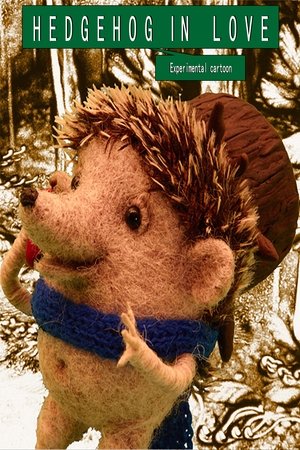
Egglantine loves salt on her eggs. Eggbert prefers pepper. Who blinks first in this playful Easter ritual?
A commissioned music video for Emmit Fenn’s instrumental track, Wind.
a 32-minute color film by Gwen Brown, featuring precious footage of Living Theatre productions “Mysteries” and smaller pieces, “Paradise Now” and “Frankenstein.” “The fusion of Brown’s freewheeling direct cinema and the Living Theatre’s performance for revolutionary change (amidst the heydays of both) unite as a dynamic concoction of the era, yielding for the viewer a shifting terrain of both critical insight and ecstatic zeal, not as a vacant nostalgia for a pre-commodified radicality, but as tactical inspiration for future days.” – Andrew Wilson (Artist’s Access Television)
Forest Light
This free-form film is a self-portrait, which revisits more than 40 years of the author’s filmography and questions the major stations of his life, while capturing the political tremors of the time.
Video Fanzine featuring: Half Japanese, Redd Kross with Sky Saxon as Purple Electricity, R Kern, Sonic Youth, White Flag, Psycho Daisies, Charlie Pickett, Nick Zedd, Morbid Opera More R&R, Film, Prose. Pencil numbering indicates there was a run of 600 tapes.
Aspiring writer Lucy Simon embarks on a psychedelic road trip to the planet Mars with her brash, unnamed drug dealer behind the wheel in this music-driven space adventure presented entirely through the use of close-up photography.
The last collaboration of Artavazd Peleshian and cinematographer Mikhail Vartanov is a film-essay about Armenia's shepherds, about the contradiction and the harmony between man and nature, scored to Vivaldi's Four Seasons.
Dislocation in time, time signatures, time as a philosophical concept, and slavery to time are some of the themes touched upon in this 9-minute experimental film, which was written, directed, and produced by Jim Henson. Screened for the first time at the Museum of Modern Art in May of 1965, "Time Piece" enjoyed an eighteen-month run at one Manhattan movie theater and was nominated for an Academy Award for Outstanding Short Subject.
Godard by Godard is an archival self-portrait of Jean-Luc Godard. It retraces the unique and unheard-of path, made up of sudden detours and dramatic returns, of a filmmaker who never looks back on his past, never makes the same film twice, and tirelessly pursues his research, in a truly inexhaustible diversity of inspiration. Through Godard’s words, his gaze and his work, the film tells the story of a life of cinema; that of a man who will always demand a lot of himself and his art, to the point of merging with it.
Could film gelatin, a 16mm film camera, 3 lenses and film developing chemistry experimentation act as messengers between the spirit and the physical world? a one day trip to the remote town of Panguipulli (Chile) seeks to explore possibilities and to also expand on the power of audio frequencies as a healing instrument. A manifestation of the hummingbird movement? A connection between mind, landscape, sound, latent image? A replication of Rukapillan volcano’s intermittent flows of magma through fissures on the earth’s surface? -Colibri- erupts 16mm single frame experiments & bursts smoke and sonic healing vibrations
Exploring impressionistic, emotional and sensory environments found within the vast natural and urban landscapes of America. Neither image nor sound takes precedence: the two interact and combine preserving a raw sense of the discovery that field recordings and in-camera edited film rushes often yield.
A new exploration of familiar places located in the region of Rhône and Isère throught an reinvention of digital nuances, a study of perceptions and fluidity around the nature of motion in landscapes and human interactions.
A camera crew travels through Thailand asking villagers to invent the next chapter of an ever-growing story.
La Révolution de la Terre
P. Adams Sitney, Professor of Visual Art at Princeton University, wrote a short essay for Artforum International "Medium Shots: the films of Morgan Fisher" in which he describes the film "()." "Fisher's most recent film, (), succeeds astonishingly where Frampton's parallel effort, Hapax Legomena: Remote Control (1972) failed; it uses aleatory methods to release the narrative unconscious of a set of randomly selected films. () is made up entirely of "inserts" from feature films organized according to Oulipian principles. Inserts were usually shot by assistants when star actors, large crews, or expensive sets were not needed. These include details of weapons, wounds, letters, signs, tombstones, machinery, games of chance, timepieces, money, and even intimate caresses.
New York City's Monterey is a residence hotel, whose inhabitants are older and primarily live alone. The camera, usually stationery, observes the lobby. No score, the lobby is clean with granite floors, men wear hats, people enter and exit an elevator, the camera looks out from within the elevator as doors open and close. People sit alone and motionless in their apartments. There are long shots of empty halls. Paint peels. The flooring on upper levels is linoleum. Hall lights are florescent. Doors open a crack then close.
William K.L. Dickson plays the violin while two men dance. This is the oldest surviving sound film where sound is recorded on the phonograph.