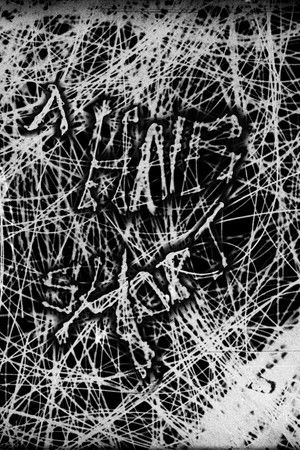
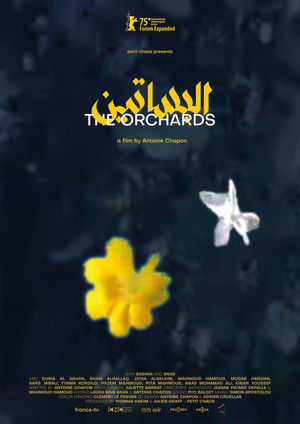
Husk
A man desperately struggles against a powerful, unseen force.
Burr creates a slow, liminal illusion in black-and-white, switching perspectives and matrices and crescendo-ing in time with Christopher Doulgeris’ portentously pulsating soundtrack.
Henry, a newly resurrected cyborg who must save his wife/creator from the clutches of a psychotic tyrant with telekinetic powers, AKAN, and his army of mercenaries. Fighting alongside Henry is Jimmy, who is Henry's only hope to make it through the day. Hardcore Henry takes place over the course of one day, in Moscow, Russia.
In 1944 Lye moved to New York City, initially to direct for the documentary newsreel The March of Time. He settled in the West Village, where he mixed with artists who later became the Abstract Expressionists, encouraged New York’s emerging filmmakers such as Francis Lee, taught with Hans Richter, and assisted Ian Hugo on Bells of Atlantis. Color Cry was based on a development of the “rayogram” or “shadow cast” process, using fabrics as stencils, with the images synchronized to a haunting blues song by Sonny Terry, which Lye imagined to be the anguished cry of a runaway slave. —Harvard Film Archive
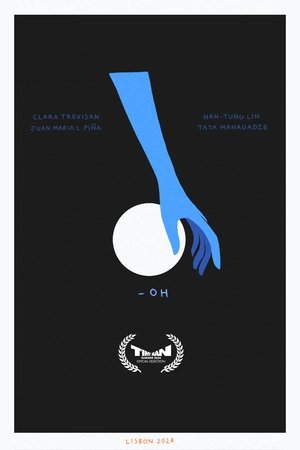
A knight has second thoughts before the coronation of a new king.
A ritual of grids, reflections and chasms; a complete state of entropy; a space that devours itself; a vertigo that destroys the gravity of the Earth; a trap that captures us inside the voids of the screen of light: «That blank arena wherein converge at once the hundred spaces» (Hollis Frampton).
A aspiring novelist operates a tiny neighborhood bookstore. His wife is a talented painter. Their marriage is disintegrating, and they are about to sign their divorce papers. Meanwhile, the legendary Casanova and his lover Lavinia are characters trapped inside of a 17th-century children's book. The tragedy of the impending divorce triggers the release of Casanova and Lavinia from the confines of the children's pop-up book.
Filmed over five years across varied sites, Devereaux gives quiet attention to the shifting sensations of place. From rain and snow to beaches, mountains, and city streets, the film traces environments in contrast: rural and urban, water and land, summer and winter. These images, held in long takes, resist narrative flow, instead assembling a meditation on how landscapes provoke moods, memories, and ideas.
This Is Not Me is an intimate, haunting exploration of identity, longing, and the truths we try to hide. A raw, dreamlike film built from five striking monologues. Each character reveals the parts of themselves they’d rather keep hidden, blurring the line between confession and performance.
At the beginning of the twenty-first century, abstraction - that most quintessentially modernist innovation - maintains a peculiarly contradictory position. Used, on one hand, by post-modernist artists as just one more quotable style amongst many, it is on the other hand still considered an elitist or hermetic language by audiences intimidated by its lack of recognizable subject matter. Yet ultimately, abstraction continues to be a viable creative path for contemporary artists of all generations, many of whom embrace it as the most inclusive and fundamentally resonant of artistic languages. Filmed at the artists' studios, the Dia Center for the Arts, and the Guggenheim Museum during their exhibition, "Abstraction in the Twentieth Century."
A bleak, cryptic vision of life in contemporary Iran that eschews overt social commentary in favour of a very personal vision of stifled lives. Directed remotely by Rashidi from Ireland over Skype, the making of this unique film reflects the alienation it so compellingly portrays.
Surreal and mysterious, in equal parts absurd and intense, Mutual Admiration Society is part of the noted multi-film collaboration between actor James Devereaux and experimental filmmaker Rouzbeh Rashidi. Based entirely around a silent, tour-de-force one-man performance by Devereaux as a man who appears to be haunting and threatening himself, Mutual Admiration Society uses startling visual techniques and editing rhythms to create a claustrophobic hall of mirrors with Devereaux’s tormented protagonist at its centre.
“Persistencies of Sadness & Still Days”, is a four hour feature film by Maximilian Le Cain and Rouzbeh Rashidi. Structured in two sections or ‘takes’ of two hours each, this dream-like, experimental project offers two complementary explorations of cinematic form that skirt around possible narratives, ducking through a series of fluctuating audio-visual categories and intensities.
Little is known of Jean Speck (1860-1933) beyond the fact that he opened Zurich’s first cinema. Rouzbeh Rashidi and Jann Clavadetscher consider the flittering black and white ghosts and shadows that he left in his wake in their phantasmagorical experimental feature film. This journey through a cinematic night probes the very essence of the cinematic image.
"When I first started to photograph in dark and unfamiliar places all over Singapore in 2003, I had no idea that those images I made would come to define me as a photographer. Born out of a curiosity of the unknown, as well as a young photographer’s restlessness, While You Were Sleeping grew to say as much about our country as it did of me. Eighteen years, two books and two exhibitions later, Singapore is now a very different place. Many of the locations I visited in the early 2000s, once alien, are now completely transformed." – Darren Soh, photographer
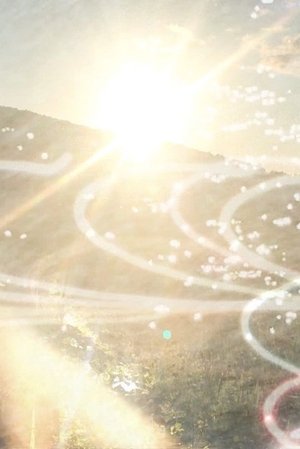
The blinking sun on the surface of the river becomes the ranting mouth of god and utters nova scotia into existence.
Solitude d'adolescence
Homo Sapiens Project (201) was completed in 2021 as part of re-envisioning and restructuring Rashidi's filmography. This nineteen-hour experimental feature is constituted from many feature films produced between 2002 to 2014. These experimental features were made as a type of test or trial experiment. Rashidi assembled the films from footage accumulated over the years, archival footage, found footage and rushes donated by his close collaborators.
An intimate stream of memories reaching out across time and space, taking on a uniquely experimental form that cuts the viewer adrift in a weave of old footage rising to the surface of consciousness like a dream.