Rayen Panday: Fenomeen
Comedian Wim Helsen apologizes for the violence, religious extremism and lousy economy plaguing Europe, then offers a happy panacea for all of it.
Because Urbanus does all kinds of pranks, he has to go to an improvement institution. There, Dr. Schrikmerg uses him as a guinea pig for his new invention: he makes a sort of robot from Urbanus.
Registration of the fourth solo program by the Dutch comedian Hans Sibbel, in which the comedian takes a look at the evolution.
Tineke Schouten: 25 Jaar Theater
First aid is my passion and my life. One traffic light turns red, another turns green: there's always something to do in Almelo. One of Herman Finkers' most famous quotes. Herman Finkers has been writing and performing theater programs since 1979. His programs are difficult to describe. He was probably best described in the Utrechts Nieuwsblad: 'master of the double punchline,' 'witty excess that does no harm,' 'sublime nonsense.' EHBO is my passion and my life is Herman Finkers' fourth program, recorded in the Leidse Schouwburg.
In the show, Jochem talks about his love for nature. Jochem: 'If you're going to talk about something four hundred times, you have to choose something you really want to talk about. Jokes are fun, but I want to talk about things that interest me. My three big hobbies are fishing, theater, and birds. The book De Gorgels is also about nature. I've already incorporated my passion for biology into it, and now I want to show that on stage as well.
Comedian Patrick Laureij grew up in Rotterdam-Zuid and uses his life experience to talk about underage drinking, kickboxing, and playgroups.
Registration of the first theatre program by the Dutch comedian Theo Maassen.
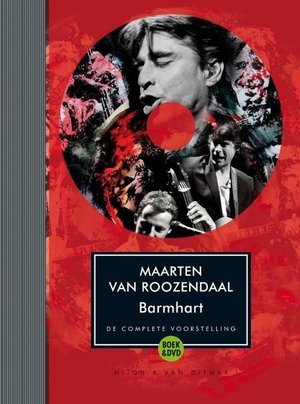
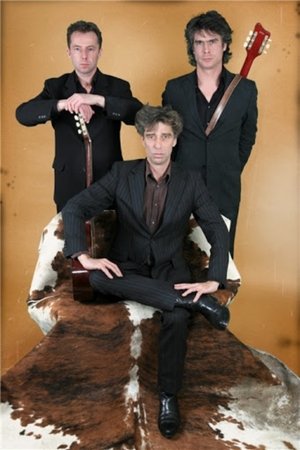
In this theatre show Maarten van Roozendaal, double bassist Egon Kracht and guitarist Marcel de Groot "celebrate" the "achievements" of Western civilization. However, the ambitious pursuit of wealth, happiness and freedom also appears to have a downside.
Registration of the fourth theatre program by the Dutch comedian Theo Maassen.
Theo Maassen is back. In all its anger, indignation, amazement about so much stupidity and lack of empathy in society, and advocates understanding and reconciliation.
After an introduction in which he reminded us all of our meaningless, shitty lives, there followed an exhilarating hour and a half packed with hilarity, a dismantling of the Jesus myth, emotion, useful tips for the bakery, a few English expressions, Skopja skopja, and above all, Wim Helsen.
Destressing? Do that at home, will you! In 'Adéhadé', everything goes in overdrive, with many Dutch celebrity impressions.
In his third theatre program the Dutch comedian Hans Teeuwen plays with empty wine bottles, little girls and himself. Poetic, absurd, false and genuine.
Inspired by a fan, TV satirist Arjen Lubach makes the move from the news desk to the stand-up stage to share his search for life’s secrets. Plus, music!
Maassen won two of the biggest comedy contests in the Netherlands in 1990, the Groninger Studenten Cabaret Festival(GSCF), and Cameretten. The GSCF jury was not pleased with the quality of the contestants that year, and gave Maassen the first prize, remarking he was the best of the year, but still not very good. In the following years, however, Maassen fame grew steadily, especially amongst students. Maassens style was based on stand-up comedy: Alone on stage, telling jokes and stories to amuse the public, without any musical support (a thing common for most Dutch comedians up to that point). Since 2000, Maassens shows are shown on Dutch national television, making him more and more a household name.
Maassen won two of the biggest comedy contests in the Netherlands in 1990, the Groninger Studenten Cabaret Festival(GSCF), and Cameretten. The GSCF jury was not pleased with the quality of the contestants that year, and gave Maassen the first prize, remarking he was the best of the year, but still not very good. In the following years, however, Maassen fame grew steadily, especially amongst students. Maassens style was based on stand-up comedy: Alone on stage, telling jokes and stories to amuse the public, without any musical support (a thing common for most Dutch comedians up to that point).
Stage registration of the fourth comedy special (2006-2008) by the Dutch comedy troupe De Vliegende Panters (The Flying Panters). This show tells the story about who the Vliegende Panters really are.
This comedy/theatre show is the sequel to 'Micha Wertheim: Somewhere Else'. This second show starts exactly where the first show ended: in the same theatrical scenery, with the same robot. But this time Wertheim surprises his audience by showing up. He tells about how the first experimental comedy show was received and contemplates about the magic of theatre and art in a society about the right to exist of art in a society that allows less and less doubt and confusion. When Robot falls into a depression, the boundaries between theater and reality begin to blur.