Klora and Minky work together to solve a very.. very.. very important equation.
Energy cannot be created or destroyed. When we die, where does our energy go? Inspired by Vauhini Vara's essay "Ghosts", in which she prompted Al to help her write about her sister's passing, "GHOSTS" takes us on the emotional journey of grief. We see a ghost figure trying to get through to her sister, who is still alive, and let her know she's still around somehow. There are two poems in this piece, one is a poem written by GPT 3, and the next is the director's (Oriana Mejer) response to it. This film uses spoken word poetry, TouchDesigner motion graphics, and is originally scored by French musician Taime.
A hypnotic mise-en-abyme constructed from JVC camcorder footage of a parking garage. Produced in tribute to teacher, filmmaker and video artist Peter Rose and the work of Piet Mondrian.
An animated tribute to the text of "If I Must Die," the final poem written by Palestinian writer, scholar, activist, and martyr Dr. Refaat Al-Areer.
A boy waits in the same street every day with his bags packed. What is he waiting for?
For the multimedia exhibition Tangenten I (Tangents I), Dammbeck and co-organizer, sculptor and painter Frieder Heinze had planned to collaborate on a film that would combine non-camera animation with 35mm footage of a train ride between the two Dresden districts of Radebeul and Pieschen. When the exhibition was banned in 1978, Heinze turned to other projects, but Dammbeck continued working on the film by himself. Metamorphoses I—the first experimental film ever to be shown publicly in East Germany—marks the filmic beginning of Dammbeck’s long-term art project the Herakles-Konzept (Hercules Concept).
Taking inspiration from 20th-century avant-garde experiments in graphical sound generation, the entire image in O/S functions as an optical soundtrack. Abstract motion becomes sound.
A wall-painting on Earth is too terrifying to exist, so unknown forces remove it.
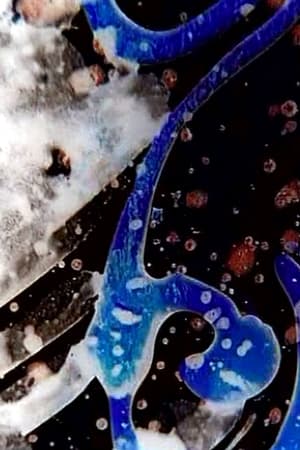
An experiment in meditative and stripped down cameraless filmmaking, edited and sequenced using machine learning models.
To cope with a grieving process, Eli creates his own pink musical paradise, full of neon lights and a lot of gayness.
'This Socks' is a stop motion animation short film that experiments with different techniques to illustrate a common everyday annoyance.
“Sweet Spot” is an experimental animated short film that uninhibitedly explores the dialog between the work and its authors, Jorge Ribeiro and Paulo Patrício, whose points of view and creative approaches, both in terms of cinematographic language and ways of being, are quite different. Through this duality, and starting from a shared but at the same time individual process, the directors seek to understand at what point the short film they are making together reaches its “sweet spot”. In other words, the ideal point at which the work is considered finished.
Begins as a whimsical piece with 'sheets' of lines running down the screen, progressing into more and more complex geometic patterns but without deviating from the basic precepts of 'dot and line' animation. Jazz piano on a lazy Sunday afternoon, and a spring color palette. -- Stephanie Sapienza. Preserved by the Academy Film Archive in 2001.
Hacking a claw machine inside C4D.
Whereabouts is a riso-printed animated short that follows a woman’s journey through New York City, unfolding through small, intimate moments. From sunrise to sunset, Whereabouts becomes an observation on presence, connection, and the quiet magic of simply moving through the world.
Beneath the skeleton, the flesh that rustles, turns and returns to our heads before rotting in silence. This is the story of this flesh. This surrealist narrative draws us into a darkened world of the unconscious. No matter how bizarre the spectacles we watch are, thanks to superb animation they flow smoothly and surely.
The first feature-length animated film by Japanese stop-motion animator Shunsaku Hayashi, inspired by his experiences after the Great East Japan Earthquake of March 11, 2011.
Flowers dance and transform in water, using strobe effects and superimposition. A meditation on life cycles through botanical animation, continuing Jodie Mack's material exploration.
A Ballerina steps out of her box for one more dance
The animation, music, and optical printing of Kitsch in Synch was produced by Beckett and the students in two classes he was teaching at CalArts. Although a group project, it is clear that Beckett was the director. The playful, catchy soundtrack is used to create a cycle of building tension and release. The brightly colored shapes create approximate symmetrical formations and become more densely layered, with glimpses of iconographic objects and even live footage near the end. Preserved by the Academy Film Archive, in partnership with the iotaCenter, in 2007.