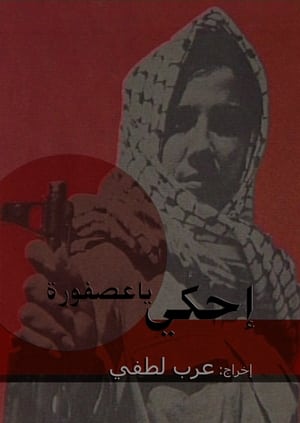
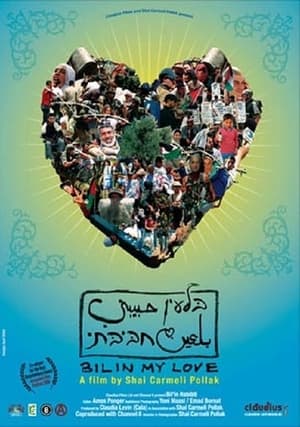
A Palestinian activist's fight for freedom draws a Japanese American filmmaker into confrontation with detention regimes of past and present.
A verité legal drama about Judge Kholoud Al-Faqih, the first woman appointed to a Shari'a court in the Middle East, whose career provides rare insights into both Islamic law and gendered justice.
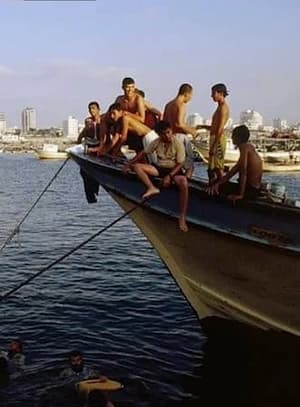
Tawfiq’s Reef chronicles the plight of Palestinian fishermen in Gaza, heavily restricted in the area in which they can fish, often indebted, shot at, harassed or imprisoned by the Israeli Navy on the narrow sliver of fishing waters available to them off the Gaza coastline, making this one of the most dangerous professions in the world.
Set in the al-Mishal Cultural Center in Gaza before it was destroyed by an Israeli air strike on August 9, 2018, A Play Before The Bombs is a story that unfolds over a 4 year period. The film follows Abeer Ahmed, a young woman growing up in the Jabaliya Refugee Camp, the largest refugee camp in Gaza, as she and the other members of her cast and crew prepare to put on a play that focuses on a Palestinian woman’s right to receive inheritance. While the content of the play is tailored towards fostering a cultural discussion among Palestinians, neither the play nor the playhouse can escape the omnipresence of the Israeli siege on Gaza. A siege that shatters literal buildings as well as the hopes and dreams of the performers and community members who take refuge within the walls of al-Mishal in search of artistic fulfillment.
A thought-provoking documentary on the current and historical causes of the Israeli-Palestinian conflict and U.S. political involvement.
An Israeli film director interviews fellow veterans of the 1982 invasion of Lebanon to reconstruct his own memories of his term of service in that conflict.
In May 1974, the Israeli Air Force carried out an extermination operation against the Palestinian refugee camp Nabatiyeh. With this as a starting point, it is reviewed how the last 50 years of Zionist colonization of Palestine have partly led to the establishment of the state of Israel, partly to the expulsion of a people, the Palestinians, from their land. The film shows scenes of daily life in Palestinian refugee camps. We hear various of the inhabitants talk about their desire to return to their country, and we follow how the resistance movement works to free women from their traditional backward role. At the same time, the emergence of the armed resistance struggle is analysed, and the significance of the latest military technological developments for guerilla wars in the 3rd world is explained.
A portrait of two Palestinian women whose individual struggles both define and transcend the politics that have torn apart their homes and their lives. Farah Hatoum, a widow living with her children and grandchildren, and Sahar Khalifeh, a novelist from the West Bank.
This film made by a Palestinian-Israeli collective shows the destruction of the occupied West Bank's Masafer Yatta by Israeli soldiers and the alliance which develops between the Palestinian activist Basel and Israeli journalist Yuval.
Documentary about war photographer James Nachtwey, considered by many the greatest war photographer ever.
Guy Hircefeld, a veteran who served in the Israeli military at the start of its occupation of Palestine in the 1980s, now fights against the Israeli occupation. His only weapon is a camera.
Liat Atzili was kidnapped from her kibbutz on October 7. What begins as a chronicle of her parents, sister, and children's efforts to secure her return, becomes a portrait of conflicting impulses towards anger, indifference, and compassion straining the bonds of one grieving family.
Here and Elsewhere takes its name from the contrasting footage it shows of the fedayeen and of a French family watching television at home. Originally shot by the Dziga Vertov Group as a film on Palestinian freedom fighters, Godard later reworked the material alongside Anne-Marie Miéville.
The Tank and The Olive Tree recalls a certain number of forgotten fundamentals and sheds new light on the history of Palestine. By combining geopolitical analysis, interviews with international personalities who are experts on the subject and testimonies from Palestinian and French citizens, this documentary offers the keys to understanding what the media call the Israeli-Palestinian conflict. Enough to rid people's minds of clichés and prejudices! If The Chariot and the Olivier is intended to be educational, it speaks above all of a magnificent territory, and of a people who constantly affirm that “to live is already to resist”...
Najwa, Nawal, and Siham, three Palestinian widows, live with their 11 children in a house on Shuhada Street in Hebron. Their house lies on the border; the façade is under Israeli occupation, the Palestinian Authority controls the back. At the entrance to the house is a military post; on the roof the Israeli army has placed a watch point over Palestinian Hebron. The three women, trapped in the middle and constantly surrounded by Israeli soldiers, carry on their difficult lives in a perverse situation: the occupation becomes a routine, the absurd becomes a given. This is the story of an occupation that extends to the staircase and the roof of the house, where it encounters poverty, loneliness, pain, but also the small joys of everyday life. This is an internal prison, the external one is the ongoing occupation.
Israeli director Natalie Assouline chronicles the lives of women, mostly young mothers, in prison for involvement in failed suicide attacks/terrorists attacks in Israel. Filmed over two years, this portrait strives to unearth the motivations behind their crimes. With the women's heads and feelings firmly covered, the film reveals no answers, just the heart-breaking tension between humanity and ideology.
Intent on shaking up the ultimate 'sacred cow' for Jews, Israeli director Yoav Shamir embarks on a provocative - and at times irreverent - quest to answer the question, "What is anti-Semitism today?"
The last years have seen a steep rise in the number of Arabs signing up to Israel's army. Considered traitors by many in the Arab community, what drives these young men to fight for a country traditionally in conflict with Arab interests? Does this provide a path for Israeli/Arab integration? In this insightful doc, we follow the first Arab battalion fighting for Israel.
2003 documentary film produced by Oliver Stone for the HBO series America Undercover about the conflict in occupied Palestine. He speaks with Ehud Barak and Benjamin Netanyahu, former prime ministers of Israel, Yasser Arafat, late president of the Palestinian National Authority, and various Palestinian activists resisting the oppression of the zionist regime.
When two young American Jews raised to unconditionally love Israel witness the mistreatment of Palestinians, they battle the old guard to create a new movement opposing Israel’s occupation, and recentering Judaism itself.