Viktor, who was born deaf, worships the figure of the samurai warrior. When bombs start falling on his countryside home in Kharkiv, his quasi-romantic obsession with war is put to the test.
Dorothy Johnson was a Western writer ahead of her time. Women saved men, heroes died unwept and unsung, whites lived with Indians and benefited from the experience. Three of her stories were made into films and many critics consider "The Man Who Shot Liberty Valance" to be the cornerstone of the modern western. This documentary looks back on Dorothy's life, and her place in history.
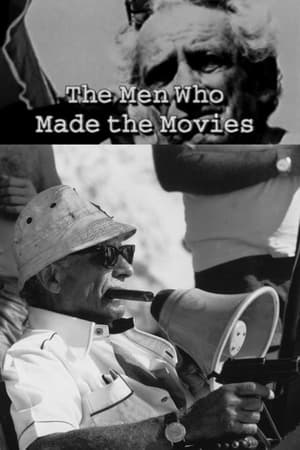
Samuel Fuller discusses his career as a filmmaker, illustrated by plenty of clips.
Brought to life through archival material and the reflections of over 40 colleagues, friends and fans, BLOOD & FLESH is much more than the story of a moviemaking life most unusual. It beautifully captures the worlds of outsider filmmaker communities that existed in California in the ’70s, and the weird ways they intersected with Hollywood mainstream and union indies. On Adamson shoots, regular Orson Welles crew and cinematographers like Gary Graver, Vilmos Szigmond and Lazlo Kovaks worked alongside Bud Cardos — and at one point, Charles Manson! Director David Gregory (founder of Severin Films, director of LOST SOUL: THE DOOMED JOURNEY OF RICHARD STANLEY’S ISLAND OF DR. MOREAU) spent years making this film, speaking to everyone down to the cops who investigated Adamson’s murder, vividly encapsulating both a bold life and tragic demise, with alien conspiracies, go-go dancers and Colonel Sanders coming in along the way. If you’ve got even a passing interest in cinema, you want to see this
A 60-minute salute to American International Pictures. Entertainment lawyer Samuel Z. Arkoff founded AIP (then called American Releasing Corporation) on a $3000 loan in 1954 with his partner, James H. Nicholson, a former West Coast exhibitor and distributor. The company made its mark by targeting teenagers with quickly produced films that exploited subjects mainstream films were reluctant to tackle.
As Australian cinema broke through to international audiences in the 1970s through respected art house films like Peter Weir's "Picnic At Hanging Rock," a new underground of low-budget exploitation filmmakers were turning out considerably less highbrow fare. Documentary filmmaker Mark Hartley explores this unbridled era of sex and violence, complete with clips from some of the scene's most outrageous flicks and interviews with the renegade filmmakers themselves.
Shot over the course of 30 days at sea, filmmaker Alizé Jireh documents the group’s voyage across the North Atlantic—from moments of stillness and calm to the chaos of storms and setbacks. With an observational approach and an eye for the emotional and physical rhythms of life at sea, Jireh captures not just the external landscape, but the internal shifts that come with navigating the vast unknown.
In 1945, two young American soldiers, brothers Budd and Stuart Schulberg, are commissioned to collect filmed and recorded evidence of the horrors committed by the infamous Third Reich in order to prove Nazi war crimes during the Nuremberg trials (1945-46). The story of the making of Nuremberg: Its Lesson for Today, a paramount historic documentary, released in 1948.
The director Andrés Kaiser combines hundreds of amateur films and photographs from the treasure trove of images belonging to his migrant grandparents creating a cinematic firework of analogies.
Emerging from the depths of the film industry, the Mad Max saga became an instant cult classic after the release of the first film in 1979. These five critically acclaimed films have continued to captivate audiences. They shaped the identity of Australian cinema, launched a movie star – Mel Gibson – and propelled George Miller as one of the greatest directors of his generation. Above all, Mad Max has left an indelible mark on our collective unconscious, redefining our vision of the apocalypse and human civilization. This documentary tells the story of this phenomenon, from the small production of the first film to the monumental later installments, drawing on interviews and rare archives.
Family Affairs is an Israeli documentary film directed by Gil Golan, which was released in 2013. The film tells the story of Gil, a treacherous man who came from a family where infidelity has always been an integral part of the relationship. Gil embarks on a documentary journey into the depths of family history on the question of whether it is possible to break the pattern that is passed down from generation to generation.
Activists of the LGBTQ+ association Rain Arcigay Caserta come back living in a property given to them in concession, confiscated from the Camorra in Castel Volturno. The goal is to reconnect with the local inhabitants and propose a new idea of sharing and regenerating the park.
In the Bella Coola Valley, a haunting legend endures through generations as a filmmaker reckons with whether the stories of her ancestors can survive being held or if they were never meant to be captured.
Is there a mental health crisis in agriculture in Colorado? Farming and ranching has become increasingly difficult over the years. An industry that is typically viewed as romantic, hardworking, and "salt-of-the earth" is actually a job full of tremendous stress outside of anyone's control. Combine that with the enormous generational pressure to continue the family farm, and you have a large group of people that are suffering silently. How do we take care of those that are taking care of us?
On September 11, 2004, filmmaker Robert Morin shot Que Dieu bénisse l'Amérique, set on September 11, 2001. For artistic reasons, he decided to shoot the feature in a single day. Philippe Falardeau witnessed this tumultuous day, which ended tragically. At the same time, filmmaker Louis Bélanger criticizes Robert Morin's working methods.
The 25-minute long documentary details the entirety of the artistic process from Ralph Ziman’s inspiration for the project and acquisition of the MiG-21, to the international collaboration to create the beadwork and assemble the art piece, leading up to the project’s unveiling at The Museum of Flight. Also covered in the film is background on the MiG-21, including details about the plane used (decommissioned tail number 8971) and how MiGs’ presence in the Angolan Civil War ultimately hastened the end of white rule in South Africa. See historical footage and personal interviews, including the Polish pilot who flew tail number 8971 in the 1980s, a South African Border War pilot and the team of artists and craftspeople in Southern Africa and the United States who took on the huge task of covering the aircraft in tens of millions of glass beads.
The dramatic stories of Fritz Wiessner’s 1939 K2 expedition and Charlie Houston’s return in 1953. K2 is one of the hardest mountains in the world to climb. This film focuses on the expeditions of Fritz Wiessner and Charlie Houston in 1953. An award winner at the Banff, Telluride, Trento and Prague film festivals.
"The Jersey Sound" is a love letter to New Jersey's diverse music scene. It captures its rich history through untold stories and intimate interviews while paying homage to legendary icons who have called Jersey home. It's an attitude.
When Sarah accidentally proposes to her girlfriend in Provincetown, the mixup turns their loving relationship into a minefield of marital exploration.
A sci-fi documentary that follows the rise and fall of Lyd — a 5,000-year-old metropolis that was once a bustling Palestinian town until it was conquered when the State of Israel was established in 1948. As the film unfolds, a chorus of characters creates a tapestry of the Palestinian experience of this city and the trauma left by the massacre and expulsion.