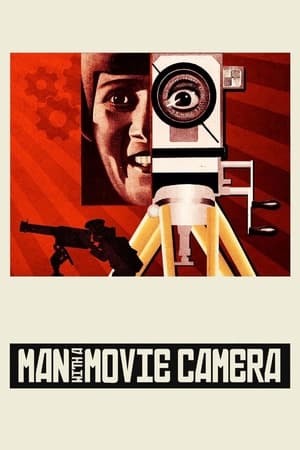
A day in the city of Berlin, which experienced an industrial boom in the 1920s, and still provides an insight into the living and working conditions at that time. Germany had just recovered a little from the worst consequences of the First World War, the great economic crisis was still a few years away and Hitler was not yet an issue at the time.
A cameraman wanders around with a camera slung over his shoulder, documenting urban life with dazzling inventiveness.
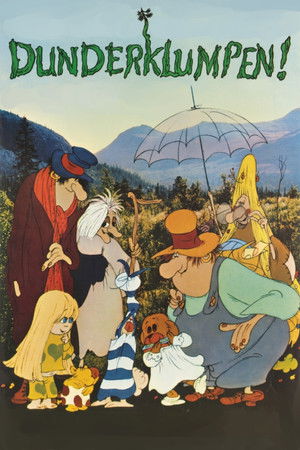
Dunderklumpen lives all alone in the mountains of Jämtland. One Midsummer's Eve when he feels very lonely he sets off on a journey to find friends.
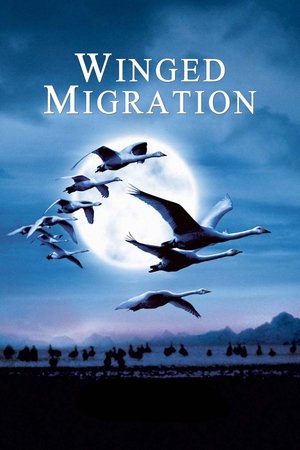
This documentary follows various migratory bird species on their long journeys from their summer homes to the equator and back, covering thousands of miles and navigating by the stars. These arduous treks are crucial for survival, seeking hospitable climates and food sources. Birds face numerous challenges, including crossing oceans and evading predators, illness, and injury. Although migrations are undertaken as a community, birds disperse into family units once they reach their destinations, and every continent is affected by these migrations, hosting migratory bird species at least part of the year.
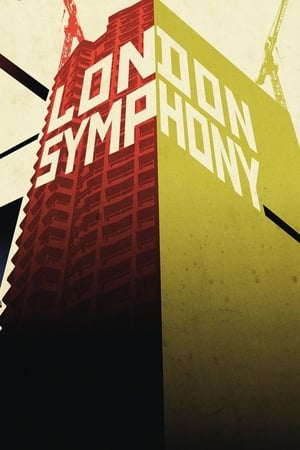
LONDON SYMPHONY is a brand new silent film - a city symphony - which offers a poetic journey through the city of London. It is an artistic snapshot of the city as it stands today, and a celebration of its culture and diversity.
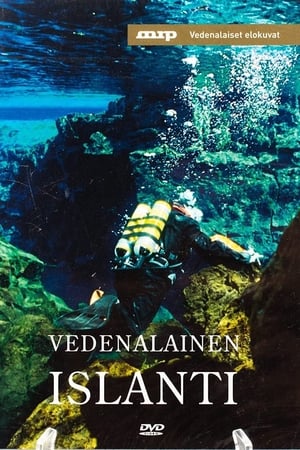
Marko Röhr's film crew takes the viewer to Europe's last unexplored area: Iceland's unique underwater world. We explore the geysers of boiling waters and the crystal clear lakes off the coast of Iceland. We dive under the icebergs, into the tears between the continental plates and into the deep caves.
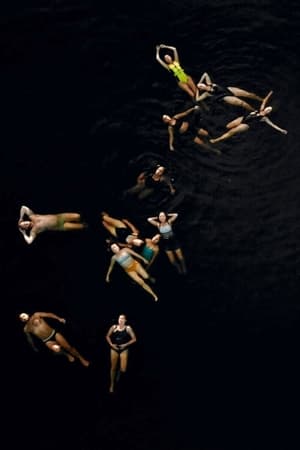
Lake gazes down at a still body of water from a birds-eye view, while a group of artists peacefully float in and out of the frame or work to stay at the surface. As they glide farther away and draw closer together, they reach out in collective queer and desirous exchanges — holding hands, drifting over and under their neighbors, making space, taking care of each other with a casual, gentle intimacy while they come together as individual parts of a whole. The video reflects on notions of togetherness and feminist theorist Silvia Federici’s call to “reconnect what capitalism has divided: our relation with nature, with others, and our bodies.”
Gubara was proud of the first color film in African cinema, which attempts to give an African response to the city symphony genre by capturing disparate images of daily life in Khartoum and setting it to music, particularly romantic Arabic songs.
Belfast, it's a city that is changing, changing because the people are leaving? But one came back, a 10,000 year old woman who claims that she is the city itself.
A frenetic found-footage documentary made entirely from “lost” unlabeled media on YouTube - weaving together nearly a thousand raw videos, each mistakenly or mindlessly uploaded under a generic filename (e.g., IMG 1326, IMG 5493…).
"The theme of the film HIDDEN CITIES is personal urban perceptions, which we call 'the city'. The city, as a living organism, reflecting social processes and interactions, economic relations, political conditions and private matters. In the city, human memories, desires and tragedies find expression in the form of designations and marks engraved in house walls and paving slabs. But what the city really is under this thick layer of signs, what it contains or conceals, is what we are researching in the HIDDEN CITIES project. The source material for the film are 9 sequential photo works created by Gusztáv Hámos between 1975 and 2010. Each of these 'city perceptions' depicts essential situations of urban experiences containing human and inhuman acts in a compact form. The cities in which the photo sequences have been made are Berlin, Budapest and New York – places with a traumatised past: Wars, dictatorships, terrorist catastrophes."
An experimental meditation on Times Square's marquees and iconic advertising that captures the concurrently seedy and dazzling aspects of New York's Great White Way.
"The Hart of London" is an endlessly layered tour de force. It explores life and death, the sense of place and personal displacement, and the intricate aesthetics of representation. It is a personal and spiritual film, marked inevitably by Chambers’s knowledge that he had leukemia. The late American avant-garde filmmaker Stan Brakhage said of Hart, "If I named the five greatest films [ever made], this has got to be one of them." Even this high praise falls short of hyperbole. The Hart of London is at the centre of Chambers’s extraordinary achievement.
Originally, a small village: Celles in the Occitanie region, 10 kilometers from Lodève, was to be swallowed up by the waters of Lac du Salagou when it was created in 1969. At the time, its inhabitants were expropriated but ultimately surprised, the village has never been submerged. Inhabited for more than 50 years now, the children of this bruised village are fighting to bring their little town back to life. The mayor of Celles, Joëlle Goudard, and the municipal councilors mobilized several years ago to revive the village. But what is the project that proposes to welcome new inhabitants? Will this dream come true?
Tale of a Lake is a film about the thousands of lakes that Finland is known for. It takes the viewers on an unprecedented adventure, ranging from the crystal clear springs all the way to the basins of the big lakes. It opens a whole new world of underwater nature for the viewers, and tells about the many old tales and beliefs in the land of thousands of lakes. The story of the film is told through tales that are based around the myths, legends and old beliefs that are part of the Finnish mythology.
Der Vierwaldstättersee: Blaues Juwel der Schweiz
Terra Mater: Der Plattensee - Ungarns Wasserwildnis
A multi-billion-dollar mining project is launched by the American Newmont Mining Corporation and lays claim to the land belonging to Preuvian highlander Máxima Acuña.
The water is a metaphorical view of life in the drought of the people living in Pustec by Prespa Lake.
In this short film Bert Haanstra gives his vision - from the water – of a tranquil Holland. During filming he held the camera upside down and afterwards put the images ‘up right’ again in the film. By doing this, we see the ‘usual’ waterfront, but transformed by the rippling of the water. In this way Mirror of Holland became a modern looking experimental film. However this did not devalue the Dutch sentiment regarding waterfronts that are so trusted to so many.