In 1959 Hiroshi Teshigahara shot the following 16 mm footage of he and his father’s first trip to Barcelona and the outlying Catalonian countryside, including a visit to the home of Salvador Dali in Port Lligat. The footage was recorded without sound.
With the construction of the Indian planned city of Chandigarh, the Swiss and French architect Le Corbusier completed his life's work 70 years ago. Chandigarh is a controversial synthesis of the arts, a bold utopia of modernity. The film accompanies four cultural workers who live in the planned city and reflects on Le Corbusier's legacy, utopian urban ideas and the cultural differences between East and West in an atmospherically dense narrative.
In the midst of the chaos of México City, a group of eight bachelor millennials who call themselves ´The Hermits´, open the doors to their tiny apartments in the historic Ermita Building, in the yet-to-be gentrified neighborhood of Tacubaya, and share their life experiences in a time when precarity changes the way in which we love, feel and relate to each other. As we explore the homes of these eight neighbors, we also witness their personalities intersect in a Whatsapp chat, a virtual space that functions as a supporting system that helps them face the adversities that living alone in this city brings.
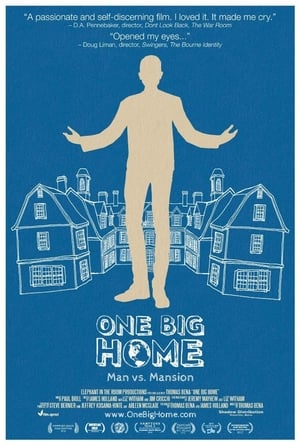
On the tiny island of Martha's Vineyard, where presidents and celebrities vacation, trophy homes threaten to destroy the islands unique character. Twelve years in the making, One Big Home follows one carpenters journey to understand the trend toward giant houses. When he feels complicit in wrecking the place he calls home, he takes off his tool belt and picks up a camera.
A biography documentary of the Argentine modernist architect Amancio Williams.
Architecture in Beirut was the second greatest victim of the civil war, with pages of ancient and modern history erased by the end of the conflict. This documentary interviews citizens calling for a reconstruction plan that would preserve Beirut’s spirit of culture and openness.
Poème Électronique is an 8-minute piece of electronic music by composer Edgard Varèse, written for the Philips Pavilion at the 1958 Brussels World’s Fair. The Philips corporation commissioned Le Corbusier to design the pavilion, which was intended as a showcase of their engineering progress. The pavilion was shaped like a stomach, with a narrow entrance and exit on either side of a large central space. As the audience entered and exited the pavilion, the electronic composition Concret PH by Iannis Xenakis (who also acted as Le Corbusier's architectural assistant for the pavilion's design) was heard. Poème électronique was synchronized to a film of black and white photographs selected by Le Corbusier which touched on vague themes of human existence.
A documentary about the 1968 explosion in the residential Ronan Point tower in East London. The building had only been opened for several weeks when a gas explosion led to a partial collapse of the upper floors of the structure. It was later deemed to have been built in an unsafe fashion. Voices of those involved are heard in the film.
This documentary follows 200 days in the life of contemporary artist Hiroshi Sugimoto— a leading presence in the world of modern art. He is the winner of many prestigious awards and his photographs are sold for millions of yen at overseas auctions. The film shows the sites of the Architecture series shot in southern France, the huge installation art work at 17th Biennale of Sydney, his new work Mathematics at Provence, his art studio while working on Lightning Fields, and more. It thoroughly pursues the question Sugimoto's works pose - "living in modern times, what are these works trying to tell us?" A thrilling look into the world of Hiroshi Sugimoto.
How can structures, which take up defined, rigid portions of space, make us feel transcendence? How can chapels turn into places of introspection? How can walls grant boundless freedom? Driven by intense childhood impressions, director Christoph Schaub visits extraordinary churches, both ancient and futuristic, and discovers works of art that take him up to the skies and all the way down to the bottom of the ocean. With the help of architects Peter Zumthor, Peter Märkli, and Álvaro Siza Vieira, artists James Turrell and Cristina Iglesias, and drummer Sergé “Jojo” Mayer, he tries to make sense of the world and decipher our spiritual experiences using the seemingly abstract concepts of light, time, rhythm, sound, and shape. The superb cinematography turns this contemplative search into a multi-sensory experience.
Crownsville Hospital: From Lunacy to Legacy is a feature-length documentary film highlighting the history of the Crownsville State Mental Hospital in Crownsville, MD.
Urban architecture as seen through the eyes of four female veterans in the field.
Jaime Lerner - Uma História de Sonhos
Best known for designing National Historic Landmarks such as St. Louis’ iconic Gateway Arch and the General Motors Technical Center, Saarinen also designed New York’s TWA Flight Center at John F. Kennedy International Airport, Yale University’s Ingalls Rink and Morse and Ezra Stiles Colleges, Virginia’s Dulles Airport, and modernist pedestal furniture like the Tulip chair.
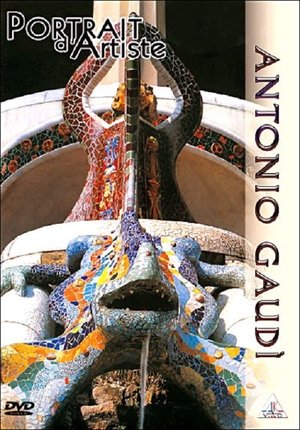
In Barcelona, the Casa Batlló alone sums up the genius of Antoni Gaudí. During the exhibition devoted to it by the Musée d'Orsay, we take a guided tour of this eccentric, colorful residence, completed in 1906.
An exploration of Cologne Cathedral, an emblematic monument and world heritage site. The towering place of worship took over 600 years to complete. Once the tallest building in the world, its ornate facade remains a masterpiece of Gothic architecture - and a reflection of the evolution of Franco-German relations.
In 1967, de Andrade was invited by the Italian company Olivetti to produce a documentary on the new Brazilian capital city of Brasília. Constructed during the latter half of the 1950s and founded in 1960, the city was part of an effort to populate Brazil’s vast interior region and was to be the embodiment of democratic urban planning, free from the class divisions and inequalities that characterize so many metropolises. Unsurprisingly, Brasília, Contradições de uma Cidade Nova (Brasília, Contradictions of a New City, 1968) revealed Brasília to be utopic only for the wealthy, replicating the same social problems present in every Brazilian city. (Senses of Cinema)
Schaub and Schindelm’s documentary follows two Swiss star architects, Jacques Herzog and Pierre de Meuron, on two very different projects: the national stadium for the Olympic summer games in Peking 2008 and a city area in the provincial town of Jinhua, China.
Known for his bold, abstract and stark white buildings, American architect Richard Meier now takes on the challenge of building the Jubilee Church in Rome. Holding the location in high regard, Meier praises the vibrant visual layout of the city and tells us, "Rome is a city of architecture; it's a city of walls and columns and spaces and places and defined places and wherever you look there's architecture" (Richard Meier). Staying true to his signature design style, Meier has created a structure resembling grand soaring sails which appear steady and peaceful as they stand in striking opposition to the city's landscape. Three curved walls separate three distinct spaces: the main sanctuary, the weekday chapel and the baptistry, each with its own entrance. As a contrast he shows us his favorite churches in Rome by his famous colleagues from earlier times.
One week in the extraordinary-ordinary life of Mr. Moriyama, a Japanese art, architecture and music enlighted amateur who lives in one of the most famous contemporary Japanese architecture, the Moriyama house, built in Tokyo in 2005 by Pritzker-prize winner Ryue Nishizawa (SANAA). Introduced in the intimacy of this experimental microcosm which redefines completely the common sense of domestic life, Ila Bêka recounts in a very spontaneous and personal way the unique personality of the owner: a urban hermit living in a small archipelago of peace and contemplation in the heart of Tokyo. From noise music to experimental movies, the film let us enter into the ramification of the Mr. Moriyama's free spirit. Moriyama-San, the first film about noise music, acrobatic reading, silent movies, fireworks and Japanese architecture!