Velu Naicker, who witnesses the brutal murder of his father, kills a corrupt policeman and escapes to Mumbai, only to become a gangster.
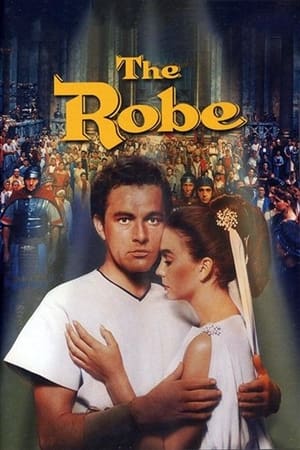
Drunk and disillusioned Roman, Marcellus Gallio, wins Jesus' robe in a dice game after the crucifixion. Marcellus has never been a man of faith like his slave, Demetrius, but when Demetrius escapes with the robe, Marcellus experiences disturbing visions and feels guilty for his actions. Convinced that destroying the robe will cure him, Marcellus sets out to find Demetrius — and discovers his Christian faith along the way.
The great King of Dacia, Decebal (Decebalus), is disposed to make the ultimate sacrifice in order to keep the integrity of his people. His own son, Cotyso, is given to the god Zamolxis to the dismay of the King and his daughter Meda. Septimius Severus, a young Roman devoted to his adopted country, must make the choice between his blood origins and the culture he was introduced to.
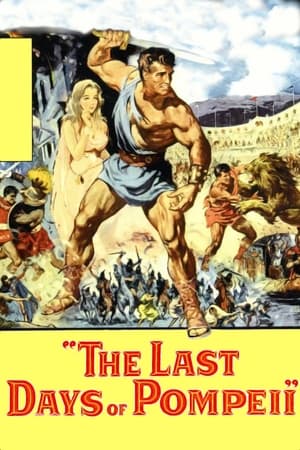
Glaucus, a demobilized centurion returns home to Pompeii to find his father murdered by a gang of black-hooded Christian robbers that terrorizes the city and he decides to investigate the matter while the nearby volcano threatens to erupt.
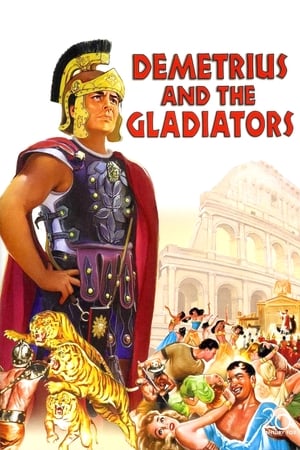
The story picks up at the point where "The Robe" ends, following the martyrdom of Diana and Marcellus. Christ's robe is conveyed to Peter for safe-keeping, but the emperor Caligula wants it back to benefit from its powers. Marcellus' former slave Demetrius seeks to prevent this, and catches the eye of Messalina, wife to Caligula's uncle Claudius. Messalina tempts Demetrius, he winds up fighting in the arena, and wavers in his faith.
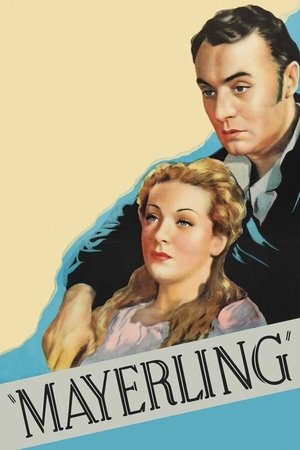
Rudolf, the only heir to Emperor Franz Josef of Austria-Hungary, is trapped in a loveless marriage to a Belgian princess. As he seeks to flee his stifling environment, he meets the beautiful Maria, and the two enter into a scandalous affair. Despite the interference of the Emperor, the couple refuse to give each other up.
The queen of Egypt barges the Nile and flirts with Mark Antony and Julius Caesar.
In the 16th century, when Prince Salim falls in love with a beautiful courtesan named Anarkali, Emperor Akbar's disapproval leads to a battle between father and son.
Luke risks his life to visit Paul in a Roman prison, where the apostle awaits execution under Nero. As Paul reflects on his past and the Christian community faces persecution, Luke resolves to record the story of the early church.
At the height of the Roman Civil War, an aging Julius Caesar finds himself intrigued by the young Egyptian queen Cleopatra, whom he teaches how to rule Egypt.
September 2, 476 A.D.: Only two days before the Ostrogoth Foederati finally sack the City of Rome in the early morning hours of September 4th. When Ostrogoth Chieftain, and the Leader of the Foederati, Odoacer finally takes over the City that same day, and Ends the Empire, by the famous Act of Deposing of the Last Western Roman Caesar Romulus Augustulus. Hence with this famous/infamous act of deposition of the Emperor Augustulus, Odoacer officially ends the 1,300 years of Roman Power, thus giving way to the next 1,000 years of the Dark Ages.
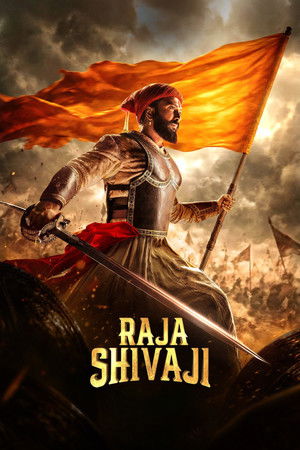
Chronicles the rise of young Shivaji Bhonsale, who challenged the might of established empires to found the Maratha kingdom and lay the groundwork for 'Swarajya' (self-rule) during a turbulent period of Indian history.
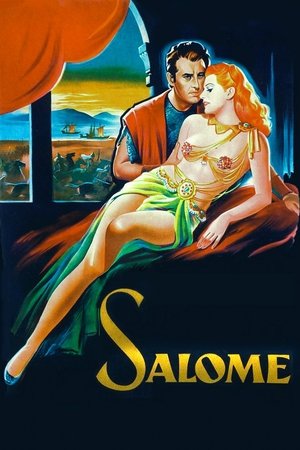
In the reign of emperor Tiberius, Gallilean prophet John the Baptist preaches against King Herod and Queen Herodias. The latter wants John dead, but Herod fears to harm him due to a prophecy. Enter beautiful Princess Salome, Herod's long-absent stepdaughter. Herodias sees the king's dawning lust for Salome as her means of bending him to her will. But Salome and her lover Claudius are–contrary to Scripture–nearing conversion to the new religion.
A mysterious warrior teams up with the daughter and son of a deposed Chinese Emperor to defeat their cruel brother, who seeks their deaths.
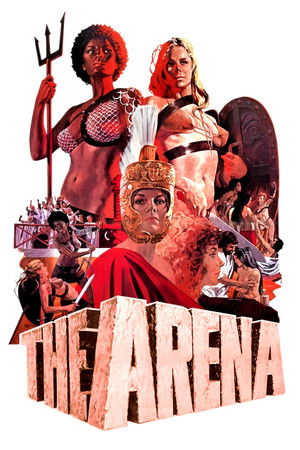
Female gladiators fight to the death. Inspired by the story of Spartacus, follow the adventures of a bevy of slave girls who, upon finding themselves thrust into the gladiator ring, mount a vicious rebellion to fight their way to freedom.
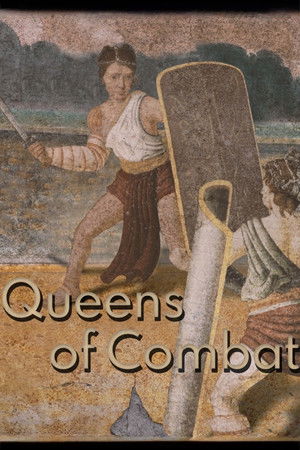
What if women were hidden among the ranks of Ancient Rome’s fearsome gladiators? A group of experts searches for evidence to prove women once fought in the arena just like men. Combining history, archaeology, and forensic investigation, journey across Europe in a quest for answers. If a female gladiator's existence can be proven definitively, what can we learn about their lives?
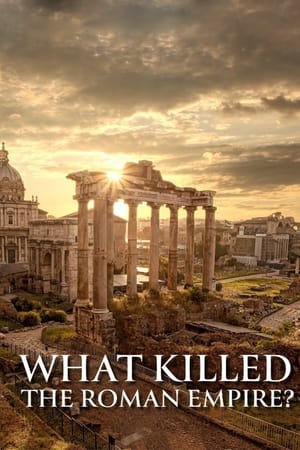
Why did the Roman Empire, which dominated Europe and the Mediterranean for five centuries, inexorably weaken until it disappeared? Archaeologists, specialists in ancient pathologies and climate historians are now accumulating clues converging on the same factors: a powerful cooling and pandemics. A disease, whose symptoms described by the Greek physician Galen are reminiscent of those of smallpox, struck Rome in 167, soon devastating its army. At the same time, a sudden climatic disorder that was underway as far as Eurasia caused agricultural yields to plummet and led to the westward migration of the Huns. Plagued by economic and military difficulties, attacked from all sides by barbarian tribes, the Roman edifice gradually cracked.
From the legendary times of Romulus and Remus to the present day, the compelling story of the eternal city's twenty-five centuries of civilization traces the rise of Christianity over paganism through studies of Vatican art treasures.
Opera written by inmates of a Nazi concentration camp in 1943 before their murder in Auschwitz.
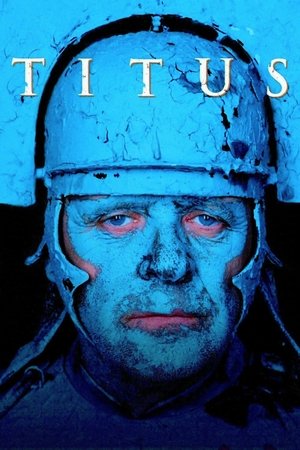
Titus Andronicus returns from the wars and sees his sons and daughters taken from him, one by one. Shakespeare's goriest and earliest tragedy.