Jean-Luc Godard brings his firebrand political cinema to the UK, exploring the revolutionary signals in late '60s British society. Constructed as a montage of various disconnected political acts (in line with Godard's then appropriation of Soviet director Dziga Vertov's agitprop techniques), it combines a diverse range of footage, from students discussing The Beatles to the production line at the MG factory in Oxfordshire, burnished with onscreen political sloganeering.
In the run-up to parliamentary elections in mid-October, Polish filmmaker Marcin Wierzchowski travelled across his country to gauge the atmosphere in a society that is more divided than ever.
A documentary on the late American entertainer Dean Reed, who became a huge star in East Germany after settling there in 1973.
The history of Camp Kinderland, founded in the 1920s to provide Jewish children an escape from the hot New York City summers.
The last months in the life of a Serbian philosopher and socialist activist Svetozar Marković and his exile by the government of the Serbian Princedom.
"Don't Let The Bastards Grind You Down" is a documentary film about British social policy. The focus is on the political struggle against neoliberal austerity policies, which have their origins in the hated Thatcher government. The film features the former socialist MP Dave Nellist, who is now the national chair of the Trade Unionist & Socialist Coalition and Hannah Sell, the general secretary of the Socialist Party. The film features a local election campaign in the miners' town of Nuneaton, students campaigning against an increase in tuition fees and refuse workers from Birmingham striking against massive cuts to their wages.
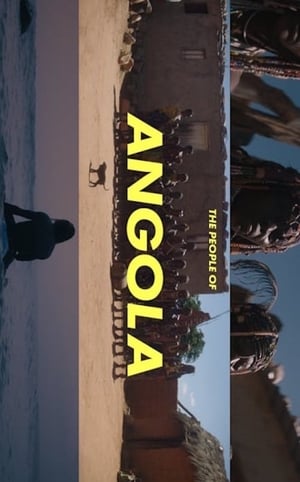
Sissako visits a war-torn Angola after thirty years of war in search of a friend and thereby through interviews reflects on the lost utopias of a generation of Africans who experienced the liberation struggles. His camera is witness to the dislocation and despair of those he encounters living in Angola, however he also discovers the resilient spirit of Africa and optimism for its future in unexpected ways.
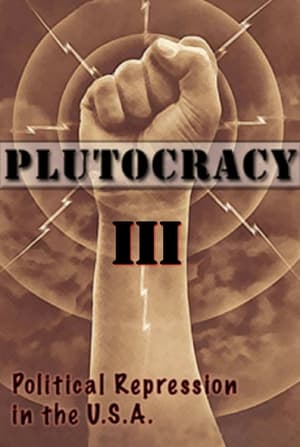
Alex Jones interviews Walter Burien, commodity trading adviser (CTA) of 15 years about the biggest game in town. There are over 85,000 federal and regional governmental institutions: school districts, water and power authorities, county and city governments – and they own over 70 percent of the stock market.
Documentary film with play scenes about the rise and fall of the short-lived Bavarian Soviet Republic in 1919 from the perspective of various well-known poets and writers who experienced the events as contemporary witnesses.
Michael Moore's view on how the Bush administration allegedly used the tragic events on 9/11 to push forward its agenda for unjust wars in Afghanistan and Iraq.
The free, almost naive view from the perspective of a child puts the "68ers" in a new, illuminating light in the anniversary year 2008. The film is a provocative reckoning with the ideological upbringing that seemed so progressive and yet was suffocated by the children's desire to finally grow up. With an ironic eye and a feuilletonistic style, author Richard David Precht and Cologne documentary film director André Schäfer trace a childhood in the West German provinces - and place the major events of those years in completely different, smaller and very private contexts.
An innovative and charismatic influencer is suddenly exiled from her community of creative partners and colleagues when she states an opinion that she did not know was “unacceptable” in their eyes.
A homeless man living in a encampment in Minneapolis tells his perspective on the ongoing crisis of homelessness.
When the revolution in Nicaragua won its victory nearly 40 years ago, the world began to dream. A young generation was taking the reins in a country of grand utopias. From West Germany alone, 15,000 “brigadists” travelled to help rebuild the war-torn country: liberals, greens, unionists, social democrats, leftists and church representatives harvested coffee and cotton, built schools, kindergartens and hospital wards. No movement has mobilised so many people. What became of the hopes and dreams of the revolutionaries and their supporters?
Ilya Kabakov is considered one of the most important contemporary artists worldwide. Born and raised in the Ukraine in the period between Stalin and Gorbatschow he left the country in the 80s. In his Installations and his numerous paintings Kabakov creates a world of its own, which leaves the heaviness of socialist and post-socialist life far behind. The film links Ilya Kabakovs artistic spaces with insights into Russian everyday life, which itself sometimes appears like an installation by the artist.
In Angola's mist-shrouded highlands, three KhoiSan master trackers embark on a spiritual quest to rediscover the legendary "ghost elephants" of Lisima, creatures presumed lost but remembered in ancestral trance, ritual, and memory.
Do Útero Ao Túmulo
A leftist revolutionary or a reformist democrat? A committed Marxist or a constitutionalist politician? An ethical and moral man or, as Richard Nixon called him, a "son of a bitch"? In SALVADOR ALLENDE, acclaimed Chilean filmmaker Patricio Guzmán (The Battle of Chile and Chile, Obstinate Memory) returns to his native country thirty years after the 1973 military coup that overthrew Chile's Popular Unity government to examine the life of its leader, Salvador Allende, both as a politician and a man.
An interview with the president of Chile conducted by Roberto Rossellini in 1971, but broadcast only after his death.
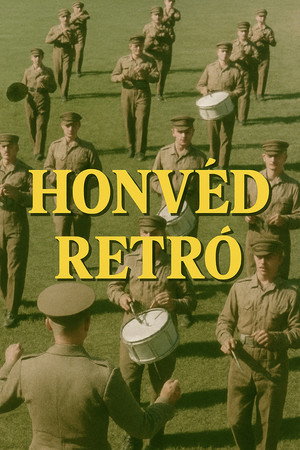
A feature length, lively - montage style - documentary, capturing the essence of what life was like in socialist Hungary's conscript army, using contemporary videos.