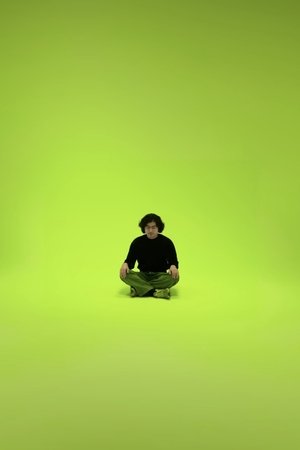
A psychotic filmmaker named Philip summons a manifestation of Stanley Kubrick into his apartment to confront him on the depiction of mental illness in his filmography. Kubrick's obsession with 'crazy' characters who meet an untimely death disturbs Philip, who wishes he could see Kubrick characters who manage their illness. The two directors go on a journey into Kubrick's films to understand insanity in our modern era.
A desktop documentary that focuses on the Golden Record that NASA sent into space in the late 1970s. The piece reflects on issues such as the power of scientific discourse to produce revisions of the world, the evolution of the concept of the archive and the resignification of borders in the rhetoric of space colonialism.
"Fly too high and you will burn, go too low and you won't breathe." A 7 day vlog during the summer of 2023, a story of dreamers and drowners.
HIPERTEXTO
An experimental video essay which uses circles and waves to explore neurodivergent experience.
Joan Crawford's close-up in Humoresque. Michelangelo's David and Boticelli's "Birth of Venus". Stendhal was overwhelmed by the cultural overstimulation in Florence, which Graziella Magherini described scientifically in 1979 as Stendhal syndrome. Mark Rappaport describes his fascination for the Austrian actor Turhan Bey, who made a career in exotic roles in Hollywood in the 1940s. A very personal essay about the effect of close-ups, the canvas idols of the dream factory and the role of their admirers and fans.
Near Munich, in Bavaria, Germany, is the Schleißheim Palace, where French filmmaker Alain Resnais shot his film Last Year at Marienbad in 1960. Nearby is the Dachau concentration camp, where thousands of people were killed between 1933 and 1945. An essay about the present and the past, beauty and horror, life and death.
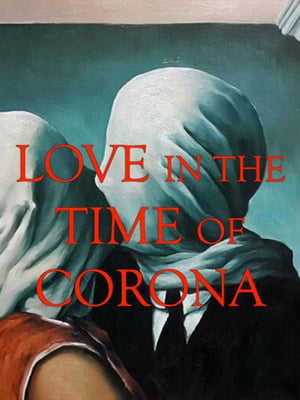
A video essay by Mark Rappaport, which spans René Magritte and Michelangelo to Bonnie & Clyde. Let’s mask up to rob a bank! But make sure that you are home before the curfew.
Swimming, Dancing examines audiovisual representations of the Yangtze (1934–present), from silent film to video art to the contemporary vlog. Inspired by the city symphonies of the 1920s, Swimming, Dancing pieces together a “river symphony”, evoking the images, sounds and contradictions that make up the river’s turbulent history.
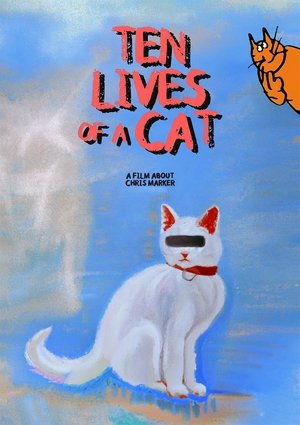
Ten years after the death of iconic French filmmaker, Chris Marker. A filmmaker, hoping to rediscover that unique sensibility against the uncertainty of the new century, returns to the places synonymous with those incomparable and unforgettable films-- From the cat cemetery of Sans Soleil, to the mausoleum of The Last Bolshevik; The caves of Level Five to the rooftops of The Case of the Grinning Cat. A biographical portrait of one of the 20th century's greatest and most misunderstood filmmakers.
What could have happened – what should have happened – if two giants in film history, like Greta Garbo and Sergei Michajlovič Eisenstein, could have declared their love for each other? The world's most famous actress, an honorary Russian citizen of cinema for her many performances; the world's most radical director, who could have immortalized her face in one of his famous close-ups? Sphinx Garbo did not want to be alone: she just wanted to marry the great Sergei. Perhaps she could have played Trotsky or Pancho Villa in one of his films. Perhaps their friends Charlie Chaplin, Walt Disney and Josef von Sternberg would have approved their love. Maybe they could have had a child together. Maybe all this could still have happened, in a Mark Rappaport film.
A short documentary that emerge at the center of round table debate, participating in it there's three students from the Superior School of Arts and Design, Caldas da Rainha - Portugal. This conversation go along with a video essay about Afrofuturism and Pop Culture. Also, during the debate, an interview with another student gives some real example of how afrofuturism can be applied when it comes to in taking control of the colonial narratives into a black person perspective.
This visual essay sets clips from Robert Bresson's "A Man Escaped" to a reading of "Functions of Film Sound," a chapter from David Bordwell and Kristin Thompson's book "Film Art." The chapter analyzes the sound design of Bresson's masterpiece as a means of discussing the use of sound in film.
What begins as an impassioned defense of empathy in children's programming takes Lindsay Ellis down a rabbit-hole to the likes of Ben Shapiro, Fred Rogers, and King Solomon, while finally leading us to a place of devastation and anger at the state of the world.
A fictional biography of Hollywood actors Martin Kosleck and Hans Heinrich von Twardowski, both of whom fled Hitler-era Germany to live a long-lasting relationship.
A fictionalized biography on John Dall who was in two great movies - Alfred Hitchcock’s Rope (1948) and Joseph H. Lewis’ Gun Crazy (1950).
A filmmaker reconstructs a common memory about the formerly industrialized Lake Constance region, which was also largely built up by migration – and in recent years has mainly attracted people who do not like to pay taxes. The imprints speak, the fog. Without talking heads, in perspectives beyond the memorialized self-image of this region, classism becomes comprehensible.
A tribute to actresses, approaching their presence in and out the screen, humanizing the icons. From the Ukrainian Anna Sten to the French Anna Karina, we can see some close-up faces that marked the history of the cinema, and whose demand is more relevant than ever.
An extension of the Benign Violation theory of comedy developed by Tom Veatch and A. Peter McGraw and Caleb Warren. Source: The Cure (1917) Dir. Charles Chaplin and Edward Brewer
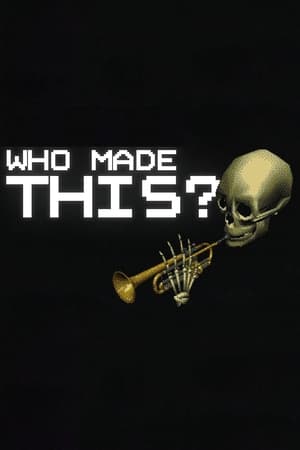
YouTuber Jeffiot goes digging for the origins of skull trumpet / doot doot / mr skeltal, and ends up taking a trip to the early web heyday of animated gif art, and ruminating on creativity and legacy.