Ballet by the Lake: The Wilderness Ballet Camp in Ontario's Algonquin Park. Dancing on the Rockies: The Banff School of Fine Arts ballet class practises out of doors.
A profile on Moses Pendleton, the founder of the Pilobolus Dance Theater and MOMIX.
When Jacques d'Amboise took a group of dancers and members of his teaching staff to China, they worked with acclaimed dancer Dou Dou Huang and more than a hundred Chinese children. Their goal: to create a special performance using a variety of dance styles - including hip-hop, freestyle jazz and traditional Chinese folk dance - that would premiere at the Shanghai Grand Theatre in honor of the 2007 Shanghai Special Olympics World Games. Part of a month-long cultural exchange between d'Amboise's National Dance Institute and several Chinese troupes, featuring some of that country's most talented young dancers, the collaboration underscored the power of dance to transcend obstacles of culture and language.
For two hundred years, the Shakers have been America's most successful utopian society. While seeking harmony, order and perfection in every aspect of their lives, they built minimalistic furniture and buildings that influenced modern design. The Shakers wrote songs of exquisite beauty and danced to the point of ecstasy during their religious meetings. Inspired by this music and dance, choreographer Tero Saarinen created Borrowed Light, a dance piece about communal life and individual sacrifice. Shot in Finland and the United States, featuring interviews and excerpts from Borrowed Light, this documentary explore the cultural legacy of this religious group devoted to creating heaven on earth.
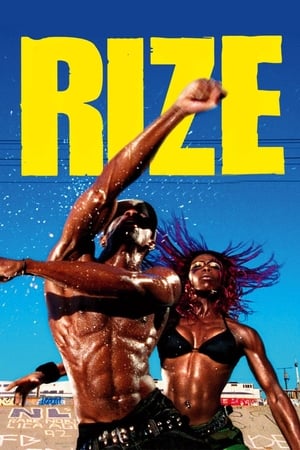
A documentary film that highlights two street derived dance styles, Clowning and Krumping, that came out of the low income neighborhoods of L.A.. Director David LaChapelle interviews each dance crew about how their unique dances evolved. A new and positive activity away from the drugs, guns, and gangs that ruled their neighborhood. A raw film about a growing sub-culture movements in America.
During his thirty-year career, Walter Hus, a Belgian composer and pianist, has taken a thousand musical faces. While he wanted to compose a new work, a crisis blocked his creation. During an exchange with his therapist, he comes to an existential question: "Who am I musically? » Through the portrait of this composer, as abundant as it is fascinating, the film aims to give access to his creative process and thus to the endurance and beauty of creation.
An Austrian director followed five successful African music and dance artists with his camera and followed their lives for a year. The artists, from villages in Ghana, Gambia and Congo, were the subjects of Africa! Africa! touring across Europe, but they have unbreakable roots to their homeland and their families. Schmiderer lovingly portrays his heroes, who tell their stories about themselves, their art and what it means to them to be African with captivating honesty. The interviews are interwoven with dance scenes and colourful vignettes set to authentic music.
An immersive look at São Paulo Dance Company
In this documentary, Argentinians dance to their favourite hits.
No Palco
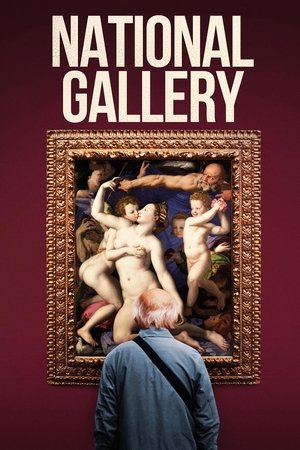
A portrait of the day-to-day operations of the National Gallery of London, that reveals the role of the employees and the experiences of the Gallery's visitors. The film portrays the role of the curators and conservators; the education, scientific, and conservation departments; and the audience of all kinds of people who come to experience it.
At the crossroads of arts, bodies and images merge to create a world of poetry and dreams.
Santiago Mitre co-directs his first movement following The Student together with choreographer Onofri Barbato. Although it would have been more accurate to say “his first film-story-adventure-movie-great movie following The Student”, the word movement fits perfectly in Los posibles, the most overwhelmingly kinetic work Argentine cinema has delivered in many, many years. The film deals with the adaptation of a dance show directed by Onofri together with a group of teenagers who came to Casa La Salle, a center of social integration located in González Catán, trying to find some refuge from hardship. Already entitled Los posibles, the piece opened in the La Plata Tacec and was later staged in the AB Hall of the San Martín Cultural Center. Now, it dazzles audiences out of a film screen, with extraordinary muscles and a huge heart: Los posibles is a rhapsody of roughen bodies and torn emotions. Precise and exciting, it’s our own delayed, necessary, and incandescent West Side Story.
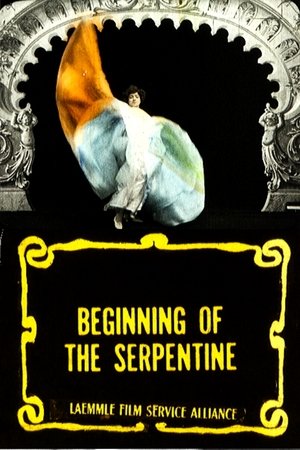
A short dance film in Pathécolor, also know as stencil colouring. The editing cuts correspond with the dancers' costume changes. More about stencil colouring at http://zauberklang.ch/filmcolors/timeline-entry/1218/.
Documentary without audio produced by deaf people. Music is depicted visually with the complete absence of musical instruments or voices. Directed by Makihara Eri and choreographer Dakei. With a diverse lineup including ordinary deaf people with zero acting experience and a choreographer who performs in Japan and abroad, this film pulls out all the tops to give visual expression to music through the physical body. An aging man uses multiple sign language poems to convey the four seasons, and a girl expresses the wind amidst the rustling trees.
Vytvorila dedina - Tancuje mesto
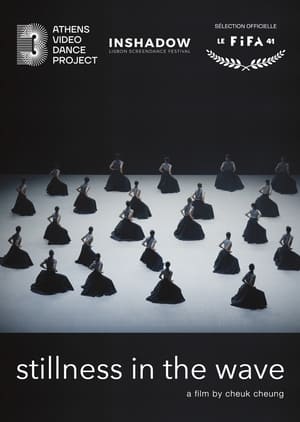
The documentary portrayed one of the most established dance companies in Hong Kong which has a history of over four decades. With a tradition of blending Chinese dance and ballet together in the training, the dance company has set sail to re-evaluate its artistic essence by adapting new physical disciplines and philosophy, picking up different cultural traces, meditation and Chinese martial arts. Through monologues of the company members, the film unveiled their fears, self-doubts, and findings in their quest to refine their dance forms and express their cultural roots. It's an uncertain journey towards the cultivation of inner peace and the essence of movement and stillness.
Documentary short from the NFB Canada Carries On series on dancing from the different cultures in Canada.
A crew of strangers converge over a quick slice inside a NYC pizza shop - a casual community hub. When a “contaigent” enters, dance turns inconsequential moments into idiosyncratic gestures, toggling between task and Bob Fosse-inspired choreography. Subtle and disorientating editing crafts an intimate dream between strangers.
The dark sensibilities and cultural resonances of Butoh, the radical Japanese dance movement, are explored in this multilayered work. Profoundly rooted in both traditional and contemporary Japanese culture, Butoh arose in a spirit of revolt in the early 1960s. Characterized by frank sexuality and bodily distortions, Butoh transforms traditional dance movements into new forms, stripping away the taboos of contemporary Japanese culture to reveal a secret world of darkness and irrationality.