In war-torn colonial America, in the midst of a bloody battle between British, the French and Native American allies, the aristocratic daughter of a British Colonel and her party are captured by a group of Huron warriors. Fortunately, a group of three Mohican trappers comes to their rescue.
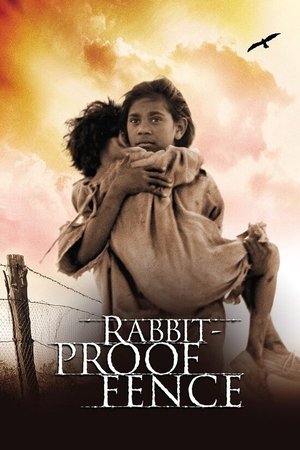
In 1931, three Aboriginal girls escape after being plucked from their homes to be trained as domestic staff, and set off on a trek across the Outback.
At the beginning of the 20th century an American woman is abducted in Morocco by Berbers, and the attempts to free her range from diplomatic pressure to military intervention.
Montezuma is a 2009 BBC Television documentary film in which Dan Snow examines the reign of the Aztec Emperor Moctezuma II.
A drama about explorer John Smith and the clash between Native Americans and English settlers in the 17th century.
Sir Robert Beaumont is behind schedule on a railroad in Africa. Enlisting noted engineer John Henry Patterson to right the ship, Beaumont expects results. Everything seems great until the crew discovers the mutilated corpse of the project's foreman, seemingly killed by a lion. After several more attacks, Patterson calls in famed hunter Charles Remington, who has finally met his match in the bloodthirsty lions.
An exhaustive explanation of how the military occupation of an invaded territory occurs and its consequences, using as a paradigmatic example the recent history of Israel and the Palestinian territories, the West Bank and the Gaza Strip, from 1967, when the Six-Day War took place, to the present day; an account by filmmaker Avi Mograbi enriched by the testimonies of Israeli army veterans.
How African artists have spread African culture all over the world, especially music, since the harsh years of decolonization, trying to offer a nicer portrait of this amazing continent, historically known for tragic subjects, such as slavery, famine, war and political chaos.
A Luta Continua explains the military struggle of the Liberation Front of Mozambique (FRELIMO) against the Portuguese. Produced and narrated by American activists Robert Van Lierop, it details the relationship of the liberation to the wider regional and continental demands for self-determination against minority rule. It notes the complicit roles of foreign governments and companies in supporting Portugal against the African nationalists. Footage from the front lines of the struggle helps contextualize FRELIMO's African socialist ideology, specifically the role of the military in building the new nation, a commitment to education, demands for sexual equality, the introduction of medical aid into the countryside, and the role of culture in creating a single national identity.
Spain, 2003. An accidental discovery leads Clarence to travel from the snowy mountains of Huesca to Equatorial Guinea, to visit the land where her father Jacobo and her uncle Kilian spent most of their youth, the island of Fernando Poo.
In 1879, the British suffer a great loss at the Battle of Isandlwana due to incompetent leadership.
This excellent feature-length documentary - the story of the imperialist colonization of Africa - is a film about death. Its most shocking sequences derive from the captured French film archives in Algeria containing - unbelievably - masses of French-shot documentary footage of their tortures, massacres and executions of Algerians. The real death of children, passers-by, resistance fighters, one after the other, becomes unbearable. Rather than be blatant propaganda, the film convinces entirely by its visual evidence, constituting an object lesson for revolutionary cinema.
An idealistic Dutch colonial officer posted to Indonesia in the 19th century is cohvinced that he can make the kinds of changes that will actually help the local people he is in charge of, but circumstances soon make him realize just how out of touch he really is, and it doesn't take long for things to go from bad to worse.
Manuel Horrillo has visited for 7 years the fields where the clashes between the Spanish troops and the rebels of the protectorate took place during the so-called Rif War, a forgotten war of the Spanish collective imaginary.
The year is 1893 and India is under British occupation. In a small village, the tyrannical Captain Russell has imposed an unprecedented land tax on its citizens. Outraged, Bhuvan, a rebellious farmer, rallies the villagers to publicly oppose the tax. Russell offers a novel way to settle the dispute: he challenges Bhuvan and his men to a game of cricket, a sport completely foreign to India. If Bhuvan and his men can defeat Russell's team, the tax will be repealed.
Stories of Waitara combines oral histories, state of the art animations and powerful dramatic re-enactments to bring to life the narratives of Te Ātiawa in their epic battle against the military might of the British Empire. Created and presented by award-winning journalist Mihingarangi Forbes NZ Wars: Stories of Waitara documents the epic battle for control over the fertile lands of Taranaki. Shared through the eyes of Te Atiawa descendants including Dr Ruakere Hond with insights from acclaimed historian Dr Vincent O'Malley this digital documentary project focuses on the beginning of the Taranaki wars which started in Waitara and raged across the region for over two decades. The Taranaki pa site of Pukerangiora holds a significant place in New Zealand's military history as a lasting symbol of Maori resistance and resilience. Pukerangiora is now the backdrop for the latest installment of RNZ's award-winning docu-series on the bloody birth of modern New Zealand.
A young adult's first-hand account of "accidentally becoming human again" after, and with, trauma induced depression. Lo-fi, vulnerable, and uniquely youthful, "The Afterlife" is a melancholic affirmation of life after death.
After accidentally becoming the caretaker of a robin’s egg, I reach out to my grandmother for guidance. As we await the fate of the fragile, pale blue egg, we call from across the world to birdwatch together—a meditation on nature, nurture, and letting go.
A documentary about the history of settler groups that came to New Zealand from Europe.
Documentary chronicling the government relocation of 10,000 Navajo Indians in Arizona.