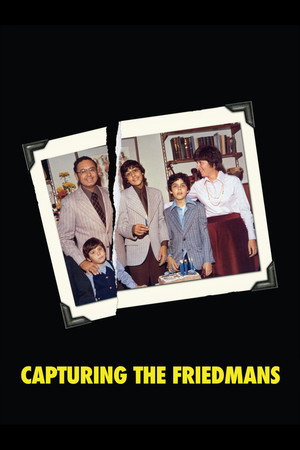
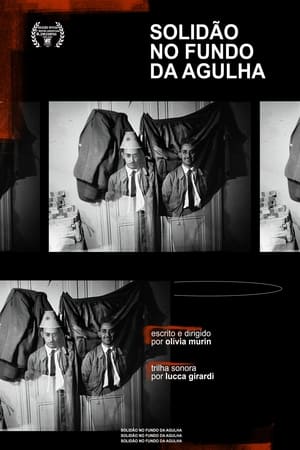
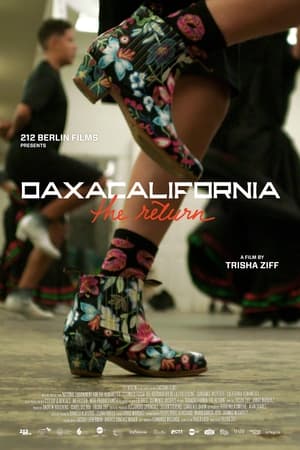
Roberto tries to interview his grandmother to find the story behind a family secret. There are two relatives whose faces are crossed out in all the pictures and nobody talks about them.
Weaving together the voices of women entangled in the criminal justice system, along with leading scholars on prison abolition, this film provides a critical analysis of the disfunctionality and violence of the prison system.
With unprecedented access, this documentary looks into the hidden world of one of Russia's most impenetrable and remote institutions - a maximum security prison exclusively for murderers. Deep inside the land of the gulags, this is the end of the line for some of Russia's most dangerous criminals - 260 men who have collectively killed nearly 800 people. The film delves deep into the mind and soul of some of these prisoners. In brutally frank and uncensored interviews the inmates speak of their crimes, life and death, redemption and remorselessness, insanity and hope. The film tracks them though their unrelenting days over several months, lifting the veil on one of Russia's most secretive subcultures to reveal what happens when a man is locked up in a tiny cell for 23 hours every day, for life. A startling insight into inscrutable minds and the forbidding world they have been condemned to. (Storyville)
The Big One is an investigative documentary from director Michael Moore who goes around the country asking why big American corporations produce their product abroad where labor is cheaper while so many Americans are unemployed, losing their jobs, and would happily be hired by such companies as Nike.
Documentary taking a look at the making of the controversial 1978 film I Spit on Your Grave.
Pete and Toshi Seeger, their son Daniel, and folklorist Bruce Jackson visited a Texas prison in Huntsville in March of 1966 and produced this rare document of of work songs by inmates of the Ellis Unit. Worksongs helped African American prisoners survive the grueling work demanded of them. With mechanization and integration, worksongs like these died out shortly after this film was made.
Errol Morris examines the incidents of abuse and torture of suspected terrorists at the hands of U.S. forces at the Abu Ghraib prison.
The youngsters housed in the "Almafuerte" Maximum Security Juvenile Institute have their first approach to audiovisual recording. A film and documentary video workshop serves as an excuse for them to make a short film inside the prison. The camera is a rabid toy that generates fascination in them and rescues a sheltered, innocent smile that seemed forgotten under the shadows. While inside libertarian cries bounce against the walls, outside sounds fanfares of an iron fist.
A short animated documentary featuring archival recordings of the filmmaker's Volga-German Great-Great-Grandmother, Mary Frank Lind, in which she recalls key memories of childhood—her father's windmill, warm rains, wolf sightings, bone trading, and her passion for carpentry, which broke gender norms but was supported by her father.
CE QUE CACHE LA FORÊT (What the Forest conceals) explores the invisible inheritance we carry within us: that of the family unconscious passed down from generation to generation. Personalities as varied as psychologist Anne Ancelin Schützenberger, systemic therapist Bert Hellinger and artist Alexandro Jodorowsky have, each in their own way, revealed the existence of these unresolved stories that profoundly influence our lives. Today, epigenetic research confirms that trauma can mark our genome, and be passed on beyond those who experienced it. But how do these memories get inscribed in us? How can they be recognized, overcome and healed? Filmmaker Louis Mouchet shares his own journey through this deeply personal film. This process was nourished by : The making of and follow-up to the film La Constellation Jodorowsky, An introspective dive triggered by the death of his mother and the simultaneous birth of his first child, A powerful session with Romanian therapist Cristina Schmidt.
70 years after a body is found floating in a Sydney river, middle aged Jewish doctor Jack learns his father, a Holocaust survivor, is responsible for the unsolved murder of an alleged Nazi and sets out on a quest to find the truth.
Elementary Genocide is a documentary executive produced by award winning journalist/filmmaker Rahiem Shabazz. The documentary appeals to a wide general viewership by addressing the social, cultural, political and personal ramifications of how the federal government allots money to each state, to build prions based on the failure rate of 4th and 5th graders. In America, where half of the 4th grade is reading below grade level and more African-American males are in jail than are in college, Elementary Genocide serves as a striking reminder of a flawed system in need of repair.
Rahiem Shabazz continues the conscience-raising dialogue generated by his acclaimed documentary Elementary Genocide: The School To Prison Pipeline with his equally hard-hitting Elementary Genocide 2: The Board of Education vs The Board of Incarceration. The Board of Education vs The Board of Incarceration uncovers the true purpose of today’s educational system and how it’s failing the African child. Going beyond the school-to-prison pipeline headlines and conspiracy theories, The Board of Education Vs. The Board of Incarceration proves that something sinister is afloat by digging deep to explore its origin, its existence and how to plot its destruction to save every Black child.
World renowned journalist, and award-winning filmmaker Rahiem Shabazz presents the third installment of his docu-series Elementary Genocide: Academic Holocaust. The first two documentaries in the series; The School To Prison Pipeline and Elementary Genocide 2: The Board Of Education vs. The Board of Incarceration received critical acclaim and launched Shabazz as a political pundit and academic ambassador for the African American community. Elementary Genocide: Academic Holocaust adds more statistical proof of the scholastic inequalities faced by Original people around the country. The documentary revisits the importance of education and its impact on self-image, family structure, financial freedom, and the collective future of African/indigenous people in America and abroad.
The life of a female weaver is thrown onto the socio-political canvas of pre-war and post-war communist Poland through the use of expressive allegorical and symbolic imagery in this imaginative take on the documentary form.
A look inside one of the most brutal campaigns of state repression in modern history - told by those who endured it and those who enforced it.
At the edge of the Yangtze River, not far from the Three Gorges Dam, young men and women take up employment on a cruise ship, where they confront rising waters and a radically changing China.
A journey through a century of Ambrosoli family history.
British documentarian Nick Broomfield creates a follow-up piece to his 1992 documentary of the serial killer Aileen Wuornos, a highway prostitute who was convicted of killing six men in Florida between 1989 and 1990. Interviewing an increasingly mentally unstable Wuornos, Broomfield captures the distorted mind of a murderer whom the state of Florida deems of sound mind -- and therefore fit to execute. Throughout the film, Broomfield includes footage of his testimony at Wuornos' trial.
The Stanford prison experiment was a landmark psychological study of the human response to captivity, in particular, to the real world circumstances of prison life, and the effects of imposed social roles on behaviour. It was conducted in 1971 by a team of researchers led by Philip Zimbardo of Stanford University.