“Balance of Life” is a film about life’s and human kinds’ fight to find the balance between our own evolving life style and the nature of the planet we inhabit. The human race is drifting further and further away from its real roots and from what being a human is really about. The speed of development has increased to a state where humans have a hard time keeping up. We find ourselves in a situation where both our own and the planets’ wellbeing is severely threatened. As a last resort human is relying on faith to find the balance. Is faith the last defense of man or is this world guided by forces greater than us? Is this force God, evolution or just the mere sum of coincidences that formed the universe, the natural order and laws of physics?’ Watch it here (https://vimeo.com/51203265)
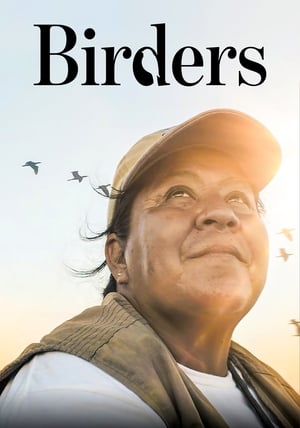
Bird watchers on both sides of the U.S.-Mexico border share their enthusiasm for protecting and preserving some of the world's most beautiful species.
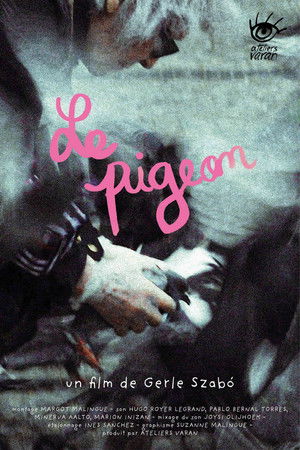
Every day, Catherine feeds and cares for the pigeons in Place Beaubourg, under the curious gaze of the passersby.
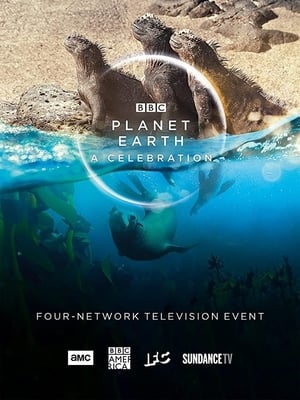
David Attenborough, Hans Zimmer and Dave unite for a special Natural History event – Planet Earth: A Celebration. The special one-hour programme brings together eight of the most extraordinary sequences from Planet Earth II and Blue Planet II including racer snakes vs iguana, surfing bottlenose dolphins and rare footage of the Himalayan snow leopard. Featuring new narration from David Attenborough, new compositions and arrangements from Hans Zimmer, Jacob Shea and the team at Bleeding Fingers and performed by the BBC Concert Orchestra, accompanied by Brit and Mercury Award-winning UK rapper Dave. In these extraordinary times, there is one thing that can offer solace to everyone – the wonder of the natural world.
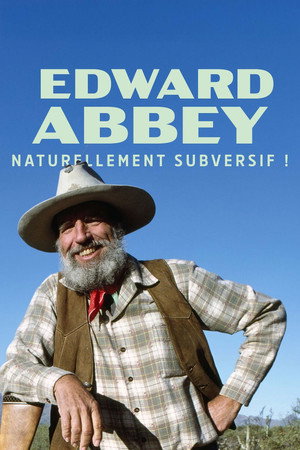
A resistance writer and pioneer of nature writing with a controversial personality, Edward Abbey wrote more than twenty books on the theme of eternal nature. A gem of counterculture, his 1975 novel The Monkey Wrench Gang inspired a generation of environmental activists and readers with rebellious souls. Portrait of a rebellious, lyrical, and rude writer.
I am sitting in a room is a sound art piece by American composer and sound artist Alvin Lucier composed in 1969. The first performance of the work was in 1970 at the Guggenheim Museum in New York. In collaboration with his partner Mary Lucier. The piece features Lucier recording himself narrating a text, and then playing the tape recording back into the room while re-recording it. The new recording is then played back and re-recorded, and this process is repeated. Due to the room's particular size and geometry, certain resonant frequencies are emphasized while others are attenuated. Eventually the words become unintelligible, replaced by the characteristic resonance of the room.
Through an imagined dialogue with Jean Paul Riopelle, this experimental film updates the painter's legacy by seeking to build bridges with today's generation. Part homage, part self-portrait, this short film is above all an intimate reflection on the courage to be oneself.
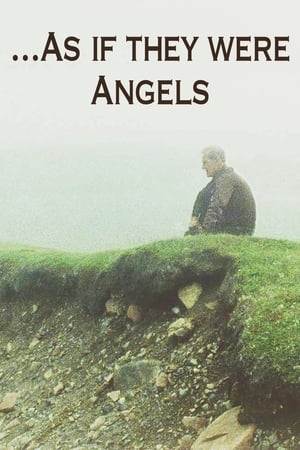
The little known story of one of the worst non-combat disasters in the history of the US Navy, …AS IF THEY WERE ANGELS is a story of courage, heart, sacrifice and the heroism of miners & fishermen of 2 small towns, who risked their lives to save nearly 200 American sailors, shipwrecked on the rugged cliffs of Newfoundland. Narrated by Peter Coyote, it’s a deeply layered tale of navigation errors, courts martial mistakes, a steep loss of life, and resonates today as if the very telling of its deep humanity offers a lifeline for our fractured times.
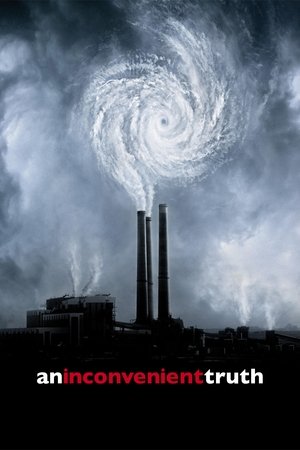
A documentary on Al Gore's campaign to make the issue of global warming a recognized problem worldwide.
A unique visual journey through galaxies, deep into the subatomic world of elementary particles, and into the center of the sun. Witness the formation of the Earth and the beginning of life and the birth of thought. Shown exclusively at the Museu do Amanhã in Rio de Janeiro.
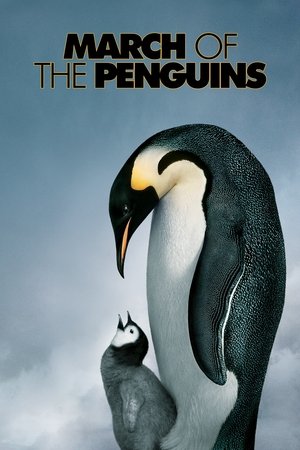
Every year, thousands of Antarctica's emperor penguins make an astonishing journey to breed their young. They walk, marching day and night in single file 70 miles into the darkest, driest and coldest continent on Earth. This amazing, true-life tale is touched with humour and alive with thrills. Breathtaking photography captures the transcendent beauty and staggering drama of devoted parent penguins who, in the fierce polar winter, take turns guarding their egg and trekking to the ocean in search of food. Predators hunt them, storms lash them. But the safety of their adorable chicks makes it all worthwhile. So follow the leader... to adventure!!
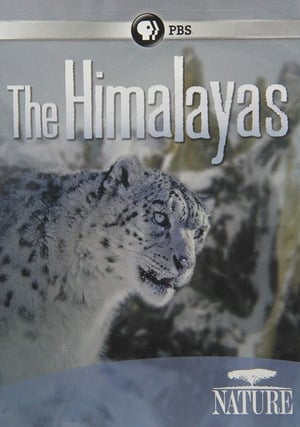
The highest mountain range in the world, the Himalayan range is far reaching, spanning thousands of miles, and holds within it an exceptionally diverse ecology. Coniferous and subtropical forests, wetlands, and montane grasslands are as much a part of this world as the inhospitable, frozen mountaintops that tower above. The word Himalaya is Sanskrit for abode of snow, fitting for a stretch of land that houses the world’s largest non polar ice masses. Extensive glacial networks feed Asia's major rivers including the Ganges, Indus, and Brahmaputra. More than a billion people rely on these glacier-fed water sources for drinking water and agriculture. The Himalayas are not only a remarkable expanse of natural beauty. They're also crucial for our survival.
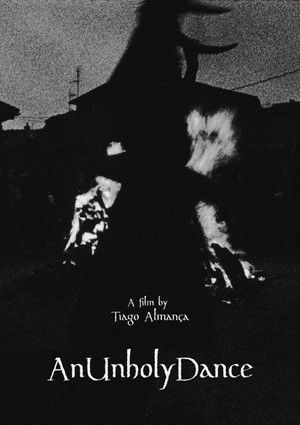
Every winter, a small town in Castilla-La Mancha called Luzón transforms into a little hell. Its inhabitants, dressed as devils, venture into the darkness and roam its streets with horns, bells, and smeared with soot. Una dança non sancta could have been just an anthropological documentary. Instead, it delves into the inferno with the town’s residents to participate in and immortalize this unholy ritual.
Japão
Atlantic Poems - La Force
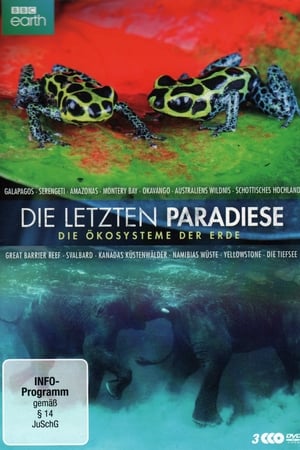
Die letzten Paradiese - Die Ökosysteme der Erde
This astounding documentary delves into the mysteries of the Tunguska event – one of the largest cosmic disasters in the history of civilisation. At 7.15 am, on 30th June 1908, a giant fireball, as bright the sun, exploded in the sky over Tunguska in central Siberia. Its force was equivalent to twenty million tonnes of TNT, and a thousand times greater than that of the atomic bomb dropped on Hiroshima in 1945. An estimated sixty million trees were felled over an area of over two thousand square kilometres - an area over half the size of Rhode Island. If the explosion had occurred over London or Paris, hundreds of thousands of people would have been killed.
In the summer of 1900, the first film camera was purchased by Mozaffar ad-Din Shah Qajar for Iran, and immediately the first Iranian moving images were captured by this camera. These images, in an obsessive manner, have embodied the mesmerized gaze of people. In the span of 79 years since the purchase of this camera, Iran has undergone two revolutions and two coups, and throughout all these moments, the camera has been present as the recorder of people's mesmerized gazes. These mesmerized gazes are in a way as if they are the ones looking at us, not the other way around. It seems like these gazes are trying to convey something, but what? No one knows. Now, we gaze at those who have gazed at us from a distant time.
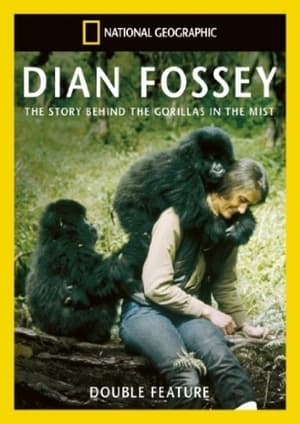
From 1968 to 1972, photographer and filmmaker Bob Campbell documented the activities of Dian Fossey as she developed a cross-species bond with Rwandan mountain gorillas. Campbell shot 70,000 feet of film, but only a fraction of his material was edited into the lecture presentation that preceded Fossey's Gorillas in the Mist. This program compiles highlights from the previously unreleased footage, offering an unforgettable glimpse into the gorilla community and Fossey's relationship with it. Her methods may not entirely jibe with those of modern conservationists, but there is no denying the profound impact of her work on current research and eco-activism.
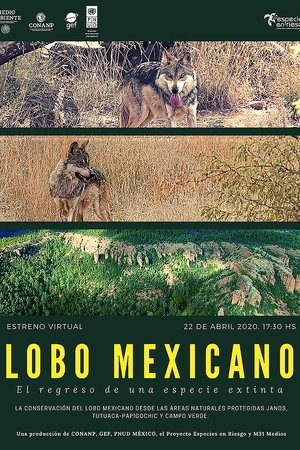
About the mexican wolf in northwest Chihuahua, the search for its conservation among local communities, landowners, and the Livestock Assurance Fund.