Twenty-five films from twenty-five European countries by twenty-five European directors.
An experimental documentary about dead turtles, crab swarms, decaying tennis courts, and microscopic histories. The filmmakers shot their explorations into the abandoned golf courses, factories, and resorts of Sarasota, Florida and spoke to local youths who are using them for new and strange purposes. What would the Surrealists and Situationists think of a suburban, subtropical tourist town? What goes on in a storage unit in the dead of night? What is the afterlife of a decommissioned train car? What ghosts haunt a ruined hotel? What is the life cycle of a city? When will waters wash it all away?
A provocative and poetic exploration of how the British people have seen their own land through more than a century of cinema. A hallucinated journey of immense beauty and brutality. A kaleidoscopic essay on how magic and madness have linked human beings to nature since the beginning of time.
Angela Su’s fictional artist Rosie Leavers is the last remaining person to upload her consciousness to a video game. Contemplating during a pandemic year which also saw people’s resistance movements in many parts of the world, the work pinpoints the uncanny affinities between gaming and warfare strategies. They have mutually informed the infrastructure of both worlds since time immemorial when diplomatic conflicts played out on the battlefield of the 64 squares of a chess board to flight simulation technologies which were adapted to shape gaming experiences as we know it now. When the conflict is between the state and its people, she speculates that gaming strategies empower civilians in resistance movements to counter imperialism through its own operative logic. But once we upload our consciousness, are we able to return to the sensibilities and political motivation that inspired the revolution to begin with?
"The prevailing stigmatization of the 'villero' universe is fed back by the images. In order to dismantle this stigmatization, other images must be presented or we need to reveal what the existing ones seek to cover up. The slum is usually represented from a limited and deceitful visual panorama. This representation has an intention. Cinema and television are two image-producing devices that strengthen the stereotypes that we have about the people who inhabit these spaces. And what happens in the field of painting? Do clichés reign there too? This visual essay seeks to confront various works by national painters and sculptors, belonging to the Palais collection, with the kinetic images of current cinema and television, to reflect on both the differences and the similarities in the meanings and discourses that both regimes of images can produce." César González
Ten years after the death of iconic French filmmaker, Chris Marker. A filmmaker, hoping to rediscover that unique sensibility against the uncertainty of the new century, returns to the places synonymous with those incomparable and unforgettable films-- From the cat cemetery of Sans Soleil, to the mausoleum of The Last Bolshevik; The caves of Level Five to the rooftops of The Case of the Grinning Cat. A biographical portrait of one of the 20th century's greatest and most misunderstood filmmakers.
Im Reich Des Squatters
In this deeply personal video diary, a young researcher tries to make sense of her fascination for the film "The Pain of Others" by Penny Lane. A deep dive into the discomforting world of YouTube and online conspiracies, that challenges traditional notions of what documentary cinema is, or should be.
In 1829 the naturalist Alexander von Humboldt attempted a russian-siberian expedition. Humboldt travelled to obtain a clear view of nature, people and life in this immense country. 2019 naturalists and humanists attempted a transdisciplinary expedition on the trails of Humboldt. To capture the events various cameras were taken along. A non-chronological narration.
An experimental portrait of Fernando Fernán Gómez, one of the most renowned Spanish artists of all time.
A documentary film contrasting present-day Lithuania with extracts from a peasant's diary from 1984/85.
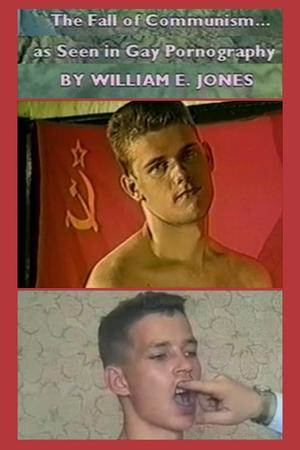
Every image in The Fall of Communism as Seen in Gay Pornography comes from gay erotic videos produced in Eastern Europe since the introduction of capitalism. The video provides a glimpse of young men responding to the pressures of an unfamiliar world, one in which money, power and sex are now connected.
Tommy sets out to document walking. He meets a colorful cast of characters, attaches microphones to his feet, and contends with what it means to capture movement on film.
Photography trip to Bolivia filmed with a rostrum camera and edited with original sounds from the country.
It has been a lifelong dream of Kyrgyz director Melis Ubukeyev to create an elaborate film version of the Kyrgyz national epic 'Manas'. He spent years working with the National Academy of Sciences of Kyrgyzstan to gather material for this film project, which would ultimately remain a dream. However, the director's efforts were not in vain: Not only did he make films in 1962 and 1988 about Manasçı – the revered oral storytellers who have preserved the epic for generations through melodic recitation –, but in 1995, to mark the 1,000th anniversary of 'Manas', he also created a beguiling essay film that not only recounts the epic’s sweeping narrative through a mix of breathtaking imagery and opulent costumes, but also weaves it into a semi-documentary exploration of Kyrgyz history and identity. Once almost impossible to find, the film has recently been restored by the film studio Kyrgyzfilm and uploaded to YouTube in 4K.
A meditative essay.
If cinema is the art of time, Linklater is one of its most thoughtful and engaged directors. Unlike other filmmakers identified as auteurs, Linklater’s distinction is not found on the surface of his films, in a visual style or signature shot, but rather in their DNA, as ongoing conversations with cinema, which is to say, with time itself. A visual essay produced by Sight and Sound.
Documents the lives of infamous fakers Elmyr de Hory and Clifford Irving. De Hory, who later committed suicide to avoid more prison time, made his name by selling forged works of art by painters like Picasso and Matisse. Irving was infamous for writing a fake autobiography of Howard Hughes. Welles moves between documentary and fiction as he examines the fundamental elements of fraud and the people who commit fraud at the expense of others.
Weeping Rocks follows Art, an entomologist nearing the end of his life, who has spent over five decades walking the same ten trails, meticulously counting every butterfly he sees and witnessing the slow erosion of the world. His eccentric, patient research has uncovered patterns of decline that went unnoticed for years, revealing the deep environmental impact of detrimental human activities. As time reshapes the landscape and species fade, Art’s journey becomes a meditation on mortality, change, and the beauty of what remains.
Kogonada's visual essay about the formalistice choices of master filmmaker Stanley Kubrick