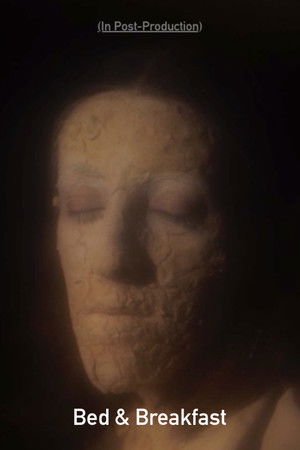
A paralysed woman awakens alone in her bedroom, as time continues without her.
Ver, Ouvir, Sentir.
An electric transition. The void left by a vice disguised as false promise to escape, is reclaimed by a new frequency, louder, colder, more transcending: C.R.Y.S.T.A.L. (Cognitive Rupture Yielding Synthetic Trance and Luminality). Through a synesthesia of stroboscopic light and sound pulses that pierce the viewer's consciousness, this short film is a sensorial trance that documents the disintegration of an individual. There's no narrative, only the vibration of a substance that reprograms the body until light is the only thing left within them. A feedback loop where the flash is, at the same time, consumption and the end of being.
Alone in the cosmic sea, a voice cries out to you.
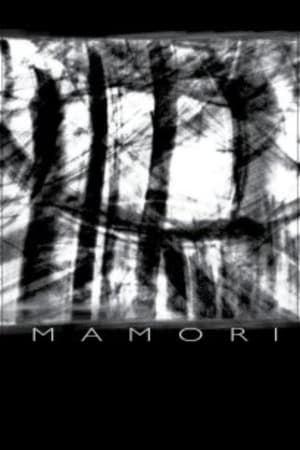
Mamori transports us into a black-and-white universe of fluid shapes, dappled and striated with shadows and light, where the texture of the visuals and of the celluloid itself have been transformed through the filmmaker’s artistry. The raw material of images and sounds was captured in the Amazon rainforest by filmmaker Karl Lemieux and avant-garde composer Francisco López, a specialist in field recordings. Re-filming the photographs on 16 mm stock, then developing the film stock itself and digitally editing the whole, Lemieux transmutes the raw images and accompanying sounds into an intense sensory experience at the outer limits of representation and abstraction. Fragmented musical phrases filter through the soundtrack, evoking in our imagination the clamour of the tropical rainforest in this remote Amazonian location called Mamori.
Nada and Rabieh are a Palestinian couple living far from the possibility of a homeland. A meditation on time, memory, and the distance from a dream. A dialogue with Masao Adachi and Koji Wakamatsu’s (1971) Red Army/PFLP: A Declaration of World War. Available to watch here: https://vimeo.com/77014813/9ecc802aef
Night
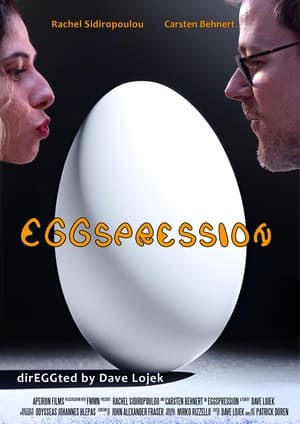
Egglantine loves salt on her eggs. Eggbert prefers pepper. Who blinks first in this playful Easter ritual?
A man faces emotional disconnection while his tumultuous relationship with a woman highlights his struggle to escape stagnation.
Departing from peripheral details of some paintings of the Bilbao Fine Arts Museum, a female narrator unravels several stories related to the economic, social and psychological conditions of past and current artists.
A teenager faces overwhelming absurdity.
Sunya
A middle-aged woman confronts loneliness as she reflects on her past.
Follows the turbulent history of a young man and his complicated experiences with love. Years after his father’s suicide and reeling from a painful breakup, he’s forced to recollect his memories and heartache as he attempts to reconcile the love he’s lost with the love he once received.
A girl believes that by counting the stars the world will end. As she focuses her attention on the sky, she draws a strange pattern in the cycle of nature. Will her obsession become reality?
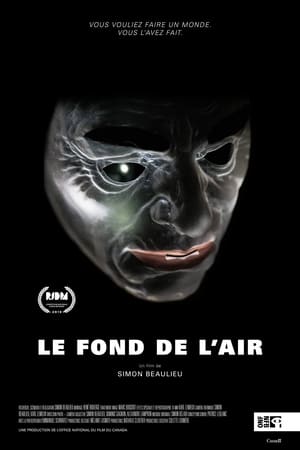
A reflection on the fate of humanity in the Anthropocene epoch, White Noise is a roller-coaster of a film, a whirlwind of sounds and images. The fourth feature-length work by Simon Beaulieu, this film essay plunges viewers into a subjective sensory adventure—a direct physical encounter with the information overload of daily life. White Noise transforms the imminent collapse of our civilization into a visceral aesthetic experience.
Roberta must finish her art school thesis amid an anthropomorphic crisis of self-actualization in Northern Ontario.
Metropia
A lady bug knight ventures out to find a stinkbug, going on a grueling journey to capture him.
After living in Denmark for 38 years, Francisco has decided to move back to his homeland, the Philippines—a country he feels he has never really left. So, on a cold winter evening, he meets with his daughter, who was born and raised in Denmark, to tell her that he plans to leave just a few days later.