Once described by the press as "one of the most controversial figures on the Australian art scene", avant-garde poet and playwright Christopher Barnett achieved a level of notoriety in the Melbourne underground theatre scene during the ‘70s and ‘80s, before self-exiling to France. He remains there today, running an experimental theatre lab working with the marginalised and underprivileged, applauded by the establishment (including former French Prime Minister Jean-Marc Ayrault) and faithful to his belief that art can change the world. These Heathen Dreams is an intimate portrait of Barnett's life and revolutionary philosophy. Combining archival footage dating back to the ‘60s with contemporary observational documentation and text from Barnett's writings, it is a poignant and inspiring study of the power of both art and political activism.
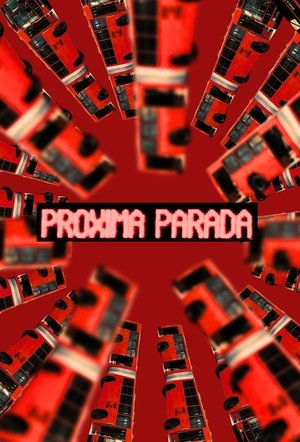
Experimental documentary that poetically exposes the reality of public transport in the city of Curitiba.
Based on the fairy tale of the Brothers Grimm this montage brings together heterogeneous super 8 Found Footage and own personal shots. By hand developement and chemical influences an interwoven story about the conversion of simple elements to gold came out.
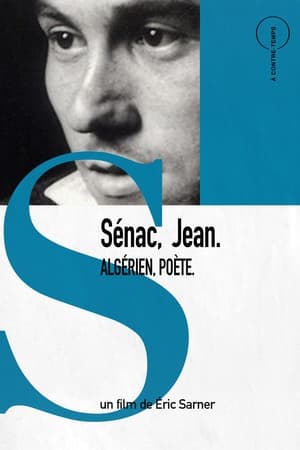
Jean Sénac, born in Béni Saf in Algeria in 1926 and died in Algiers in 1973, is today considered one of the great French writers and poets and the only one of his reputation to have accompanied the Algerian revolution before November 1954. part of all the debates and got involved, very early and with immense enthusiasm, in a work of commitment which ended badly. His poetry, his sexual preferences and his political lyricism work against him: rejected as much by the Pieds Noirs as by the FLN activists then by the power in place in Algiers, Jean Sénac was assassinated in 1973 at his home in Algiers, in circumstances never clarified.
In this 21st century, under the cloak of capitalism, governments, and other systems by which society is governed, this short film shows the true social reality of many people “on the street”.
A funeral. A cremation. An attempt to articulation. To (fail to) purge. Flipping the image on the burning, destruction and violence decades ago, the filmmaker documents a funeral and cremation she held for the ethnic hate still spoken to her 20 years later. Can memories be erased? What can we choose to forget? What continues to haunt us?
Archive footage from 2006 - 2010 of a young girl growing up during the ages of four to eight. Only fragments of what is remembered exists. Words from a transgender man float to the surface as fleeting memories go on.
Video-essay about poet Ana Enriqueta Terán.
The Hurricane Maria represented a historic event for the island of Puerto Rico. The Puerto Rican spirit at the helm of this natural disaster was shattered beyond repair. And from the rumble the Puerto Rican spirit will be reborn again. Omar Iloy makes a desperate call to the wounded spirit of the island, a call for hope and help.
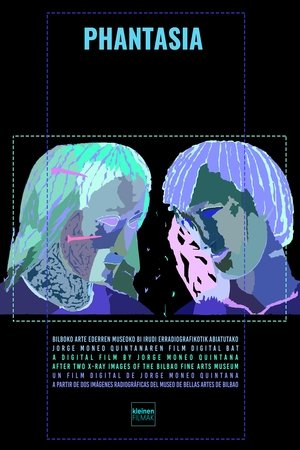
X-ray images were invented in 1895, the same year in which the Lumière brothers presented their respective invention in what today is considered to be the first cinema screening. Thus, both cinema and radiography fall within the scopic regime inaugurated by modernity. The use of X-rays on two sculptures from the Bilbao Fine Arts Museum generates images that reveal certain elements of them that would otherwise be invisible to our eyes. These images, despite being generally created for technical or scientific purposes, seem to produce a certain form of 'photogénie': they lend the radiographed objects a new appearance that lies somewhere between the material and the ethereal, endowing them with a vaporous and spectral quality. It is not by chance that physics and phantasmagoria share the term 'spectrum' in their vocabulary.
A closeup examination of a tree in the morning light.
A user is browsing the Internet looking for a job and, suddenly, finds himself caught up in a spiral of excessive and simultaneous content consumption.
Jone is ready to fly. She finds herself at the beginning of something new, but before she moves on, there needs to be a closure. Jone is one of Mollies, the queer-feminist collective that had been living for a decade at a trailer park next to Ostkreuz, Berlin.
A documentary short in which Terence Davies talks about his life and his love for the arts in what turned out to be his final interview.
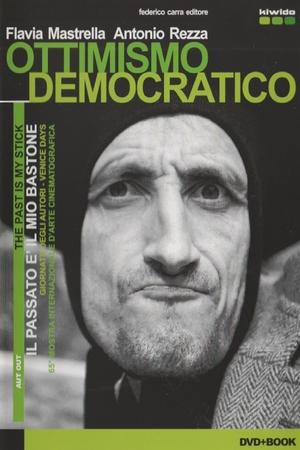
Ottimismo democratico
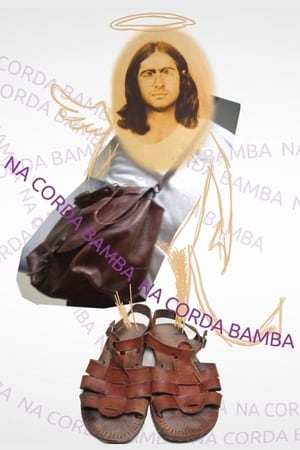
Cacaso, a Brazilian poet, lived in Rio de Janeiro. Born Antonio Carlos de Brito (1944-1987) he was one of the leaders of the marginal poetry movement. Cacaso filled notebooks not only with poems but reflections, drawings and collages. He also became a lyricist and partner of celebrated songwriters such as Tom Jobim, Edu Lobo, Toninho Horta, João Donato and Sivuca.
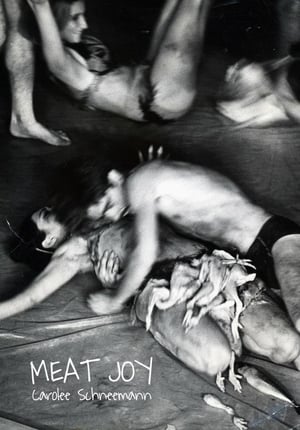
"Meat Joy is an erotic rite — excessive, indulgent, a celebration of flesh as material: raw fish, chicken, sausages, wet paint, transparent plastic, ropes, brushes, paper scrap. Its propulsion is towards the ecstatic — shifting and turning among tenderness, wildness, precision, abandon; qualities that could at any moment be sensual, comic, joyous, repellent. Physical equivalences are enacted as a psychic imagistic stream, in which the layered elements mesh and gain intensity by the energy complement of the audience. The original performances became notorious and introduced a vision of the 'sacred erotic.' This video was converted from original film footage of three 1964 performances of Meat Joy at its first staged performance at the Festival de la Libre Expression, Paris, Dennison Hall, London, and Judson Church, New York City."
The basis of the experimental film Sky Spirits are real-life shots of fireworks. The authors of the film have collected these shots from the year 2001. to 2008. The experiment explores the ultimate limits of fireworks as sources of light, showing this through real-life dynamic light patters which are led through video processors, resulting in chromatically rich animated samples. The material is "laboratory" processed and then formed into a film unit, while respecting the dramaturgy of fireworks. The original sound was used, which was, of course, subsequently processed, too. The whole work process is a kind of "homage to the tape" because the entire work is completely recorded and realised on digital video tapes, without using any kind of computer program.
C+M, for YK. Subtractive colour blending is used in an attempt to conjure Yves Klein's 'L'accord bleu (RE 10)', 1960. The limitations imposed by media and technology ensure that my perfect pigment never is, and that what is produced is ephemeral, declarative, and reverent of the impure. Laser printed onto recycled 16mm film in 2014.
a sensorial journey on a scottish island reminding us of the connection between the living questioning our relationship to the sea and to the land