Second part of the trilogy about the Granada poet directed by Juan José Ponce, which focuses on the writer's journey to Argentina and Uruguay
In the period 1891-1927, Henriette Roland Holst goes through a dramatic development. As an aspiring poet from an affluent bourgeois milieu she throws herself, full with idealism and conviction, into the labour movement. Within the various socialistic parties however, a fierce battle on direction takes place, wherein Henriette has trouble finding her place. After returning disillusioned from a trip to the Soviet Union, she does not feel at home in any leftist party. Later she will recollect on this period in her biography "Het vuur brandde voort" (translation: "The fire rages on"). The film reconstructs this period with the use of old film material combined with texts by Henriette Roland Holst herself: fragments from letters, poems, speeches and books, sparingly supplemented with personal commentary by the filmmaker.
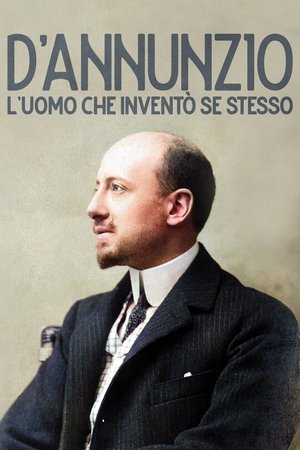
D'Annunzio: l'uomo che inventò se stesso
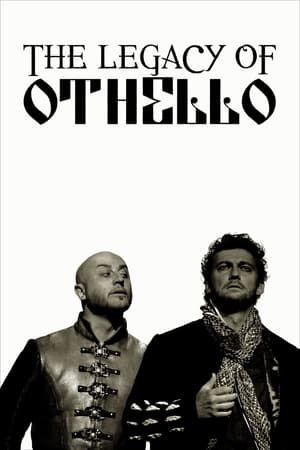
A fascinating exploration of the literary — The Tragedy of Othello, the Moor of Venice, by English playwright William Shakespeare (1604) — and lyrical — Othello, by Italian opera composer Giuseppe Verdi (1887) — myth of Othello, the desperately tragic story of a Moorish general in the army of the Venetian Republic whose absurd jealousy poisons his love for his wife Desdemona.
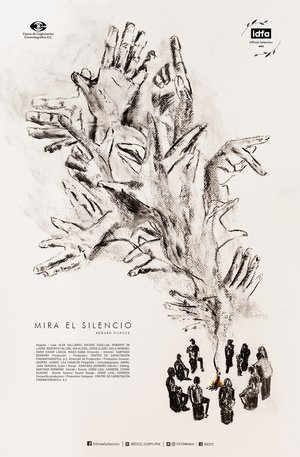
“I love poetry because it makes me feel like my mind expands.” In Regard Silence, that's the very first sentence expressed—in sign language of course. Watching the poems signed by deaf people in this film has a similarly mind-expanding effect. That’s because sign language—the Mexican version in this case—is a very different means of communication than written or spoken language.
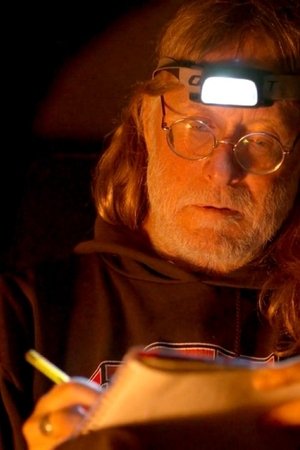
Chris, sous le pont Laënnec
Um Dia Eu Fui Zeus
A mini documentary about küçük İskender and his views on poetry.
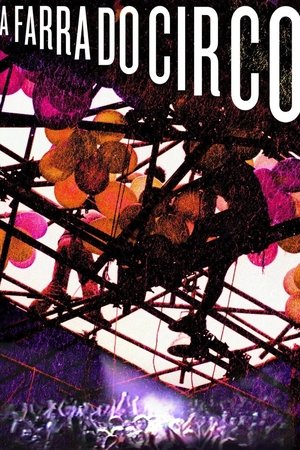
This documentary highlights the evolution of Brazil's Circo Voador venue from homespun artists' performance space to national cultural institution.
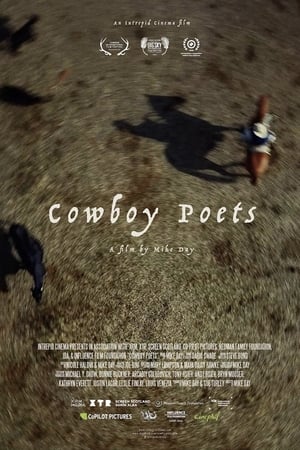
Since 1985, poets, songwriters and musicians have gathered at the Cowboy Poetry Gathering in Nevada.
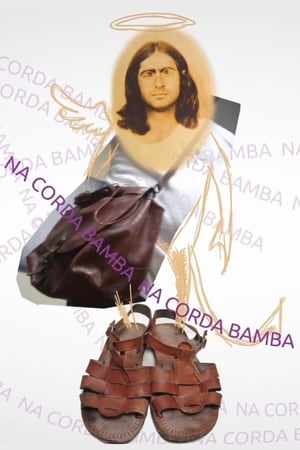
Cacaso, a Brazilian poet, lived in Rio de Janeiro. Born Antonio Carlos de Brito (1944-1987) he was one of the leaders of the marginal poetry movement. Cacaso filled notebooks not only with poems but reflections, drawings and collages. He also became a lyricist and partner of celebrated songwriters such as Tom Jobim, Edu Lobo, Toninho Horta, João Donato and Sivuca.
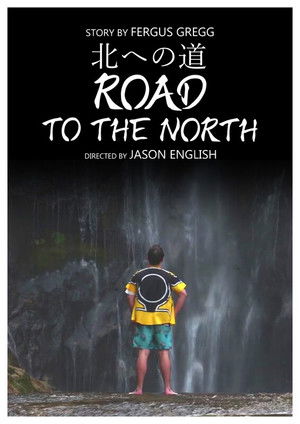
After nearly three years living in Japan, Fergus Gregg finds himself struggling to bid farewell to this beautiful country. On a journey tracing the path of his hero, the poet Matsuo Basho, Fergus decides to trek the northern landscapes of Tohoku. As he travels, he encounters more than he bargained for - facing setbacks, meetings with traditional hunter-gathers, and dances at northern Japan's largest Summer festival. Join Fergus Gregg on his 'Road to the North'.
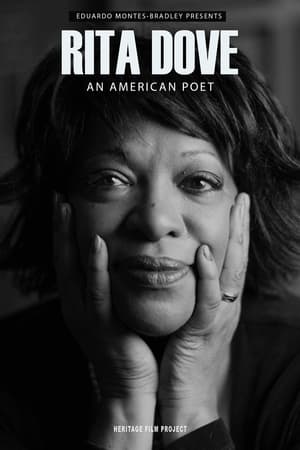
A series of in-depth conversations with Poet Laureate Rita Dove—conducted and recorded by Eduardo Montes-Bradley between September 2012, and October 2013. The film explores the poet's life, exposing fundamental facts of Dove's childhood and formative years growing up in Akron, Ohio in the 1950s and during the turbulent 1960s, supplemented by selections from hundreds of still images and several hours of home movies from the Dove family's collection.
Once described by the press as "one of the most controversial figures on the Australian art scene", avant-garde poet and playwright Christopher Barnett achieved a level of notoriety in the Melbourne underground theatre scene during the ‘70s and ‘80s, before self-exiling to France. He remains there today, running an experimental theatre lab working with the marginalised and underprivileged, applauded by the establishment (including former French Prime Minister Jean-Marc Ayrault) and faithful to his belief that art can change the world. These Heathen Dreams is an intimate portrait of Barnett's life and revolutionary philosophy. Combining archival footage dating back to the ‘60s with contemporary observational documentation and text from Barnett's writings, it is a poignant and inspiring study of the power of both art and political activism.
Documentary about the Venezuelan poet Armando Rojas Guardia.
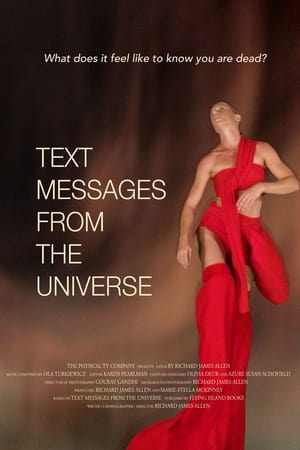
A film that immerses its audience in subjective states of consciousness they might experience when they die, imagining what they can see and think and hear in a seamless but fragmentary flow of poetic images, words and music. The viewer undertakes a journey into their own interior world of dreams and projections in which time and space, and cause and effect logic, are turned on their heads. Text Messages from the Universe is inspired by The Tibetan Book of the Dead, a text which guides souls on their journey of 49 days through the 'Bardo', or intermediate state, between dying and rebirth.
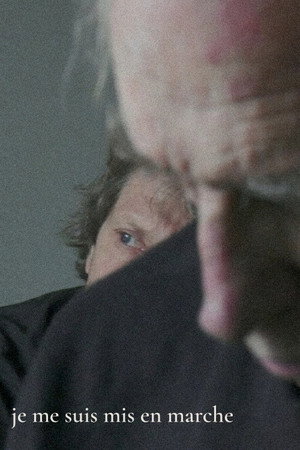
In the 1980s, writer, poet, radio personality and football enthusiast Franck Venaille is diagnosed with Parkinson's disease. He decides to travel the length of the Scheldt river, to dip his hands in its source, and brings back the long epic poem La Descente de l'Escaut. Today, the disease has progressed, but Venaille still spends much of his time working in the study where he wrote the text. Je me suis en marche is both a road movie weaving together the poem, Venaille now and during his journey, and a documentary adaptation of the epic odyssey of a sick man retracing a river across 450 kilometres.
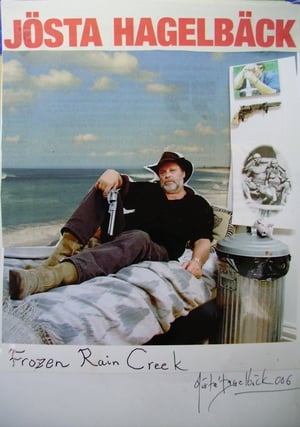
About Jösta Hagelbäck (1945-2009), Swedish film director, writer, poet, musician, actor etc. A human bipolar mixture of genius and madman. Invited to Hollywood, had an artistic hit with the film "Kejsaren/The Emperor" (1979) at the Berlin Film Festival.
A short film by Barry Lowe and Dino Mahoney, starring Pauline Burton as Anna. The film is an introduction to the great Soviet era modernist poet, Anna Akhmatova; shot in winter in Saint Petersburg (Leningrad), it contains rare interviews with people who knew her, academics, and dramatized readings of some of her poems.
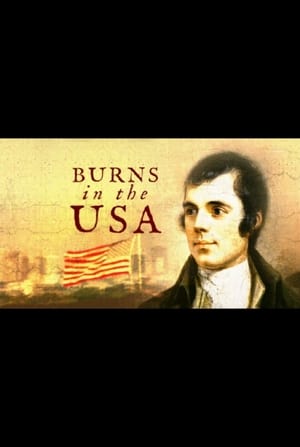
Robert Burns was well aware of the revolution taking place across the Atlantic as he grew up. The poet was inspired. And America was to be inspired by him. From Abraham Lincoln to Frederick Douglass, and Walt Whitman to Bob Dylan, some of the most significant figures in American politics and culture have cited Burns as an influence.