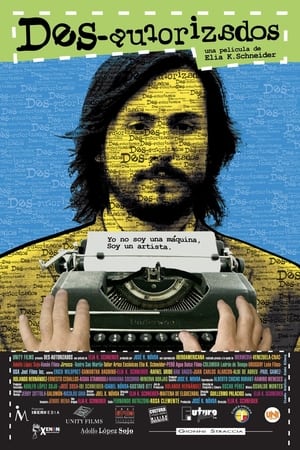
"Des-authorized" is the combination of three stories, three realities that coexist and feed. The journey begins in the imagination of Elia K, the principal, who imagines Elijah, a character who is a poor playwright facing the crossroads to be true to his art, or succumb to the pressures of the producers must decide his work between surrender or pay the price of his freedom. On another level, we have Nina and Frederick, the protagonists of the work that Elijah is writing. They only seek to love, they are forced to leave the paper and press the Elijah to them the end that his story deserves, this is the starting point of "Des-authorized" a film set in an imaginary city , colorful and delusional. In the line of "Amelie" and "Stranger Than Fiction", brings a reflection on art, creativity, love and heartbreak.
Avant-garde homage to pre-revolution Russian silent movies, and to the poet Aleksandr Blok.
An unknown future. A boy confesses to the murder of another in an all-boy juvenile detention facility. More an exercise in style than storytelling, the story follows two detectives trying to uncover the case. Homosexual tension and explosive violence drives the story which delivers some weird and fascinating visuals.
The pantomime of two characters exchanging roles is accompanied by a three-layered phonogram, where sophisticated narrative text is interrupted by slightly accelerated excerpt from Brezhnev’s speeches, as well as by fragments of statements of the mentally ill person with the schizophasia symptom.
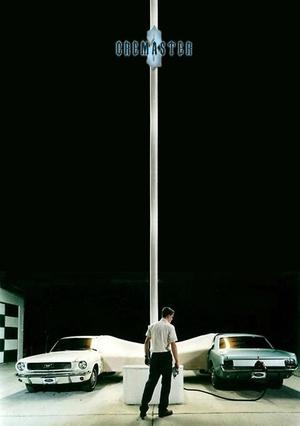
CREMASTER 2 is rendered as a gothic Western that introduces conflict into the system. On the biological level it corresponds to the phase of fetal development during which sexual division begins. In Matthew Barney's abstraction of this process, the system resists partition and tries to remain in the state of equilibrium imagined in Cremaster 1.
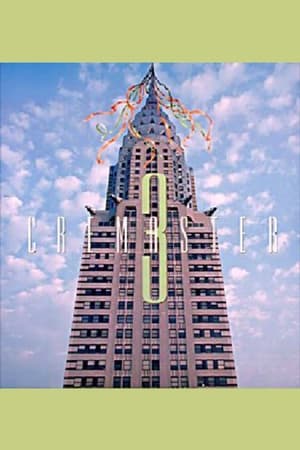
CREMASTER 3 is set in New York City and narrates the construction of the Chrysler Building, which is in itself a character - host to inner, antagonistic forces at play for access to the process of (spiritual) transcendence. These factions find form in the struggle between Hiram Abiff or the Architect...
Anémona and Pisces live a capicua experience: they are at the same time the woman who looks, the woman who is looked at, and the very act of looking. Between fractal scenes and images multiplied in reference to Man Ray, Anémona assumes the will to, through the state of trance, always be a foreigner within herself, while Pisces goes in search of an alien vision, to assume herself as the self and otherness to understand the world.
Under the impetus of the 75th anniversary of the bamboo top-handle bags, the House presents a contemporary retelling of an ancient Japanese story entitled ‘Taketori Monogatari (The Tale of the Bamboo Cutter).’ Makoto Nagahisa stages the plot of finding oneself, along with true love, in a Tokyo betwixt and between reality and a dream. Dressed in looks from the Gucci Love Parade collection, Hikari Mitsushima, Aoi Yamada, and Eita Nagayama star in the story shedding a new light on the Gucci Bamboo 1947 and Gucci Diana Beloved lines.
A punk scarecrow, endowed by life, annihilates its roots and revitalizes its territory.
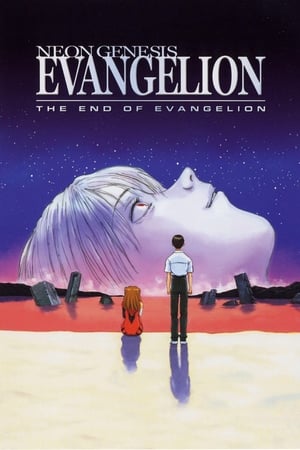
SEELE orders an all-out attack on NERV, aiming to destroy the Evas before Gendo can advance his own plans for the Human Instrumentality Project. Shinji is pushed to the limits of his sanity as he is forced to decide the fate of humanity.
A stream of mysterious rituals and symbols are encountered as a young boy journeys to school in the fantastical world of Kshya Tra Ghya.
We are first presented a cobweb castle, filled with the haunting doubts of the young protagonist. Spirits appear on the screen and are heard on the soundtrack. Gradually a female guide emerges and escorts the young man into an antechamber to another (and possibly higher) world.
A young bride flees the ceremony with a stranger and, together, they set off on an epic journey though increasingly bizarre lands. They encounter talking animals and mournful exhibitionists, converse with a discoursing rock, journey through a surrealist's psychedelic hotel, instigate a prison riot, escape from naked cannibals living in a tree, and battle a wind-up midget dictator!
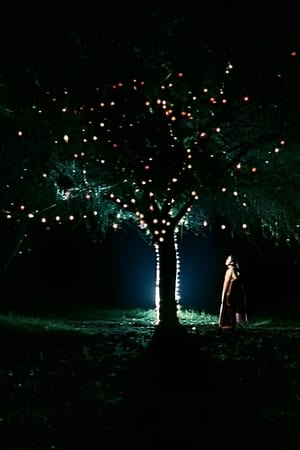
Prometheus, on an Odyssean journey, crosses the Brooklyn Bridge in search of the characters of his imagination. After meeting the Muse, he proceeds to the "forest." There, under an apple tree, he communes with his selves, represented by celebrated personages from the New York "underground scene" who appear as modern correlatives to the figures of Greek mythology. The filmmaker, who narrates the situations with a translation of Aeschylus' Prometheus Bound, finds the personalities of his characters to have a timeless universality.
In this fragile yet frightening poetic fantasy set against a dark industrial landscape, a woman sits knitting on the porch of her home when a man appears and takes the knitting from her.
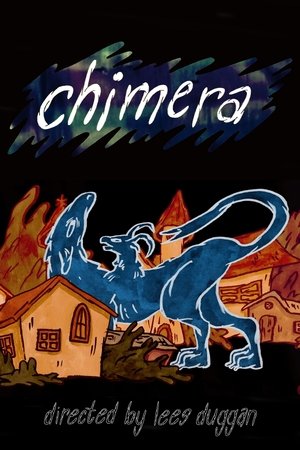
A child is attacked and turned into a chimera and must learn to navigate his strange world as an entirely new kind of being.
Dislocation in time, time signatures, time as a philosophical concept, and slavery to time are some of the themes touched upon in this 9-minute experimental film, which was written, directed, and produced by Jim Henson. Screened for the first time at the Museum of Modern Art in May of 1965, "Time Piece" enjoyed an eighteen-month run at one Manhattan movie theater and was nominated for an Academy Award for Outstanding Short Subject.
A one-day car trip of a woman and a stranger girl involves a journey of self-awakening.
What does the energy harnessed through orgasm have to do with the state of communist Yugoslavia circa 1971? Only counterculture filmmaker extraordinaire Dušan Makavejev has the answers (or the questions). His surreal documentary-fiction collision begins as an investigation into the life and work of controversial psychologist and philosopher Wilhelm Reich and then explodes into a free-form narrative of a beautiful young Slavic girl’s sexual liberation.
An abstract work featuring three dancers, the performers interact with large screens as well as each other. Included in Shirley Clarke’s Four Journeys Into Mystic Time, costuming and color play an integral role in this piece.