Documentary about the Belgian surrealist artist who died in 1967.
A documented introspection written, directed, composed, illustrated, and experienced by Riadh Bakache, serving as a transition into a new era for his YouTube channel. Rich in emotion, this piece reflects on his personal experiences and inner journey, supported by his readings. Riadh explores several philosophical and psychological questions about himself, in an effort to better understand and ultimately accept who he is. Taking a step back from his situation became necessary, leading to the telling of his entire journey in this video.
The first of five interview short films with renowned painter Edward Povey during the install of a collection of four paintings at 2 Blackburne Terrace. In the first interview we see the install and dive into our first painting.
“Wings of Silver: The Vi Cowden Story,” follows one 93-year-old woman’s journey from the Black Hills of South Dakota where she learned to fly biplanes, to flying fighter planes for the Army Air Corps in 1943 & ’44. Vi was among these first women in United States history to fly military planes, and one of 114 who flew Pursuit Planes like the P51 and Thunderbolt!
Richard Hambleton was a founder of the street art movement before succumbing to drugs and homelessness. Rediscovered 20 years later, he gets a second chance. But will he take it?
Filipíny – Pašije a fiesty
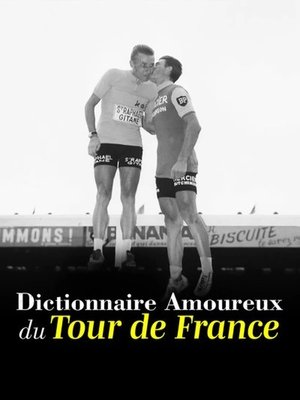
Combining the author's poetic voice with those of Bernard Hinault, Antoine de Caunes, and Daniel Mangeas, the film offers a passionate journey into the heart of the history and imagination of the Tour. It captures the spirit of the great epics, the Anquetil-Poulidor duel, Yvette Horner's accordion, the popular fervor, but also the physical and spectacular reality of the dangers of racing. Women's cycling plays an important role thanks to the testimony of Cédrine Kerbaol. The contemporary scene is represented by cyclist Guillaume Martin.
Short interview with Clive Barker about Midnight Meat Train, his artistic process, and his paintings. Includes a tour of his painting studio.
Review the discovery of Tutankhamun's tomb by Howard Carter in 1922 with archival photographs and reviews the highlights of the treasure trove with anecdotal stories and conjecture about the Boy King's life and death.
The driving force behind our transformations, an instrument of social affirmation, a weapon of emancipation: how did perfume, from a simple bottle, become both a reflection of our personal revolutions and an object of gender manipulation? Over the centuries, its notes have been in tune with those of history, clinging to the necks of struggles and the wrists of wars. Its bottles have perfumed wars and revolts and continue, even today, to reflect the social norms that surround and confine us. This film, like the book from which it is adapted, is a declaration of love for perfume.
ARTSAKH Armenian Genocide Continues is a documentary film by multi-award-winning journalist & documentary filmmaker, Vic Gerami, about the Artsakh Genocide (Nagorno-Karabakh) perpetrated by Azerbaijan and Turkiye. It tells the story of this ongoing tragic chapter through the lens of Armenian-American journalist and LGBTQ+ activist Vic Gerami. Through a journalist’s perspective, ARTSAKH documents Azerbaijan’s and Turkey’s unprovoked genocidal attack and ethnic cleansing against Armenians of Artsakh, also known as Nagorno-Karabakh, starting on September 27, 2020. Azerbaijan, with the declared assistance from Turkey, launched a large-scale offensive against Artsakh. In its war effort, Azerbaijan relied on thousands of Turkish-paid jihadist mercenaries airlifted from terrorist camps in Syria, Libya, and Pakistan and brought to fight alongside the Azerbaijani Army. For 44 days, the world watched mainly in deafening silence as over 5,000+ Armenians were massacred.
To help prevent the unthinkable from ever coming true, it is important to know what could really happen....the most awesome and deadly display of warfare that the world has ever seen.
Podkarpatská rusínska maliarska škola
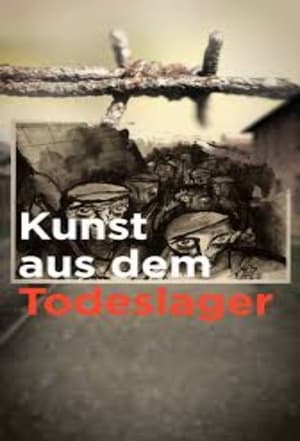
The Nazi concentration and extermination camps were places of incomprehensible cruelty, misery and death. But even here, creation took place. Creation as a means of survival against destruction. Art against dehumanization. On behalf of the SS, but also secretly at the risk of their lives, people drew and painted, sculptors and model makers worked, concerts were performed and theater was played. Prisoners created paintings and other works of art, which the SS henchmen sold or sent home to their families. In the Austrian Mauthausen concentration camp, inmates made sketches of the crime scenes where fellow prisoners had allegedly died while trying to escape. In the Buchenwald concentration camp, prisoners had to rehearse a camp song in the freezing cold until it sounded perfect to the ears of their tormentors. In addition to this forced art, however, there were also illegal drawings that could give the outside world an insight into actual camp life.
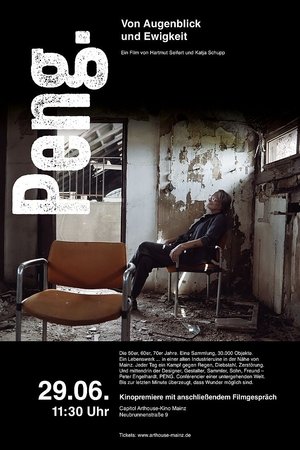
Peter Engelhardt - aptly named “PENG” - has dedicated his entire life to good design: as a renowned designer as well as a collector of everything that makes up everyday life in the 50s, 60s and 70s ... The well-known and the nameless, the precious and the superfluous, the special and the everyday. The Engelhardt collection once comprised over 30,000 objects. But the more Peter collected, the more space he needed - and the less money he had. The last stop for the time being: a dilapidated industrial wasteland near Bingen, rainwater and theft the biggest enemies. The preservation of the collection - or rather the fight against its destruction - in the old mine in Waldalgesheim became the 78-year-old's life's work.
A documentary that tells the tale that the victors still do not want you to know. Learn the terrible truth about the rape, torture, slavery, and mass murder inflicted upon the German people by the Allied victors of World Word II.
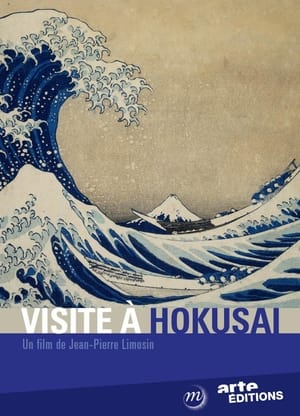
A look at the work of Japanese woodblock printing artist Katsushika Hokusai (1760-1849).
Artist and writer Matt Collings takes the plunge into an alien world of equations. He asks top scientists to help him understand five of the most famous equations in science, talks to Stephen Hawking about his equation for black holes and comes face to face with a particle of anti-matter. Along the way he discovers why Newton was right about those falling apples and how to make sense of E=mc2. As he gets to grips with these equations he wonders whether the concept of artistic beauty has any relevance to the world of physics.
Trampa Para Duendes
The film 'Canterbury is One Hundred' was produced by the National Film Unit in 1950 to celebrate the region's centennial. Written and directed by Oxley Hughan, it emphasises the bucolic agricultural productivity of the Canterbury region, particularly through the lambing and wheat-growing industries. Life in Canterbury's cities is presented as people 'taking pleasure in their neat gardens and comfortable wooden houses', in contrast to the rustic huts built by the early settlers a century earlier. The film is also a poignant tribute to Christchurch's celebrated Neo-Gothic architecture, much of which was destroyed following the February 2011 earthquake.