Short educational film of our solar system
Documentary about children's shelters in Czech villages, which serve to care for children when parents do not have time for them due to their workload.
A basic explanation of the purpose and process of menstruation, told largely with diagrams.
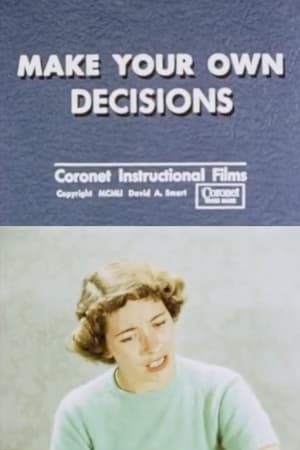
Once you're old enough to make decisions for yourself, how exactly do you go about doing it? How can you really know which choice is best for you?
The Institute of National Remembrance, Fish Ladder and Juice present “The Unconquered” – an animated film that shows the fight of Poles for freedom, from the first day of World War II to the fall of communism in 1989.
Training film for shelter managers. Food, water, sanitation, medical, and radiation detection systems are explained.
Beginning at the industrial revolution of the ‘great north’, Jenn Nkiru draws lines between peoples, cities, countries, buildings, movements, bodies and spaces(s) using a mixture of archive materials and new footage. There is little stillness as we are pushed and pulled through Black histories and communities across the city of Manchester and beyond. Nkiru has termed this filmmaking process “cosmic archeology”, and it is grounded in Afro-surrealism, experimental film and the Black arts movement.
Promotional film for Seventeen intended to show how well the magazine knows and serves its teenage audience. The film observes teenage girls at home, in school, at work and play, and alone and with friends, zeroing in on teen concerns about dating, marriage, and adulthood.
An in-depth look into the isolated sport of Motocross in the much more isolated island of Bermuda.
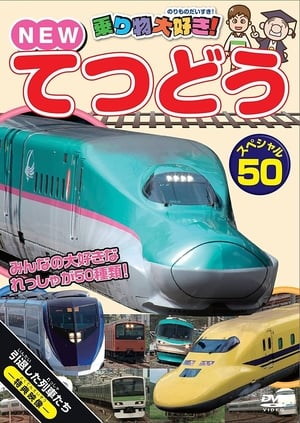
"Tetsudou" version of the series full of popular vehicles for children. Fifty kinds of trains selected from the railway active in Japan such as Shinkansen, SL (steam locomotive), limited express, etc. are recorded with powerful images. Introducing a nostalgic train that is not running now as a bonus picture.
O světle
With cinematic storytelling, a moving musical score, computer animation, and 4D ultrasound images, this documentary accompanies a new human life from conception to birth, poetically describing developmental milestones and the human experience of living in a womb.
A primer on proper phone manners produced for the New Zealand Post Office.
An animated short film that explains in a pedagogical way how the radio transmission works. Created by Czech filmmakers it was commissioned by Argentina Schools. The film tells the story of Curious, an extraterrestrial child that reaches the planet earth attracted by the sound waves. There he meets the Queen of Waves, an ethereal figure who teaches her step by step the process by which sound is captured, amplified, modulated and transformed into electromagnetic vibrations to be transmitted by a radial antenna.
A short film made by the Central Office of Information about how to cook Potatoes, with narration from Max Munden.
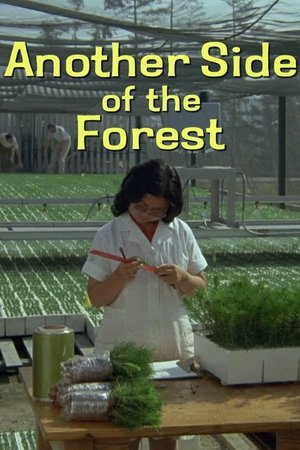
Developments in the Canadian forestry industry during the 1970s are shown being carried out both as lab experiments and in the field to protect and conserve the country's vast forests. These include turning a Newfoundland bog into woodland, fostering British Columbia seedlings that withstand mechanical planting, inoculating Ontario elms against the bark beetle, devising ways of controlling fire, and more.
An educational short film about correct speaking methods.
A scientific film essay, narrated by Phil Morrison. A set of pictures of two picnickers in a park, with the area of each frame one-tenth the size of the one before. Starting from a view of the entire known universe, the camera gradually zooms in until we are viewing the subatomic particles on a man's hand.
A quotation from Aristophanes, "The desire and pursuit of the whole is called love," precedes views of a man and a woman's bodies, often in extreme close up. Off-screen, a voice recites fragments of oracular literature and purple prose. We see an eye, an ear, a mouth, a tongue, bits of hair, a hand, the tips of fingers, toes. Occasionally, the frame includes a larger scape of a body: a chest, a back, a breast. Usually the camera is stationery; sometimes, it moves across a body, remaining in close up. They hold hands for one moment. The bodies are without clothes; no genitalia are visible.
2012: Time For Change is a documentary feature that presents ways to transform our unsustainable society into a regenerative planetary culture. This can be achieved through a personal and global change of consciousness and the systemic implementation of ecological design.