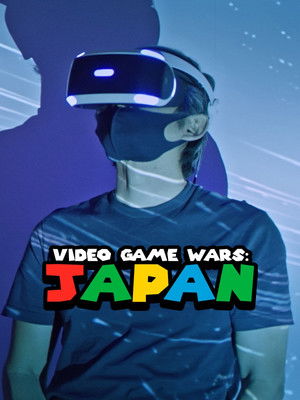
This exploration of Japan's fascination with girl bands and their music follows an aspiring pop singer and her fans, delving into the cultural obsession with young female sexuality and the growing disconnect between men and women in hypermodern societies.
JDM Insider
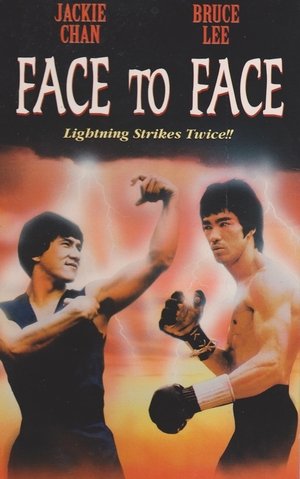
Made for German TV documentary about the early craze of Hong Kong Martial Arts Cinema. While critical on the subject and not too well informed, it nevertheless offers some interesting insights into the Hong Kong film industry of that days.
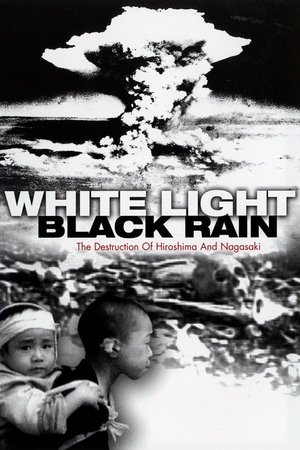
Pulitzer Prize -- winning journalist John Hersey caused a sensation when he published "Hiroshima", the first account for American readers of the horror experienced by victims of the 1945 Hiroshima atomic bomb attack. "Hiroshima" stunned readers with its descriptions of the terrible aftermath of the bombing, yet Hersey never spoke about his experience in Hiroshima.
The fantastic story of how an ancient martial art, Chinese kung fu, conquered the world through the hundreds of films that were produced in Hong Kong over the decades, transformed Western action cinema and inspired the birth of cultural movements such as blaxploitation, hip hop music, parkour and Wakaliwood cinema.
Japon : L'Empire du sexe virtuel
The greatest taboo of the Battle of Okinawa were Guerrilla units composed of boy soldiers. Until now, not even the Japanese people knew the full scope of these secret troops, and survivors have been afraid to share their tragic details. Okinawa became the bulwark to protect the Japanese mainland toward the end of World War II. After the Americans landed, a violent battle ensued resulting in the loss of over 200,000 lives – many of them civilian. This documentary uncovers Japan’s deepest secrets concerning the Battle of Okinawa, and also sounds alarms about modern Japan’s recent steps toward remilitarization.
A journey back through Dacia Maraini's and her trips around the world with her close friends cinema director Pier Paolo Pasolini and opera singer Maria Callas. An in-depth story of this fascinating woman's life. Maraini's memories come alive through personal photographs taken on the road as well as her own Super 8 films shot almost thirty years ago.
Tokyo Night Cruise on the Yurikamome Line The "Yurikamome" line, connecting Shimbashi and Toyosu, is popular for its scenic route past commercial facilities and high-rise buildings. Departing Shimbashi at dusk, the train curves right to Shiodome, then passes Takeshiba, Hinode, and Shibaura-futo stations before crossing the Rainbow Bridge. After the bridge, it enters Odaiba, where Mount Fuji’s silhouette is visible. This once-vacant area is now densely developed. The train passes Toyosu Market before reaching Toyosu. On the return journey, as darkness falls, the lights of Odaiba create a captivating glow. The vibrant nightscape, captured in high-definition 4K 10-bit HDR, provides a stunningly detailed experience.
The Katakai Festival, one of Niigata and Echigo's Three Great Fireworks Festivals, has a 400-year history. Held annually on September 9th and 10th in Katakai Town, it features fireworks dedicated to Asahara Shrine, filled with wishes and prayers. Highlights include Japan’s largest 'San-shakudama' and the world's largest 'Yon-shakudama,' which impress spectators with their grandeur. The small hill behind the launch site amplifies the fireworks' powerful bursts. This work condenses the festival's two-day fireworks displays. It captures the fleeting beauty of each firework, the vibrant rapid-fire starmine displays, and the grand 'San-shakudama' and 'Yon-shakudama' that fill the night sky, creating an emotional and resonant experience. Filmed in ultra-high-definition 4K/8K60P, it faithfully reproduces the grand fireworks and fine sparks. Enjoy the immersive experience with high-resolution audio at 96kHz24bit, emphasizing the fireworks' explosive sounds and echoes.
In this tape, Ko Nakajima and Video Earth Tokyo interview a homeless man. The subject is initially angry and frustrated, but gradually opens up and shares stories about his life. Under A Bridge was later broadcast on cable television.
The world continues to look to Japan as a highly industrialized, future-oriented country that has retained much of its ancient tradition. This series provides an insight into the character of a highly complex nation by examining the lives of nine Japanese from widely diverse backgrounds in the context of social and economic developments.
In the final hours of the Pacific War, Okinawa was the destination for Korean men conscripted as “military laborers” and Korean women taken as “comfort women.” Little is known about the number of casualties or their experiences. In 1989, Park Soonam started to track down the survivors of the Battle of Okinawa to record their testimonies. In 1990, Park visits Korea in search of former “military laborers” who had survived Okinawa and repatriated to Korea. The survivors vividly recount their experiences of their compatriots’ murder and about the “comfort women” to the Zainichi Korean female director. The film zeroes in on the murder of Korean “military laborers” and the presence of “comfort women” in Okinawa via testimonies of former Japanese soldiers.
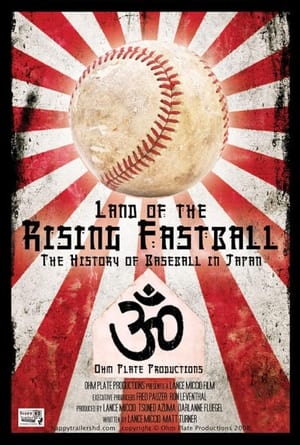
Montreal Expos star catcher Gary Carter visits Japan to learn about the customs and traditions of baseball in the Far East. He also encounters other "foreign" baseball players he once played with in the MLB.
Actual footage by the United States Signal Corps of the landing and attack on Arawe Beach, Cape Glouster, New Britain island in 1943 in the South Pacific theatre of World War Two, and the handicaps of the wild jungle in addition to the Japanese snipers and pill-box emplacements.
Japan blossomed into its Renaissance at approximately the same time as Europe. Unlike the West, it flourished not through conquest and exploration, but by fierce and defiant isolation. And the man at the heart of this empire was Tokugawa Ieyasu, a warlord who ruled with absolute control. This period is explored through myriad voices-- the Shogun, the Samurai, the Geisha, the poet, the peasant and the Westerner who glimpsed into this secret world.
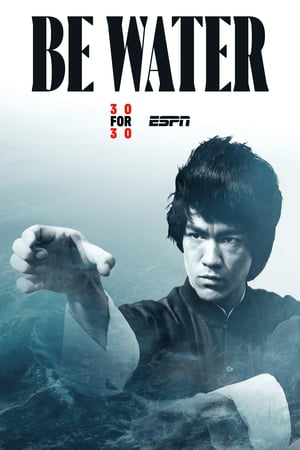
Documentary on the legendary martial artist Bruce Lee, with a focus on the production of his unfinished film Game of Death. Using interviews and behind-the-scenes footage, Lee aficionado John Little paints a portrait of the world's most famous action hero, concluding with a new cut of Game of Death's action finale, reconstructed from Lee's notes and recently-recovered footage.
By mid-1945, Hitler is dead and the war has ended in Europe. Halfway around the world, however, the fighting is still going strong on a small island in the Pacific. Okinawa was the site of the last battle of the last great war of the 20th century, with a casualty rate in the tens of thousands. Through it all, military cameramen risked their lives to film the conflict, from brutal land combat to fierce kamikaze attacks at sea. See the footage they captured and experience this intense battle the way the soldiers saw it -- in color.
Documentary about the world of the Japanese geisha. Unattainable by all but the wealthy and powerful, geisha are the ultimate massagers of the male ego. Behind the delicate fan and enigmatic smile can also be found a darker side to the geisha story, including treachery and suicide.
This is the story of colorful Japanese customs and manners of the past, and their contrast with present-day Japan. We see ancient farming customs, agricultural ceremonies, ancestor worship, schoolteaching, marriage customs, sports, all against the background of beautiful Japan.