These are the first images shot in the ALN maquis, camera in hand, at the end of 1956 and in 1957. These war images taken in the Aurès-Nementchas are intended to be the basis of a dialogue between French and Algerians for peace in Algeria, by demonstrating the existence of an armed organization close to the people. Three versions of Algeria in Flames are produced: French, German and Arabic. From the end of the editing, the film circulates without any cuts throughout the world, except in France where the first screening takes place in the occupied Sorbonne in 1968. Certain images of the film have circulated and are found in films, in particular Algerian films. Because of the excitement caused by this film, he was forced to go into hiding for 25 months. After the declaration of independence, he founded the first Algerian Audiovisual Center.
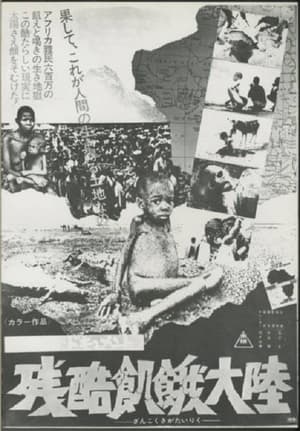
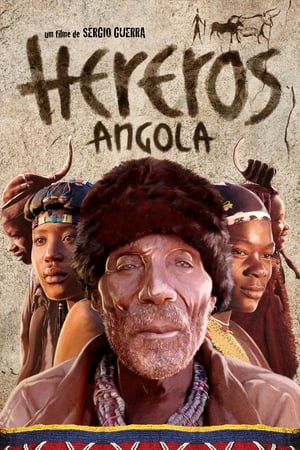
This film speaks of archaic peoples, their customs and mores, in an attempt to make the last snapshots of their traditional lifestyles before they are gone for good.
Mögöbalu, Les Maîtres des Tambours d'Afrique
A documentary about investigators of the International Criminal Court trying to gather evidence of crimes committed in Africa.
Tears of Africa
Kibera is the largest slum area in Nairobi, and the largest urban slum in Africa. This documentary depicts three important problems; violence, drugs (miraa) and albinos killing.The 2009 Kenya Population and Housing Census reports Kibera's population as 170,070, contrary to previous estimates of one or two million people .Most of Kibera slum residents live in extreme poverty, earning less than $1.00 per day. Unemployment rates are high. Persons living with HIV in the slum are many, as are AIDS cases. Cases of assault and rape are common. There are few schools, and most people cannot afford education for their children. Clean water is scarce. Diseases caused by poor hygiene are prevalent.
This film is the result of more than two years of work tracking down archive material and witnesses close to Mobutu in Africa, Europe and the U.S. More than 950 hours of footage have been seen by the world. Among the 104 hours selected as the basis for this film, are 30 hours of archives recently discovered in Kinshasa and never before released. Completing these exceptional documents, are more than 50 hours of interviews with those close to the former president and the events surrounding his reign, conducted by the director in Kinshasa, Brussels, Paris and Washington. Like a vast historical puzzle, this film pieces together the tragic history of a country, and its self-styled leader - the dictator, Mobutu Sese Seko, "King of Zaïre".
Without a Fight is a feature length documentary film that explores how soccer can facilitate social change in Kibera, one of Africa's largest slums. Footage of violent clashes fueled by polarizing national presidential elections is intertwined with profiles of youth from different religious and ethnic backgrounds as they navigate daily life and prepare for the final championship soccer game of the season. The film provides a glimpse-often a very positive one-into an Africa few have seen. It attempts to break stereotypes associated with people who live in extreme poverty while depicting sports as a tool that could be used to prevent violence among at-risk youth. The film made its World Premiere at the 11 MM Festival in Berlin, Germany in March 2012 and its North American Premiere at the Full Frame Documentary Festival in Durham, NC in April 2012. - Written by Beth-Ann Kutchma
African drummer leaves village, makes it big in the world. Great drumming!!
Pasolini seeks in Africa the peasant and revolutionary authenticity he had sought in the Roman villages. This hope will end in a new disappointment: Africa is a reservoir of irremediable contradictions that will explode in the massacres of yesterday and today. It is an Africa that starts from the outskirts of Rome, but thousands of non-EU citizens flock to the sub-proletariat of the villages.
Africa is a land of giants. Its powerful rivers sculpt the earth and form impressive valleys and waterways that are home to many imposing and powerful inhabitants. These are the rivers where massive elephants and hippos live, feed and drink, and where ancient crocodiles hunt and breed. They share the rivers with porcupines, the martial eagle, and the leopard.
In common with many L.A. Rebellion films, Snake touches on such themes as institutionalized racism, colonialism and the plight of women of color. Narrated in the first person by the filmmaker as an epistle to her son, The Snake in My Bed tells Diegu's story as a Nigerian woman in Lagos who is romantically pursed by a German national who has “gone native.” Despite his secretive and duplicitous actions, she eventually agrees to marry him and has his child, only to learn that he is a bigamist with a German wife and child.
When a massive Chinese factory complex attempts a high-stakes expansion in rural Ethiopia, three women in search of prosperity have their faith in industrialization tested to the limit. Filmed over four years with singular access, Made in Ethiopia lifts the curtain on China’s historic but misunderstood impact on Africa, and explores contemporary Ethiopia at a moment of profound crisis. The film was awarded the Jury Special Mention at Tribeca Festival.
Filmmaker Christopher Quinn observes the ordeal of three Sudanese refugees -- Jon Bul Dau, Daniel Abul Pach and Panther Bior -- as they try to come to terms with the horrors they experienced in their homeland, while adjusting to their new lives in the United States.
Beatrice is an 18-year-old young reporter with the Children’s Radio Foundation (CRF) in Lusaka, Zambia. She is part of the Unite4Climate Radio Initiative, a project which uses the power of radio to challenge mindsets and shift behaviours around environmental protection.
The film is an evocative story of the tenuous relationship between a charcoal burner and forests. The film follows Lloyd on his journey from burning charcoal to setting up a micro-nursery selling trees to his neighbouring community – a brief window into his deep rooted connection to forests around Livingstone.
In partnership with the MasterCard Foundation and local partner Mwanza Youth and Children Network, the young reporters produce and broadcast radio shows that illustrate how farming can lead to individual prosperity and country-wide economic growth and teach the business and finance skills necessary to manage these small agricultural enterprises.
Across Africa, people are using soccer to lift themselves up, to create change in their communities and to pave the way for progress. "The Beautiful Game" follows several unforgettable Africans who are beating the odds on and off the pitch.
Gabon's Loango National Park is home to a group of western lowland gorillas who have become accustomed to biologists who have studied them for almost twenty years. This documentary presents an intimate look at the silverback Kamaya and his family and features a newborn baby gorilla, brave researchers, forest elephants, buffalos and the last remaining wild coastline in the African tropics.
Many geneticists and archaeologists have long surmised that human life began in Africa. Dr. Spencer Wells, one of a group of scientists studying the origin of human life, offers evidence and theories to support such a thesis in this PBS special. He claims that Africa was populated by only a few thousand people that some deserted their homeland in a conquest that has resulted in global domination.