Explores the history, technology, people, stories and industry influence of this lesser-known personal computer. The film profiles important individuals involved in the creation of the computer, plus its life after cancellation, both as an entry-level Macintosh compatible and as a collectible. The work of Douglas Engelbart and his team, plus advances from the Xerox Palo Alto Research Center (PARC) with their Alto and Star workstations were the initial innovators of the Graphical User Interface (GUI), but the Apple Lisa stands as the clear foundation for what we all use today -- Macintosh -- Windows -- iOS -- Android.
All Creatures Welcome explores the world of hackers and nerds at the events of the Chaos Computer Club, Europe's largest hacker association. The film dispels common clichés and draws a utopian picture of a possible society in the digital age.
Film sponsored by Western Electric (AT&T's equipment manufacturing division), the builder of the United States Air Force's White Alice Communications System in Alaska. Introduces the people and geography of the new state as well as the Western Electric radio-relay system, which links far-flung military sites, alert stations, and missile-warning facilities. Ralph Caplan praised the film's "intrinsically dramatic and highly photogenic" portrayal of communications equipment.
Prompt: Make a Documentary investigates the growing influence of artificial intelligence on the film industry. The documentary places the rise of AI within the broader historical context of cinema’s evolution, drawing parallels with earlier technological shifts such as the introduction of sound, colour, and digital visual effects. By revisiting landmark moments in film history, the film demonstrates that disruption has always been part of cinema’s DNA, while questioning whether AI represents a fundamentally different kind of change. Featuring insights from directors, academics, and practitioners, Prompt: Make a Documentary explores the tension between innovation and integrity, the democratisation of creative tools, and the ethical implications of automation in the arts. The film ultimately asks whether artificial intelligence will empower the next generation of storytellers or redefine creativity itself.
We are witnessing a generational transformation of audiovisual entertainment. Independent work by internet creators, who have already managed to take first places in the celebrity rankings, is competing with television production. Parents panic when their children spend the whole day frozen in front of laptop and smartphone screens. The most watched is a communication bridge between two generations. What does it actually mean to be a YouTuber? And why have YouTubers become a phenomenon that already has an undeniable influence on society today? The feature-length documentary reveals the secrets of their success and looks into the everyday lives that they keep away from the cameras. It hears the opinions of everyone who is affected by watching and creating YouTube videos. Parents of children, marketing specialists, sociologists, psychologists and the viewers themselves.
This film tells the competition in the telecommunication sector over the last years, in order to make us understand its stakes and the industrial and commercial logics. The story is told by its four main characters : Martin Bouygues, Stéphane Richard, Xavier Niel and Patrick Drahi.
In the first decades of the 20th century, when life was being transformed by scientific innovations, researchers made a thrilling new claim: they could tell whether someone was lying by using a machine. Popularly known as the “lie detector,” the device transformed police work, seized headlines and was extolled in movies, TV and comics as an infallible crime-fighting tool. Husbands and wives tested each other’s fidelity. Corporations routinely tested employees’ honesty and government workers were tested for loyalty and “morals.” But the promise of the polygraph turned dark, and the lie detector too often became an apparatus of fear and intimidation. Written and directed by Rob Rapley and executive produced by Cameo George, The Lie Detector is a tale of good intentions, twisted morals and unintended consequences.
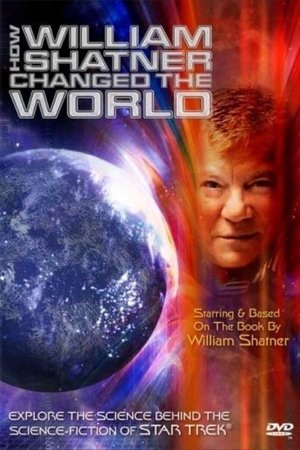
Back in 1976, microprocessors had a maximum of 8.5K transistors for 64bits of memory. The Queen of England sent her first email, and Steve Wozniak designed the Apple I. And a post-Star Trek but pre-TJ Hooker William Shatner made this film for AT&T about the future of microprocessors.
This is not just a “folkumentary”, but an invitation to reflect on the future of humanity on a planet where tradition and technology coexist, and where the unknown reminds us that there are still unanswered questions.
For the first time in history people and machinery are working together, realizing a dream. A uniting force that knows no geographical boundaries. Without regard to race, creed or color. A new era where communication truly brings people together. This is the dawn of The Net.
A heartwarming story about a precautious, 8-year-old girl exploring the world with her globetrotting father and growing up in an unconventional family.
17.10.61
The face of stone. About the natural beauty of Ural gemstones, about the unparalleled beauty of pieces and jewellery made by Russian master jewellers. Malachite was used in the furnishing of the lounge room at the Winter Palace in St. Petersburg, which is why it is called the Malachite Room. Also featured are malachite items made using the complex technique of Russian mosaic. This semi-precious stone became widely used by craftsmen after the discovery of huge malachite deposits in the Demidov mines in the Urals.
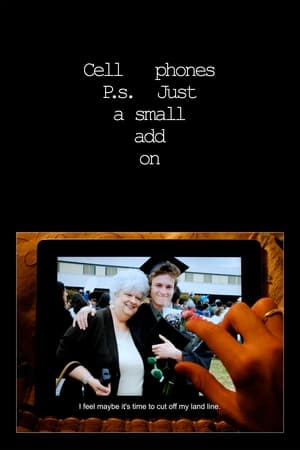
Four children want to invite their friends to a picnic, but they don't know how to use the telephone. Suddenly, the room goes dark and the phone becomes large enough for them to climb into. They walk through a tunnel and meet a man named Telly, who takes them into the world of Telezonia, where they are shown various kinds of telephones. They meet several costumed characters, such as Question Mark, who teaches them how to answer the phone; Q and Z, who show them how to use the phone book; and Exclamation Point, who teaches them how to place a call. By the time they leave Telezonia, they are full-fledged telephone users.
L’aube de l’humanité
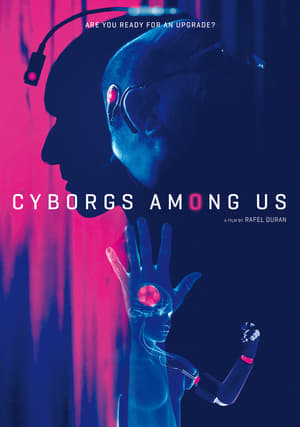
Over the past few years, technology has improved our lives in so many ways. Now, some people, called trans-humanists, are taking the next logical step - they are fusing their bodies with digital implants to increase their abilities and expand their senses - they are becoming, in effect, real life cyborgs. How is life going to change for us all if some people have supernatural powers?
In northern Peru, the unprecedented archaeological discovery of the largest known mass child sacrifice in the world opens the doors to the kingdom of Chimor. This international archaeological investigation carried out like a criminal investigation reveals the mysteries of the last civilization of the Andes before the arrival of the Incas.
At Arcata, California, testing technology for landing planes in fog. Also: a high-tech barber shop in Westwood Village, California; manufacture of precision steel gauge blocks in Eskilstuna, Sweden.
The Chinese company Huawei wants to expand 5G worldwide and is well advanced in the development of the technology. With the help of 5G, entire communities can function wirelessly, self-driving cars become possible and advanced medical care can be performed remotely in real time. However, many are worried that Huawei is incorporating backdoors that allow vast amounts of data to be collected and then used by China for espionage.
This short documentary follows the fortunes of iconic car manufacturer Lotus. Once famous for its championship-winning race cars and iconic sports cars, Lotus has struggled to remain in profit. A new investor and managing director set out to build the first new Lotus road cars in over a decade: their final petrol-powered car Emira and their first pure electric British hypercar, the 2000bhp Evija.