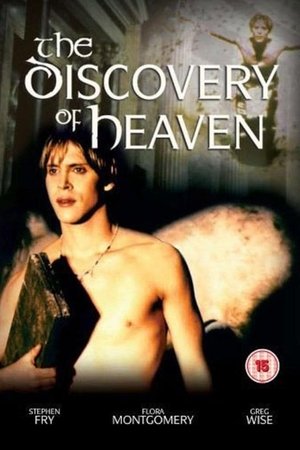
Disappointed with humanity, God wants to revoke his contract with humanity and wants to take back the stone tablets containing the ten commandments. To this end an angel is sent out to affect the personal lives of three humans so an appropriate child may be conceived.
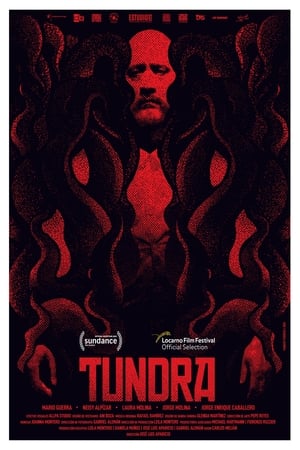
Walfrido Larduet, a lonely electrical inspector, dreams of the Red Woman, whose image persists and becomes an obsession. Something tells him she is near. Over the course of a day, Walfrido will follow her trail as he travels through the suburbs of an infested city.
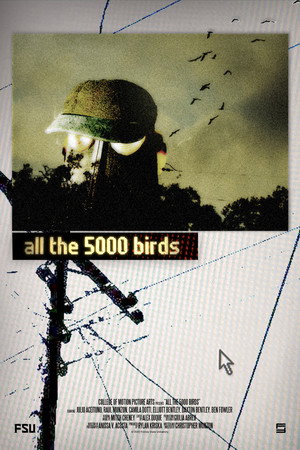
Cabrón, a janitorial robot, wastes his days at a motel meditating on the family who made him. While working under new management and flooded by new faces, he contemplates individuation and truth in an attempt to classify two vastly different iterations of home.
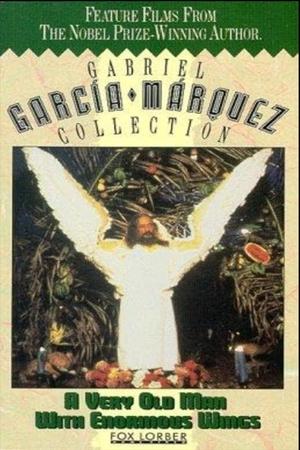
An elderly man with wings is blown off course during a tropical storm in this symbolic fantasy. The Old Man lands near a Caribbean island where a poor family gives him shelter in a chicken coop. Father Gonzaga is the skeptical priest who rushes to damn the creature. Soon the Old Man is the subject of curiosity seekers as Elisinda and Pelayo start charging admission. A traveling carnival of human oddities camps near the Old Man as people flock to see the show. The Old Man is reduced to being an unwanted pet, and after six years, he mends his wings and flies away. Nudity, simulated sex with a spider woman, and the ugliness of human exploitation definitely put this fantasy in a category not for children.
Detectives Marcus Burnett and Mike Lowrey of the Miami Narcotics Task Force are tasked with stopping the flow of the drug Ecstasy into Miami. They track the drugs to the whacked-out Cuban drug lord Johnny Tapia, who is also involved in a bloody war with Russian and Haitian mobsters. If that isn't bad enough, there's tension between the two detectives when Marcus discovers that playboy Mike is secretly romancing Marcus’ sister, Syd.
Seven years after his triumph in Cuba, Che winds up in Bolivia, where he tries to ignite the same revolutionary fires as before.
Ernesto Guevara, known as 'Che', leads a group of Cuban exiles under Fidel Castro in a revolution to overthrow Fulgencio Batista, the dictator of Cuba.
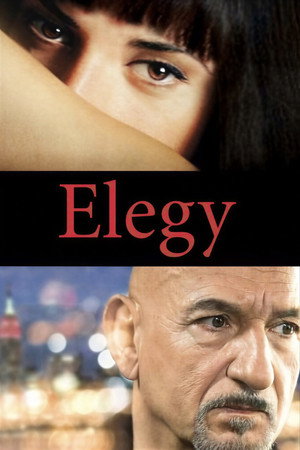
Cultural critic David Kepesh finds his life -- which he indicates is a state of "emancipated manhood" -- thrown into tragic disarray by Consuela Castillo, a well-mannered student who awakens a sense of sexual possessiveness in her teacher.
Will Cubans be able to safeguard their heritage of pristine Nature and preserved ecological treasures under this new era, as they are facing the combined pressure of money and tourism? What policies can be implemented to maintain the island’s spectacular wilderness?
In 1839, the slave ship Amistad set sail from Cuba to America. During the long trip, Cinque leads the slaves in an unprecedented uprising. They are then held prisoner in Connecticut, and their release becomes the subject of heated debate. Freed slave Theodore Joadson wants Cinque and the others exonerated and recruits property lawyer Roger Baldwin to help his case. Eventually, John Quincy Adams also becomes an ally.
OSS 177 goes on holiday to Brazil, but is called into action when he finds himself being stalked by a double.
Thomas Sankara came to power in Burkina Faso in 1983, with the promise of a revolutionary government that would transform the West African country. To help build the revolution, he sent 600 children — many orphans from rural areas — to be educated in Cuba. But after Sankara’s assassination, the children were stranded. The last would only return to Burkina Faso in 2005. SANKARA’S ORPHANS tells their stories through interviews with some of the 600, along with archival footage of their lives on Cuba’s Isle of Youth — where both Sankara and Fidel Castro came to visit. Along with their education, the children worked in the fields and received weapons training. This, combined with their idealism, frightened the new Burkina Faso regime, which worried they might return and take up arms.
The Castro revolution was just consolidating its power when, in 1961, over 100,000 students were sent from their schools into the countryside to teach the peasants there how to read. Coinciding with the Bay of Pigs invasion, in this docudrama, 15-year-old Mario (Salvador Wood) has come to a tiny village in the Zapata swamps and gradually wins the villagers over to his task. At the same time, he receives an education in the realities of rural life from the hard-working peasants.
Yvette has dreamed of performing Romeo and Juliet since starting high school. Now, in her final year, the headmaster has decided to use the school's entire arts and culture budget to fund a T20 event. In a last ditch effort to put on the play, they ask the school's cricket hero, Marko Marais, to play the role of Romeo.
In pre-revolution Cuba, Katey Miller is about to defy everyone's expectations. Instead of a parent-approved suitor, Katey is drawn to the sexy waiter, Javier, who spends his nights dancing in Havana's nightclubs. As she secretly learns to dance with Javier, she learns the meanings of love, sensuality and independence.
Just after the Anglo-Boer War, a dispute arises when Ester returns home from a concentration camp only to find that her cousin and her English-speaking husband have moved into Ester's house.
This documentary, shot entirely on location in Havana, includes many band members' insights into this revival, and features performance footage of an All-Stars' concert at the city's Salon of Dreams.
Santiago is an aging, down-on-his-luck, Cuban fisherman who, after catching nothing for nearly 3 months, hooks a huge Marlin and struggles to land it far out in the Gulf Stream.
Based on the novel Francisco by Anselmo Suárez y Romero, "The Other Francisco" is a socio-economic analysis of slavery and class struggle through the retelling of the original novel. The film contrasts the romantic conceptions of plantation life found in Suárez Romero's novel with a realistic expose of the actual historical conditions of slavery throughout the Americas. It offers a critical analysis of the novel, showing how the author's social background led to his use of particular dramatic structures to convey his liberal, humanitarian viewpoint.
1896. Cuba is at a critical juncture. Following the death of Antonio Maceo, one of its independence leaders, the island is torn between two positions: continuing the fight for independence or annexation to the United States. Spain, through its energetic generals, seeks to maintain its hegemony on the island. A difficult period in which, however, strange love stories also occur.