The true story of the seven weeks that changed China forever. On June 4, 1989, pro-democracy demonstrations were violently and bloodily repressed. Thousands of people died, but the basis for China's future was definitely planted.
Big Rig (2008) is a documentary film by Doug Pray about long-haul truck drivers. The film consists of a series of interviews with different drivers, focusing on both their personal life stories and also the life and culture of truck drivers in the United States.
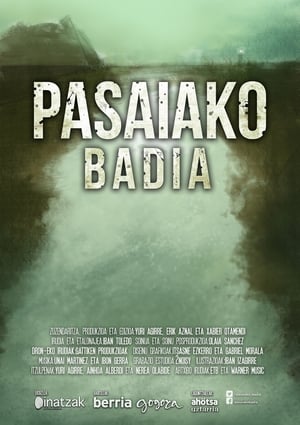
A documentary about Basque Radical Rock. Its name comes from a song by the well-known and successful band Hertzainak, which is also referenced in the documentary, along with the work of other rock bands and singer-songwriters. The documentary features interviews with musicians who played rock from mid-1975 to 1990. There are 23 interviews in total, with musicians from bands such as Barricada, Hertzainak, Itoiz, Zarama... In addition, the documentary includes spectacular images from that period, as the rock boom was linked to different movements in the Basque Country: gaztetxes (youth clubs), free radio stations, and fanzines. The documentary is a portrait of the youth who had just emerged from the dictatorship.
In this documentary, we travel to the main locations where the musical movement known as "Basque Radical Rock" exploded, emerging in the Basque Country and Navarre in the 1980s. It recalls bands from that era, such as Cicatriz, Zarama, RIP, Eskorbuto, and Kortatu, and interviews some of its leading figures.
Since the war in Gaza and the expanding occupation of the West Bank, a peaceful resolution to the conflict between Israelis and Palestinians feels more distant than ever. In this three-part series, the reporter Matthew Cassel travels along the 1949 Armistice border, or ‘Green Line’, once seen as the best hope for a resolution. He meets Palestinians and Israelis living just kilometres apart, but shaped by vastly different realities.
Through his own photographs, the Basque artist Néstor Basterretxea (1924-2014) is portrayed by the art critic and exhibition curator Peio Aguirre, a great connoisseur of his work and personal archives.
COINTELPRO 101 exposes illegal surveillance, disruption, and outright murder committed by the US government in the 1950s, 60s, and 70s. “COINTELPRO” refers to the official FBI COunter INTELigence PROgram carried out to surveil, imprison, and eliminate leaders of social justice movements and to disrupt, divide, and destroy the movements as well. Many of the government's crimes are still unknown. Through interviews with activists who experienced these abuses first-hand, with rare historical footage, the film provides an educational introduction to a period of intense repression and draws relevant lessons for the present and future.
Between 1930 and 1945, Eastern Europe experienced mass violence on an unprecedented scale. Hitler and Stalin exploited the vast region for their respective expansionist plans. It is estimated that around 14 million civilians were murdered—primarily Jews, Poles, Balts, Belarusians, and Ukrainians.
'Ama Lur' is a documentary, directed by Nestor Basterretxea and Fernando Larruquert, that premiered in San Sebastián in 1968, and it is considered the foundation of Basque cinema.
An attempt to create a bridge between the different political positions that coexist, sometimes violently, in the Basque Country, in northern Spain.
Acabou a Paz: Isto Aqui Vai Virar o Chile
Near the end of World War II, Gen. Dietrich von Choltitz receives orders to burn down Paris if it becomes clear the Allies are going to invade, or if he cannot maintain control of the city. After much contemplation Choltitz decides to ignore his orders, enraging the Germans and giving hope to various resistance factions that the city will be liberated. Choltitz, along with Swedish diplomat Raoul Nordling, helps a resistance leader organize his forces.
The chronicle of the process, ten long years, that led to the end of ETA (Euskadi Ta Askatasuna), a Basque terrorist gang that perpetrated robberies, kidnappings and murders in Spain and the French Basque Country for more than fifty years. Almost 1,000 people died, but others are still alive to tell the story of how the nightmare finally ended.
Ahead of releasing 'Idols', his most personal album to date, and before anyone had heard a note, Yungblud and his touring family travelled to Berlin, where he would perform and record these brand new songs live for the very first time. A personal journey of change, confidence and rock-and-roll chaos, set against a city that has always celebrated counterculture and creativity, this is a revealing and uncompromising documentary about a generational artist finding his own voice.
In late 2009, over twenty Hong Kong civic groups united as the "Anti-High-Speed Rail, Stop Funding" coalition, aiming to halt Legislative Council approval of the HKD 66.9 billion Express Rail Link amid deep social rifts. The "Post-80s Anti-High-Speed Rail Youth" group drew thousands of young people with their slogan “Defend Our Homeland, Protest with Joy,” leading to three funding suspensions that surprised the public. Media coverage was intense and innovative, featuring rare camera angles and lively online debate among journalists. This documentary explores how reporters shaped the movement, their emotional involvement, and the dynamic relationship between the media and activists during Hong Kong’s pivotal 2009–10 protests.
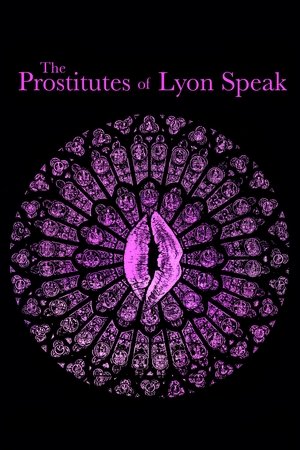
Documentary about the Lyon sex workers who occupied the church of St. Nizier on June 3, 1975.
Undercover in Tibet reveals the regime of terror which dominates daily life and makes freedom of expression an impossibility. Tash meets victims of arbitrary arrests, detention, torture and ‘disappearances’ and uncovers evidence of enforced sterilizations on ethnic Tibetan women. He sees for himself the impact of the enormous military and police presence in the region, the hunger and hardship being endured by many Tibetans and hears warnings of the uprising taking place across the provinces now.
Let's Not Live Like Slaves
La ciudad es nuestra
An in-depth interview with José Antonio Urrutikoetxea, known as Josu Ternera, one of the most relevant leaders of the terrorist gang ETA.