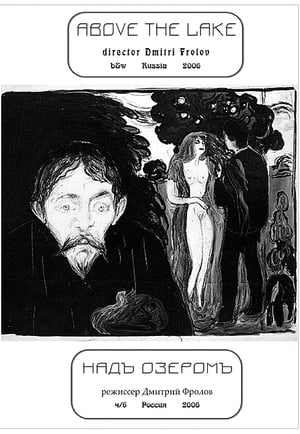
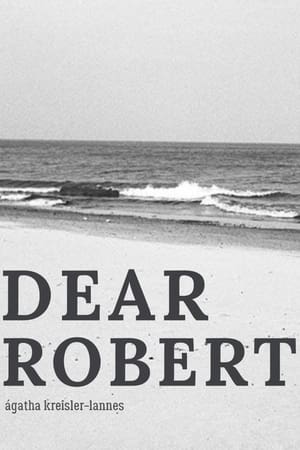
A man without his own half of the body is looking for the other half in the opposite sex. As for the integrity of his body, so for the sake of emotional healing.
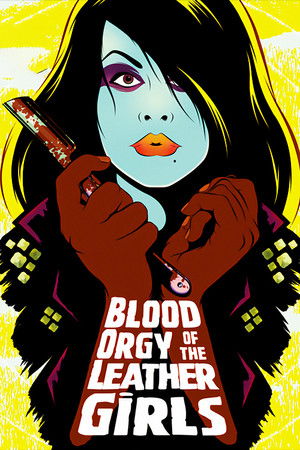
This highly stylized, critically acclaimed film from the 70's mixes silent film cards, a soundscape, color, opera music and atmosphere to explore the Freudian truths about men's fear of women that Wedekind powerfully exposed. A kinetic melodrama of the rise of a femme-fatale and her fate at the hands of Jack-the-Ripper. Rethinking Pabst's silent film and Alban Berg's opera.
This independent film follows the actions and inner thoughts of four unusual individuals as they go about their lives in Tokyo, occasionally meeting up with one another. Their thoughts tend to focus on questions of death, existence, and the conflict of society against the individual. All of the action is performed silently, with narration dubbed over.
Repurposing and manipulating classic film footage and the filmmaker’s personal footage, the film weaves a phantasmagoric narrative of a Chinese lady named Ma Li who dreams she is a Caucasian named Mary.
Ion is a seemingly normal guy whose life goes by without a hitch. A phone call; a meeting with a friend; small, unimportant everyday situations. One day he gets into a car with two other people. They cross the border between Spain and France. The next morning, their lives will change forever.
Disillusioned English banker's wife Mary meets troubled Italian immigrant Bruno, with whom she is captivated by and they set off on a voyage on which they meet a variety of society's dropouts.
Avant-garde homage to pre-revolution Russian silent movies, and to the poet Aleksandr Blok.
Sequence of five shots, each one with a particular color treatment, in which a man carrying a machine gun runs. He moves fast in the beginning but, as the end comes closer, he starts to walk in zigzag. Is he hurt?
A woman wakes up to discover herself in a hospital room. She wanders the corridors before making a shocking discovery.
Dislocation in time, time signatures, time as a philosophical concept, and slavery to time are some of the themes touched upon in this 9-minute experimental film, which was written, directed, and produced by Jim Henson. Screened for the first time at the Museum of Modern Art in May of 1965, "Time Piece" enjoyed an eighteen-month run at one Manhattan movie theater and was nominated for an Academy Award for Outstanding Short Subject.
A filmmaker recalls his youth in the town of Onomichi. In the present, he shoots a film in Onomichi alongside his cast, crew and family.
Cremaster 5 is a five-act opera (sung in Hungarian) set in late-ninteenth century Budapest. The last film in the series, Cremaster 5 represents the moment when the testicles are finally released and sexual differentiation is fully attained. The lamenting tone of the opera suggests that Barney invisions this as a moment of tragedy and loss. The primary character is the Queen of Chain (played by Ursula Andress). Barney, himself, plays three characters who appear in the mind of the Queen: her Diva, Magician, and Giant. The Magician is a stand-in for Harry Houdini, who was born in Budapest in 1874 and appears as a recurring character in the Cremaster cycle.
A Hollywood actor grows tired of making the same corporate movies, so he moves to Argentina to find more experimental and meaningful work.
This is a time when we learn afresh that nothing lasts forever and that the variability is an integral part of everyday life. What is a river today does not mean that tomorrow will not become a sea. Life itself is one large metamorphosis, and the human being is its variable shape...
An experimental journey through a year in the life of the director, using his always playing playlist to cross the boundaries of fiction and documentary. Through scenes of both comedy and tragedy, realistic documentary footage and experimental sequences of the director's environment and daily life we get a sometimes estranging image of a young man and also an intriguing insight in his mindset and how this translates to the imagery on screen.
In 1983, yacht sailor Will Parker leads an American crew financed by millionaire Morgan Weld to defeat during the America's Cup race against an Australian crew. Determined to get the prize back, Will convinces Morgan to finance an experimental boat designed by his ex-girlfriend Kate's new beau, Joe Heisler. When the boat is completed, the Americans head to Australia to reclaim the cup.
A film that places the bright and dark sides of life close together. From an understatement beginning, the movie drives up to an ecstatic highlight with a love act between two young people. The orgasm becomes an enormous image flow into the crematorium's death machine.
A take it or leave it auteur-experimental fiction exercise: two women are monitoring their dreams, dreams that may of course also be stark naked reality, at least to the dreamers, as they come and they go like bubbles, rising, floating, bursting. A man appears out of nowhere. Poet Peter Laugesen co-wrote the script with Tom Elling, who was Lars von Trier's director of photography on "The Element of Crime".
A man and woman embark on a sexual journey to detach mind from body. The relationship slowly grows into one of emotional domination, physical disease, abandonment and the creation of personal pornography.
The main protagonist is a young fellow who tries to live his life within 30 frames. He's a person suitable for any atmosphere, which makes him different from the rest. He's like a plant that differs from others, an informer who wants to escape out from his skin. This man loves, hates, eats, drinks, lies ill, laughs, cries, kisses, plays... These are agonies of a contemporary man.